Banner
Object-Based Processing: Numbers Confuse How We Perceive Spaces

Researchers recently studied the relationship between numerical information in our vision, and...

Males Are Genetically Wired To Beg Females For Food

Bees have the reputation of being incredibly organized and spending their days making sure our...

The Scorched Cherry Twig And Other Christmas Miracles Get A Science Look

Bleeding hosts and stigmatizations are the best-known medieval miracles but less known ones, like ...

$0.50 Pantoprazole For Stomach Bleeding In ICU Patients Could Save Families Thousands Of Dollars

The inexpensive medication pantoprazole prevents potentially serious stomach bleeding in critically...

User picture.
News StaffRSS Feed of this column.

News Releases From All Over The World, Right To You... Read More »

Blogroll

NASA's Spitzer Space Telescope has captured for the first time enough light from planets outside our solar system, known as exoplanets, to identify signatures of molecules in their atmospheres. The landmark achievement is a significant step toward being able to detect possible life on rocky exoplanets and comes years before astronomers had anticipated.

"This is an amazing surprise," said Spitzer project scientist Dr. Michael Werner of NASA's Jet Propulsion Laboratory, Pasadena, Calif.

Do hard money contributions by interest groups to members of Congress contribute to better quality policy deliberations and outcomes in congressional committees? A new study conducted by political scientist Kevin M.

Scientists from Université Laval’s Faculty of Medicine have succeeded in producing neurons in vitro using stem cells extracted from adult human skin. This is the first time such an advanced state of nerve cell differentiation has been achieved from human skin, according to lead researcher Professor François Berthod. This breakthrough could eventually lead to revolutionary advances in the treatment of neurodegenerative illnesses such as Parkinson’s disease. Berthod and his team described the method used to produce these neurons in a recent issue of the Journal of Cellular Physiology.

The researchers used skin obtained from plastic surgery procedures.

At any given time, most of the roughly 30,000 genes that constitute the human genome are inactive, or repressed, closed to the cellular machinery that transcribes genes into the proteins of the body. In an average cell, only about one in ten genes is active, or expressed, at any given moment, with its DNA open to the cell' transcriptional machinery.

A dynamic cast of gatekeeper enzymes controls this access to the DNA, adding and removing particular molecules to open or close the genome to transcription as needed. Fully explicating the complex interplay among these enzymes and the molecules they manage has been a primary goal for scientists seeking to understand the mechanisms governing gene control.

Drilling is complete on an Alaskan North Slope well, cofunded by the Department of Energy, that could prove to be an important milestone in assessing America's largest potential fossil energy resource: gas hydrate.

Gas hydrate is an ice-like solid that results from the trapping of methane molecules - the main component of natural gas - within a lattice-like cage of water molecules. Dubbed the "ice that burns," this substance releases gaseous methane when it melts.

The size of the global gas hydrate resource is staggering, holding more ultimate energy potential than all other fossil fuels combined, according to the U.S. Geological Survey (USGS).

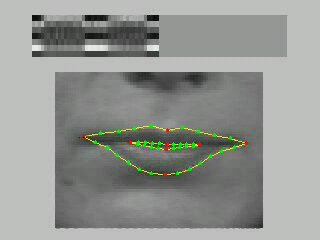
Researchers at the University of East Anglia are about to embark on an innovative new project to develop computer lip-reading systems that could be used for fighting crime.

The three-year project, which starts next month, will collect data for lip-reading and use it to create machines that automatically convert videos of lip-motions into text. It builds on work already carried out at UEA to develop state-of-the-art speech reading systems.


CLICK ABOVE FOR MOVIE.