Banner
Why Antarctic Sea Ice Stopped Growing In 2015

Though numerical models and popular films like An Inconvenient Truth projected Arctic ice...

Wealth Correlated To Loneliness

You may have read that Asian cultures respect the elderly more than Europe but Asian senior citizens...

Ousiometrics Analysis Says All Human Language Is Biased

A new tool drawing on billions of uses of more than 20,000 words and diverse real-world texts claims...

Wavelengths Of Light Are Why CO2 Cools The Upper Atmosphere But Warms Earth

There are concerns about projected warming on the Earth’s surface and in the lower atmosphere...

User picture.
News StaffRSS Feed of this column.

News Releases From All Over The World, Right To You... Read More »

Blogroll
On one side of the political spectrum in America and across a broader swath of Europe, science is controversial - especially genetic engineering. But genetic engineering has been done since humans first deduced they could shape the natural world, if anything it has gotten precise in a way that was never possible before.

Now it mean even help fight against cancer - and it may do so using Salmonella, more famous as a bacteria that lives in intestines.

Titan, Saturn's largest moon, is one of the most Earthlike places in the solar system. 

It has a thick, hazy atmosphere and surface rivers, mountains, lakes and dunes, which is why the Cassini-Huygens is studying it. But sometimes new data bring new mysteries, such as the seemingly wind-created sand dunes spotted by Cassini near the moon's equator, and the contrary winds just above.

It's become a popular idea among endurance athletes that salt consumption during competition will help, but a new study finds no evidence that is true.

A small kernel of truth is involved in the belief, the authors write in the the Journal of Sports Science and Medicine - that there are sodium losses due to sweat during exercise and our bodies function on a principle of thermoregulation - but then some endurance athletes have taken that to believe they should consume large quantities of salt or other electrolyte supplements containing sodium during training and competition to improve performance. 
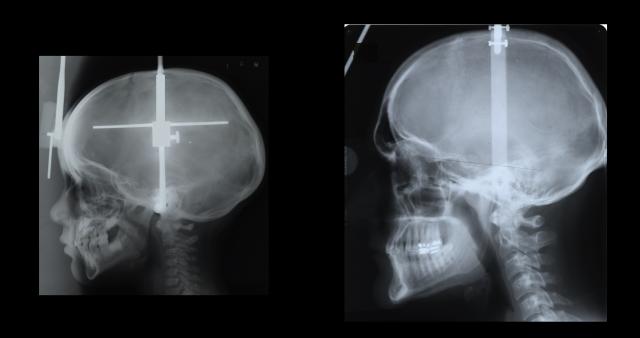
When you look at a primate or neanderthal skull and compare it to modern humans, it is immediately noticeable that we have a feature they are missing.

In fact, it's missing from all other species: A chin.

Why do we? A new study finds that our chins didn't come from mechanical forces such as chewing, but instead results from an evolutionary adaptation involving face size and shape, possibly linked to changes in hormone levels as we became more societally domesticated. If true, it would settle a debate that's gone on for more than a century, and anthropology would have solved it rather than biology.
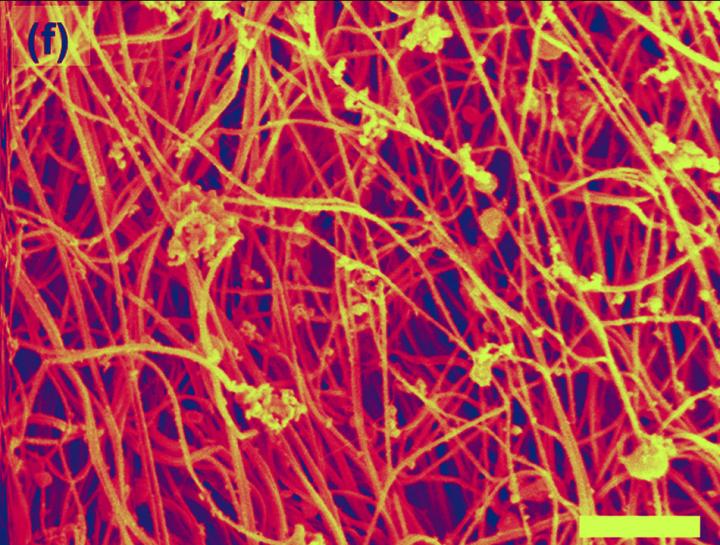
Skin is remarkably resistant to tearing and a team of researchers from the University of California, San Diego and the Lawrence Berkeley National Laboratory now have shown why.

Using powerful X-ray beams and electron microscopy, researchers made the first direct observations of the micro-scale mechanisms that allow skin to resist tearing. They identified four specific mechanisms in collagen, the main structural protein in skin tissue, that act together to diminish the effects of stress: rotation, straightening, stretching, and sliding. Researchers say they hope to replicate these mechanisms in synthetic materials to provide increased strength and in better resistance to tearing.
Bacteria have an immune system to fight off invasive viruses called phages, and like any immune system, from single-celled to human, the first challenge of the bacterial immune system is to detect the difference between “foreign” and “self.”

Since all living things are made of DNA and proteins, how do viruses and bacteria recognize their own? 

“In most environments, phages are around ten times more abundant than bacteria. And, like all viruses, phages use the host cell’s replication machinery to make copies of themselves,” says Prof. Rotem Sorek of the Weizmann Institute’s Department of Molecular Genetics. “And they are constantly evolving new ways to do this. So bacteria need a very active immune system to survive.”