Banner
Thousands Of Unpublished Studies Show Why Conservation Efforts Miss The Mark

Europe alone has so much unpublished, un-catalogued biological data that it is challenging to take...

Why Antarctic Sea Ice Stopped Growing In 2015

Though numerical models and popular films like An Inconvenient Truth projected Arctic ice...
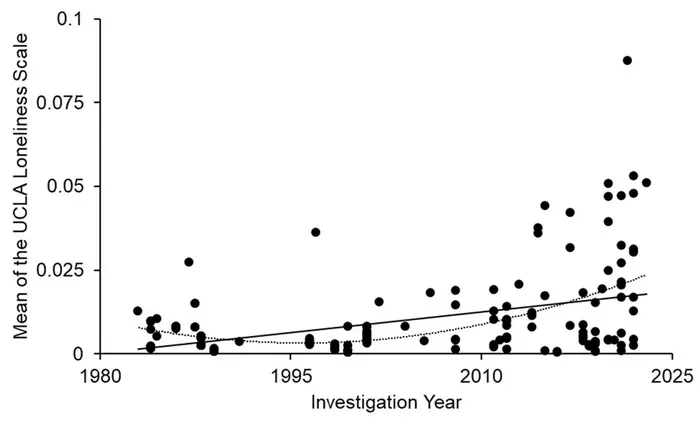
Wealth Correlated To Loneliness

You may have read that Asian cultures respect the elderly more than Europe but Asian senior citizens...

Ousiometrics Analysis Says All Human Language Is Biased

A new tool drawing on billions of uses of more than 20,000 words and diverse real-world texts claims...

User picture.
News StaffRSS Feed of this column.

News Releases From All Over The World, Right To You... Read More »

Blogroll

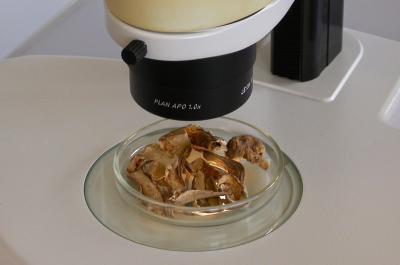
For lovers of wild foods, autumn means things like mushrooms and fungi of dizzying variety.

Intrepid treasure hunters scour the woods in search of delectable wild mushrooms and their not-quite-meat, not-quite-vegetable qualities.

A bonus: If you find some, you may be eating something not even known to science.

The Fungi Kingdom is enormously diverse and completely under-documented. Species are tough to know, and that is without counting the billions that have gone extinct without us ever knowing about them, but of the 10 million species likely out there, only about 100,000 have been described.

That DNA makes RNA which makes protein is a simplified explanation molecular biologists use to explain for how genetic information is deciphered and translated in living organisms.

The process is more complicated than the schema first articulated nearly 60 years ago by Nobel Laureate Francis Crick, co-discoverer of the DNA's double-helix structure. Now it is known that there are multiple types of RNA, three of which—messenger RNA (mRNA), transfer RNA (tRNA), and ribosomal RNA (rRNA)—are essential for proper protein production. Moreover, RNAs that are synthesized during the process known as transcription often undergo subsequent changes, which are referred to as "post-transcriptional modifications."

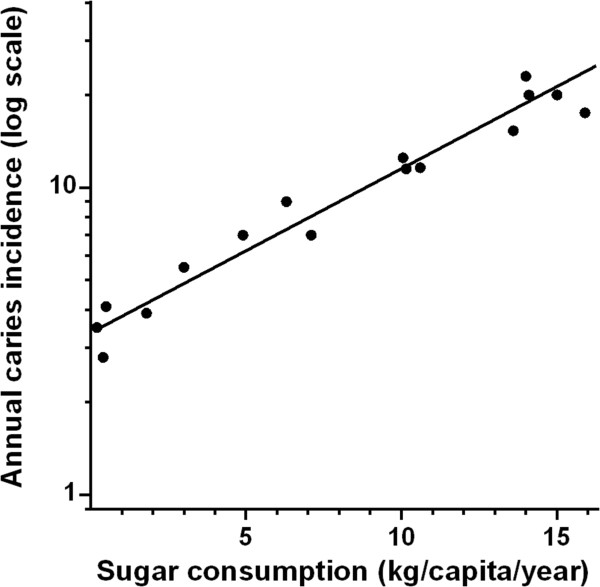
If we get sugars down to 3% of total energy intake, it may put dentists out of business, according to a paper in BMC Public Health which analyzed the effect of sugars on tooth decay and found that sugars are the only cause of tooth decay in children and adults.

Free sugars are defined by the World Health Organisation Nutrition Guidance Advisory Group as "Free sugars include monosaccharides and disaccharides added to foods by the manufacturer, cook or consumer, and sugars naturally present in honey, syrups, fruit juices and fruit concentrates." 

Calculating the pros and cons is a time-honored method for making analytical decisions but focusing too much on numberscalculations, especially those involving money, can lead to negative consequences, including social and moral transgressions, says a new paper.

Based on several experiments, researchers concluded that people in a "calculative mindset" as a result of number-crunching are more likely to analyze non-numerical problems mathematically and not take into account social, moral or interpersonal factors.

Chen-Bo Zhong. Credit: Rotman School

Molecules containing carbon-halogen bonds are produced naturally across all kingdoms of life and constitute a large family of natural products with a broad range of biological activities. 

The presence of halogen substituents in many bioactive compounds has a profound influence on their molecular properties and a goal of chemical science has been to find the late-stage, site-specific incorporation of a halogen atom into a complex natural product by replacing an sp³ C-H bond (one of the most inert chemical bonds known in an organic compound) with a C-X bond (X=halogen).

There has been no reliable synthetic or biological method known to be able to achieve this type of transformation but in Nature Chemical Biology

In 2010, McGill Redmen receiver Charles-Antoine Sinotte suffered a concussion during his last home game. "It was like nothing I had experienced before," recalls Sinotte. "I felt like I was out of my body."

Although he received medical attention and missed the rest of the game, he admits he downplayed his symptoms in order to play in the next game – his last before leaving McGill.