Banner
Pilot Study: Fibromyalgia Fatigue Improved By TENS Therapy

Fibromyalgia is the term for a poorly-understood condition where people experience pain and fatigue...

High Meat Consumption Linked To Lower Dementia Risk

Older people who eat large amounts of meat have a lower risk of dementia and cognitive decline...

Long Before The Inca Colonized Peru, Natives Had A Thriving Trade Network

A new DNA analysis reveals that long before the Incan Empire took over Peru, animals were...

Mesolithic People Had Meals With More Tradition Than You Thought

The common imagery of prehistoric people is either rooting through dirt for grubs and picking berries...

User picture.
News StaffRSS Feed of this column.

News Releases From All Over The World, Right To You... Read More »

Blogroll
Results  presented at the 2014 World Transplant Congress evaluated the safety and efficacy of CSL Behring's C1 Inhibitor (C1-INH) concentrate in preventing antibody-mediated rejection following kidney transplants in highly sensitized patients.

C1-INH is a human protein and an important inhibitor of the complement system. Antibody-mediated rejection is a major cause of kidney transplant failure and a prime barrier to improving long-term outcomes for transplant patients. The types of antibody-mediated rejection vary in acuity and severity. Approximately 10 to 15 percent of kidney recipients experience rejection within one year after transplantation.
There's a little bit of MacGyver in all of us so even if it's unlikely to come up in our day-to-day lives, it would be nice to know how to do an artificial heart transplant in case it becomes really, really necessary, like you need to save a third world dictator or his second-in-command will launch a nuclear bomb.

The Journal of Visual Experiments is here to help. They have made it possible to watch the implantation of the SynCardia temporary Total Artificial Heart as you read their journal article. The paper and video both describe the case of a 60-year-old male with hypertrophic cardiomyopathy. Both detail the implantation surgery. They also discuss perioperative complications, postoperative care and selection of good candidates for the procedure.
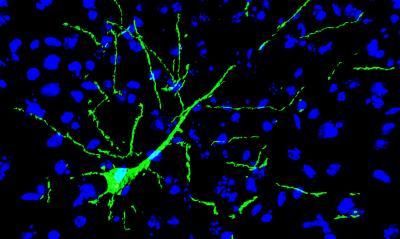
Physicists investigating tubular biological microstructures that showed unexpected luminescence after heating. Bioinspired peptides, like the ones investigated, could be useful for applications in optical fibers, biolasers and future quantum computers.

The luminous peptide microstructures self-assemble in a water environment. After heating them with a laser, they showed luminescence in the green range of the optical spectrum.
Dyscalculia is a broad term for difficulty in understanding numbers, arithmetic and mathematics. It is different than 'I am not good at math', people with dyscalculia have difficulty with counting and adding, understanding patterns - when you should add, when to subtract - and even telling time.

In the wild world of epidemiology, there has been conjecture that being a pre-term baby was a risk factor for dyscalculia, because being pre-term children has also been linked to other cognitive deficits.
Artesunate, a common herbal-based anti-malarial drug, can be used to control asthma, with better treatment outcomes than other drugs currently available, according to a paper by researchers from the National University of Singapore (NUS).

The authors write that artesunate is able to suppress airway inflammation and produce an array of anti-inflammatory effects similar to those by dexamethasone, the most potent steroid currently available, and with less side effects. 

Asthma is an incurable lung disease that inflames and narrows the airways, causing recurring periods of wheezing, chest tightness, coughing and shortness of breath. It is a chronic condition that affects people of all ages, but it most often starts during childhood.

A new study in The Journal of Clinical Investigation (JCI) found that preventing weight gain, obesity, and ultimately diabetes could be as simple as keeping a nuclear receptor, PPARgamma, from being activated in a small part of the brain.

When researchers blocked the effects of PPARgamma in a small number of brain cells in mice, the animals ate less and became resistant to a high-fat diet.

Proopiomelanocortin (POMC) neurons are found in the hypothalamus and regulate food intake. When activated, these neurons cause a feeling of fullness and curb appetite. PPARgamma regulates the activation of these neurons.