Banner
How To Overcome Leadership Battles

In times of social rancor and strife, most will fight each other, but societies are saved by those...

Thousands Of Unpublished Studies Show Why Conservation Efforts Miss The Mark

Europe alone has so much unpublished, un-catalogued biological data that it is challenging to take...

Why Antarctic Sea Ice Stopped Growing In 2015

Though numerical models and popular films like An Inconvenient Truth projected Arctic ice...

Wealth Correlated To Loneliness

You may have read that Asian cultures respect the elderly more than Europe but Asian senior citizens...

User picture.
News StaffRSS Feed of this column.

News Releases From All Over The World, Right To You... Read More »

Blogroll

A new paper in Astrobiology says we will need to look to oceans to find life on Earth-like planets. Most computer simulations of habitable climates on Earth-like planets have focused on their atmospheres, but as is easily seen on Venus, the presence of oceans is vital for optimal climate stability and habitability.

Their model simulated pattern of ocean circulation on a hypothetical ocean-covered Earth-like planet. They looked at how different planetary rotation rates would impact heat transport with the presence of oceans taken into account. 

When you get something for free, how much complaining can you really do? Apparently quite a bit, in the UK, according to a new report. There has been a large increase in complaints, which may be due to wider social trends rather than localized issues. A large number of complaints did not progress because the issues raised could not be identified, which suggests that the General Medical Council (GMC) is getting complaints due to a wider complaint-handling system and culture but they are outside its scope.

A new study indicates sea levels likely will continue to rise in the tropical Pacific Ocean off the coasts of the Philippines and northeastern Australia as humans continue to alter the climate.

The study authors combined past sea level data gathered from both satellite altimeters and traditional tide gauges to find out how much a naturally occurring climate phenomenon called the Pacific Decadal Oscillation, or PDO, influences sea rise patterns in the Pacific.

The size and age of plants has more of an impact on their productivity than temperature and precipitation, according to a landmark study by University of Arizona researchers.

Professor Brian Enquist and postdoctoral researcher Sean Michaletz, along with collaborators Dongliang Cheng from Fujian Normal University in China and Drew Kerkhoff from Kenyon College in Gambier, Ohio, have combined a new mathematical hypothesis with data from more than 1,000 forests across the world to show that climate has a relatively minor direct effect on net primary productivity, or the amount of biomass that plants produce by harvesting sunlight, water and carbon dioxide.  

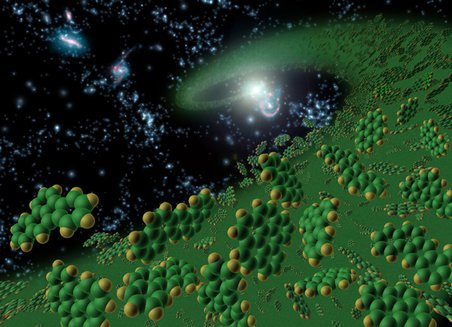
 An 'organic cage molecule' called CC3 has been found to separate krypton, radon and xenon from air at concentrations of only a few parts per million. 

Gases such as radon, xenon and krypton all occur naturally in the air but in minute quantities – typically less than one part per million. As a result they are expensive to extract for use in industries such as lighting or medicine and, in the case of radon, the gas can accumulate in buildings.

In the US, radon accounts for around 21,000 lung cancer deaths a year.

A new paper in Nature Genetics finds that nearly 60 percent of the risk of developing autism is genetic and most of that risk is caused by inherited variant genes that are common in the population and present in individuals without the disorder.

Although autism is thought to be caused by an interplay of genetic and other factors, there has been no consensus on their relative contributions and the nature of its genetic architecture. Recently, evidence has been mounting that genomes of people with autism are prone to harboring de novo mutations - rare, spontaneous mutations that exert strong effects and can largely account for particular cases of the disorder.