Banner
Pilot Study: Fibromyalgia Fatigue Improved By TENS Therapy

Fibromyalgia is the term for a poorly-understood condition where people experience pain and fatigue...

High Meat Consumption Linked To Lower Dementia Risk

Older people who eat large amounts of meat have a lower risk of dementia and cognitive decline...

Long Before The Inca Colonized Peru, Natives Had A Thriving Trade Network

A new DNA analysis reveals that long before the Incan Empire took over Peru, animals were...

Mesolithic People Had Meals With More Tradition Than You Thought

The common imagery of prehistoric people is either rooting through dirt for grubs and picking berries...

User picture.
News StaffRSS Feed of this column.

News Releases From All Over The World, Right To You... Read More »

Blogroll

Every spring, as the weather warms, trees in forests up and down the east coast explode in a bright green display of life as leaves fill their branches, and every fall, those same leaves provide one of nature's great color displays of vivid yellow, orange and red.

Over the last two decades, spurred by higher temperatures caused by climate change, Harvard scientists say, forests throughout the Eastern U.S. have experienced earlier springs and later autumns than ever before.

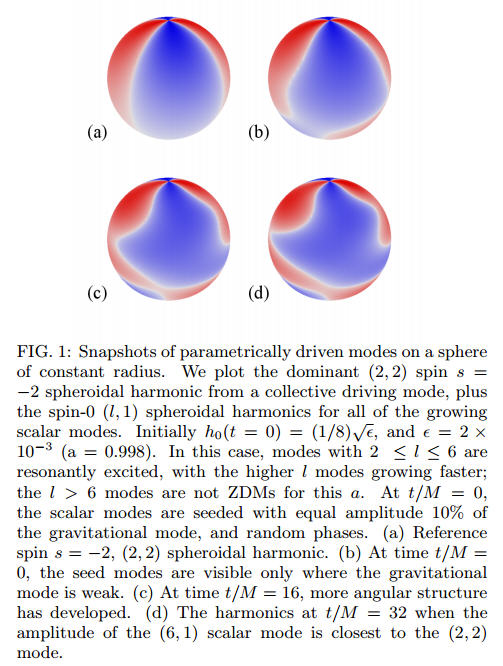
If you’re flying in the vicinity of a black hole, seatbelts and a bumpy ride are really the least of your concerns, but we are in the world of the hypothetical, and the accepted wisdom among gravitational thinkers has been that spacetime cannot become turbulent. 

An idea by the wizards at the Perimeter Institute is that such accepted hypothetical wisdom might be wrong.

The researchers followed this line of thought: Gravity might be able to behave as a fluid. One of the characteristic behaviors of fluids is turbulence – under certain conditions, fluids don’t move smoothly, they eddy and swirl. 

Presto, let's put something on arXiv.

Climate change models could have a thing or two to learn from termites and fungi, according to a new study released this week.

For a long time scientists have believed that temperature is the dominant factor in determining the rate of wood decomposition worldwide. Decomposition matters because the speed at which woody material are broken down strongly influences the retention of carbon in forest ecosystems and can help to offset the loss of carbon to the atmosphere from other sources. That makes the decomposition rate a key factor in detecting potential changes to the climate.

Compassion can produce counterintuitive results, challenging prevailing views of empathy's effects on moral judgment, say philosophers in a new paper

To understand how humans make moral choices, the philosophers asked subjects to respond to a variety of moral dilemmas, such as whether to stay and defend a mortally wounded soldier until he dies or shoot him to protect him from enemy torture and enable you and five other soldiers to escape unharmed.

Ethicists say people make choices based on a struggle within their brains between thoughtful reason and automatic passion.

Diagnoses of allergies in humans and animals have risen as understanding and awareness have become more common. An allergic reaction may cause unpleasant symptoms like hay fever, food intolerance or skin rashes.

In more severe cases, allergic reactions may also cause acute and life-threatening symptoms, such as asthma or anaphylactic shock.  On the other extreme, modern awareness of allergies has led some to claim them where none exist. Studies have shown that 75 percent of people who claim a gluten sensitivity, for example, have no noticeable adverse reaction to gluten, but they think they do.

We know solar cycles impact the weather and the climate but figuring how much, and how much of recent warming has been due to human-controllable variables, has been difficult.

A recent paper found the existence of significant resonance cycles and high correlations between solar activity and the Earth's averaged surface temperature during centuries.

It adopts the wavelet analysis technique and cross correlation method to investigate the periodicities of solar activity and the Earth's temperature as well as their correlations during the past centuries.