Banner
Pilot Study: Fibromyalgia Fatigue Improved By TENS Therapy

Fibromyalgia is the term for a poorly-understood condition where people experience pain and fatigue...

High Meat Consumption Linked To Lower Dementia Risk

Older people who eat large amounts of meat have a lower risk of dementia and cognitive decline...

Long Before The Inca Colonized Peru, Natives Had A Thriving Trade Network

A new DNA analysis reveals that long before the Incan Empire took over Peru, animals were...

Mesolithic People Had Meals With More Tradition Than You Thought

The common imagery of prehistoric people is either rooting through dirt for grubs and picking berries...

User picture.
News StaffRSS Feed of this column.

News Releases From All Over The World, Right To You... Read More »

Blogroll
Organisms inherit their mitochondria – the cell’s “power plants” – from their mothers, but what happens to all the father’s mitochondria?

Why and how are paternal mitochondria prevented from getting passed on to their offspring after fertilization? Just the randomness of evolution or is there a reason the phenomenon has been conserved?

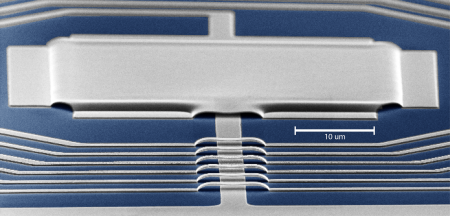
"Subatomic particles act in quantum ways—they have a wave-like nature—and so can atoms, and so can whole molecules since they're collections of atoms," Schwab says. "So the question then is: Can you make bigger and bigger objects behave in these weird wave-like ways? Why not? Right now we're just trying to figure out where the boundary of quantum physics is," says Keith Schwab, Professor of Applied Physics at Caltech. 

And that means finding a way to make measurements that go beyond the limits of quantum physics.

Researchers have shown for the first time in an animal that is more closely related to humans that it is possible to make new bone from stem-cell-like induced pluripotent stem cells (iPSCs) made from an individual animal's own skin cells. The study in monkeys reported in the Cell Press journal Cell Reports on May 15th also shows that there is some risk that those iPSCs could seed tumors, but that unfortunate outcome appears to be less likely than studies in immune-compromised mice would suggest.

Jupiter's trademark Great Red Spot — a swirling storm feature larger than Earth — is shrinking. This downsizing, which is changing the shape of the spot from an oval into a circle, has been known about since the 1930s, but now these striking new NASA/ESA Hubble Space Telescope images capture the spot at a smaller size than ever before.

Jupiter's Great Red Spot is a churning anticyclonic [1]. It shows up in images of the giant planet as a conspicuous deep red eye embedded in swirling layers of pale yellow, orange and white. Winds inside this Jovian storm rage at immense speeds, reaching several hundreds of kilometres per hour.

An article in the feminist, scientific, peer-reviewed journal Psychology of Women Quarterly says that when women in developing countries own land, they are less likely to experience violence.

Psychologists Shelly Grabe, Rose Grace Grose and Anjali Dutt analyzed anecdotes Grabe cataloged by speaking with 492 women in Nicaragua and Tanzania in 2007 and 2009 respectively. 

Grabe wanted to show that the power dynamic between men and women changes when women own land and that gender-based violence against women drops with property ownership.  

"Women in both countries connected owning property to increased power and status within their communities and to having greater control within their relationships," the authors write.

Zinc is essential for optimal plant growth and development but when high levels of the metal are present in the soil, it can become toxic to the plant. Consequently, plants need to trigger mechanisms capable of coping with that stress. Researchers from the Instituto Gulbenkian de Ciência (IGC) have now discovered a novel genetic mechanism that protects plants from toxic zinc levels. The research team, led by Paula Duque, identified a gene that produces a protein capable of sequestering zinc inside the cells of the root. In the presence of high levels of zinc, this gene undergoes a special processing which ensures more production of the protecting protein.