Banner
Pilot Study: Fibromyalgia Fatigue Improved By TENS Therapy

Fibromyalgia is the term for a poorly-understood condition where people experience pain and fatigue...

High Meat Consumption Linked To Lower Dementia Risk

Older people who eat large amounts of meat have a lower risk of dementia and cognitive decline...

Long Before The Inca Colonized Peru, Natives Had A Thriving Trade Network

A new DNA analysis reveals that long before the Incan Empire took over Peru, animals were...

Mesolithic People Had Meals With More Tradition Than You Thought

The common imagery of prehistoric people is either rooting through dirt for grubs and picking berries...

User picture.
News StaffRSS Feed of this column.

News Releases From All Over The World, Right To You... Read More »

Blogroll
In Europe, there is a rush to ban and label things regardless of information. In America, there is a movement to do the same. In Asia, it is open season on the public regarding bizarre supplements, alternative medicine and natural therapies.

Yet in many ways, Asians are healthier. That shows that everyone can be right in their claims when the data is so scattered and people who insist their idea will be a one-size-fits-all solution are not being evidence-based.

So, claims that more labels and symbols will improve public health may be true -  they haven't shown to be true in America but perhaps it just takes more time - but how to do that effectively is a mystery. When will people reach label fatigue?

Here is the chemical list of an organic egg.

An ancient kitten-sized predator is one of the smallest species reported in the extinct order Sparassodonta, which were carnivorous marsupials (metatherian mammals, anyway) native to South America lived in Bolivia about 13 million years ago.

The researchers can't name the new species because the specimen lacks well-preserved teeth, which are the only parts preserved in many of its close relatives.

The skull, which would have been a little less than 3 inches long if complete, shows the animal had a very short snout. A socket, or alveolus, in the upper jaw shows it had large, canines, that were round in cross-section much like those of a meat-eating marsupial, called the spotted-tailed quoll, found in Australia today, the researchers said.

When ovarian cancer spreads from the ovaries it almost always does so to a layer of fatty tissue that lines the gut. A new study has found that ovarian cancer cells are more aggressive on these soft tissues due to the mechanical properties of this environment. The finding is contrary to what is seen with other malignant cancer cells that seem to prefer stiffer tissues.

"What we found is that there are some cancer cells that respond to softness as opposed to stiffness," said Michelle Dawson, an assistant professor in the School of Chemical and Biomolecular Engineering at the Georgia Institute of Technology. "Ovarian cancer cells that are highly metastatic respond to soft environments by becoming more aggressive."

Proteins, those workhorses of the cell responsible for almost all biological functions, have to be adaptable and that means chain-like molecules must engage in an intricate three-dimensional conformation.

This process - protein folding - is one of the most important in biology. In the event of improper folding, proteins can't perform their duties and may even lump together in aggregates, which can lead to severe diseases like Alzheimer's or Parkinson's.

To prevent that, specialized proteins, so-called chaperones, help other proteins to adopt their proper shape. 

If you ask rural people in the American east which is more damaging to the ecology, coyotes or deer, it may be a toss-up. But that doesn't mean it is a good idea for one to just take the other out.

In most states, deer population management also brings revenue benefits - hunting licenses and meat - but coyotes aren't hunted. They haven't been arrived that long. Coyotes -- Canis latrans -- have long inhabited the American West but are a relatively recent arrival to eastern North America, appearing first in the region in noticeable numbers in the 1970s. They have already become a significant source of deer mortality and most often prey on whitetail fawns in the earliest months of their lives.

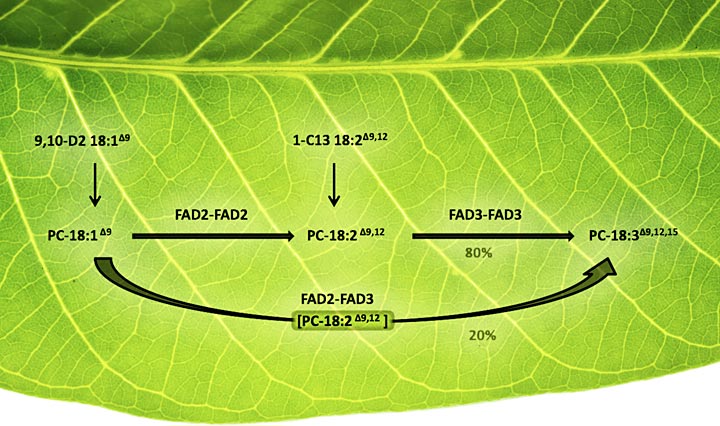
Scientists at Brookhaven National Laboratory have found that certain enzymes responsible for desaturating fatty acids, the building blocks of oils, can link up to efficiently pass intermediate products from one enzyme to another.

Getting plants to accumulate high levels of more healthful polyunsaturated fatty acids, or unusual fatty acids that could be used as raw materials in place of petroleum-derived chemicals in industrial processes, are a few possible outcomes.


Metabolic channeling