Banner
Pilot Study: Fibromyalgia Fatigue Improved By TENS Therapy

Fibromyalgia is the term for a poorly-understood condition where people experience pain and fatigue...

High Meat Consumption Linked To Lower Dementia Risk

Older people who eat large amounts of meat have a lower risk of dementia and cognitive decline...

Long Before The Inca Colonized Peru, Natives Had A Thriving Trade Network

A new DNA analysis reveals that long before the Incan Empire took over Peru, animals were...

Mesolithic People Had Meals With More Tradition Than You Thought

The common imagery of prehistoric people is either rooting through dirt for grubs and picking berries...

User picture.
News StaffRSS Feed of this column.

News Releases From All Over The World, Right To You... Read More »

Blogroll

Of the uncertainties facing climate modelers, climate feedbacks from decomposition by soil microbes are among the biggest. 

The dynamics among soil microbes allow them to work more efficiently and flexibly as they break down organic matter – spewing less carbon dioxide into the atmosphere than previously thought, according to a new study from the International Institute for Applied Systems Analysis (IIASA) and the University of Vienna published in Ecology Letters.

The 2008 Mumbai terrorist attacks, where a group of gunmen killed 165 and injured 304 people, the May 2012 shooting of five people by a gunman in Seattle and the recall of four million cars by Toyota in 2009 and 2010 because of a faulty accelerator pedal show the power of social media - and the problems.

When the online community is creating and exchanging the news rather than official news channels, credibility is unknown and it can not only exaggerate the unfolding situation, but also turn it into misinformation, diverting attention from the real problems.

Anti-anxiety drugs and sleeping pills have been linked to an increased risk of death, according to a large study published in BMJ which shows that several anxiolytic (anti-anxiety) drugs or hypnotic drugs (sleeping pills) are associated with a doubling in the risk of mortality.  

The findings are based on routine data but need to be interpreted cautiously.

The study accounted, where possible, for other factors such as age, smoking and alcohol use, other prescriptions and socioeconomic status. Crucially, the team controlled for contributing risk factors such as sleep disorders, anxiety disorders and other psychiatric illness in all participants.

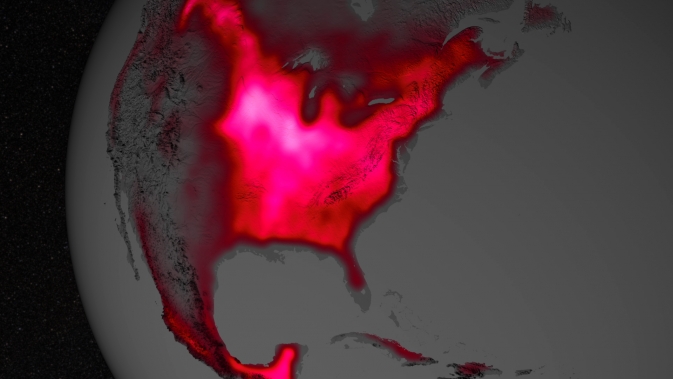
American farmers lead the world in productivity coupled with environmental responsibility, producing far more food on far less land than was even imagined decades ago. If the world had America's efficiency in agricultural dematerialization, an area the size of Amazonia could be reverted back to its natural state.

The Moon formed nearly 100 million years after the start of the solar system, according to a paper based on measurements from the interior of the Earth combined with computer simulations of the protoplanetary disk from which the Earth and other terrestrial planets formed.

The team of researchers simulated the growth of the terrestrial planets (Mercury, Venus, Earth and Mars) from a disk of thousands of planetary building blocks orbiting the Sun.

By analyzing the growth history of the Earth-like planets from 259 simulations, the scientists discovered a relationship between the time the Earth was impacted by a Mars-sized object to create the Moon and the amount of material added to the Earth after that impact.

Sweden, the country with the second highest prevalence of type 1 diabetes in the world, could actually have 2-3 times more adolescents and young adults with type 1 diabetes than previously estimated, according to new findings in Diabetologia.

Current estimates in Sweden are based on the Diabetes Incidence Study in Sweden (DISS), which has been around since 1983. The DISS is one of very few registers to record data on adolescents and young adults and therefore findings from the DISS study have had implications for diabetes research and care in many countries.  Dr. Araz Rawshani of the Swedish National Diabetes Register, Gothenburg, and colleagues found that the DISS had very low coverage which discards previous findings.