Banner
Pilot Study: Fibromyalgia Fatigue Improved By TENS Therapy

Fibromyalgia is the term for a poorly-understood condition where people experience pain and fatigue...

High Meat Consumption Linked To Lower Dementia Risk

Older people who eat large amounts of meat have a lower risk of dementia and cognitive decline...

Long Before The Inca Colonized Peru, Natives Had A Thriving Trade Network

A new DNA analysis reveals that long before the Incan Empire took over Peru, animals were...

Mesolithic People Had Meals With More Tradition Than You Thought

The common imagery of prehistoric people is either rooting through dirt for grubs and picking berries...

User picture.
News StaffRSS Feed of this column.

News Releases From All Over The World, Right To You... Read More »

Blogroll

Lindsay says that around 50 distinct signal burst characteristics were used in the amino acid identifications, but that most of the discriminatory power is achieved with 10 or fewer signal traits.

Remarkably, recognition tunneling not only pinpointed amino acids with high reliability from single complex burst signals, but managed to distinguish a post-translationally modified protein (sarcosine) from its unmodified precursor (glycine) and also to discriminate between mirror-image molecules knows as enantiomers and so-called isobaric molecules, which differ in peptide sequence but exhibit identical masses.

Pathway to the $1000 dollar proteome?

The transfer, via a viral vector, of a normal copy of the gene deficient in patients, allowed to fully and very rapidly cure the heart disease in mice. These findings are published in Nature Medicine on 6 April, 2014.

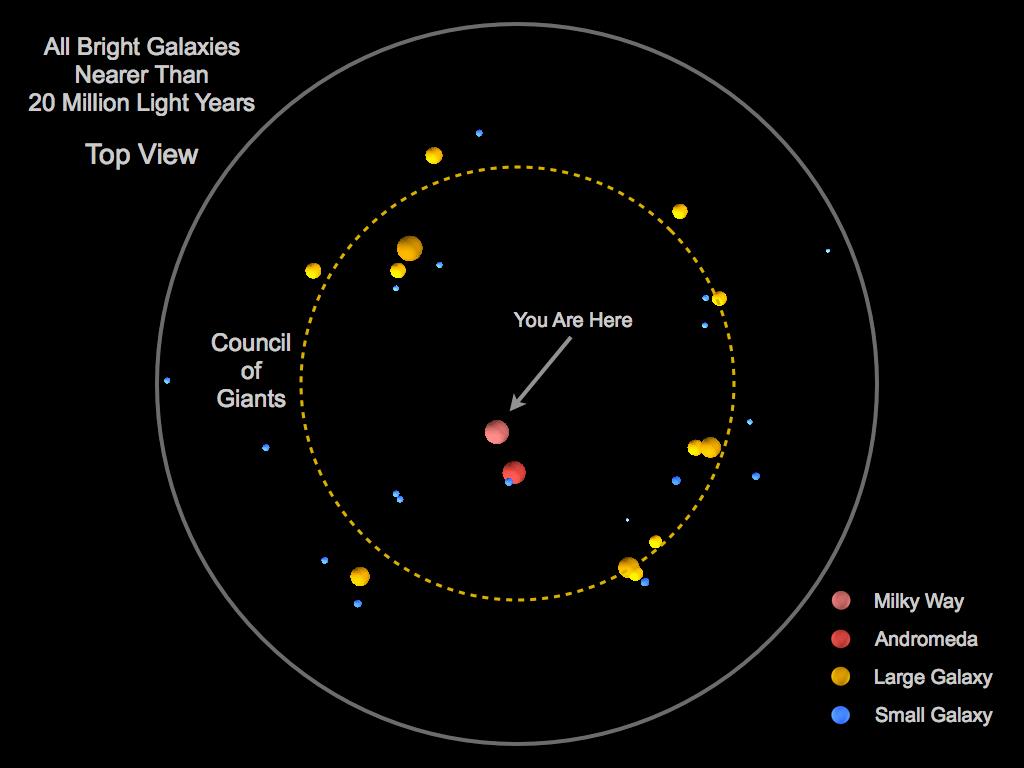
The universe is big - really big. Just our Milky Way galaxy alone is about 300 billion stars, with planets whizzing around them and clouds of gas and dust floating in between.

Then there is our orbiting companion, the Andromeda Galaxy and a small group of galaxies in our Local Group, which is about 3 million light years across.

What is in the vast unknown remains a mystery but a recent paper shed light on our immediate neighborhood - bright galaxies within 35-million light years of the Earth. 
A new initiative is underway to breathe life back into the 700,000-gallon ocean tank at Biosphere 2. The new ocean at Biosphere 2 will provide a glimpse into the sea that's closest to Southern Arizona – the Gulf of California, which stretches for a thousand miles from the mouth of the Colorado River to Mazatlan on the mainland of Mexico.

The original "ocean" was one of several habitats intended to sustain a crew of scientists living and working inside the Biosphere 2 dome isolated from the outside world. When the "enclosed missions" ended in 1994, the fragile ecology of the ocean habitat collapsed. The corals died and algae and bacterial mats took over, crowding out the reef.  
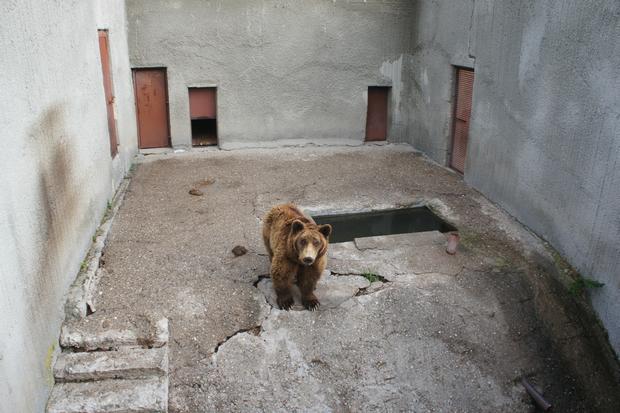
A genetic study of brown bears (Ursus arctos) in Bulgarian mountain regions showed they originated in Carpathia. So how did they get to Bulgaria? It wasn't natural dispersal. 

Bulgarian and Romanian NGOs, the Frankfurt Zoological Society, and scientists of the Senckenberg Conservation Genetics Section in Frankfurt have found that a legend was probably true - the legend being that the former leader of the Romanian Communist Party, Nicolae Ceausescu, flew the bears to Bulgaria.

PROVIDENCE, R.I. [Brown University] — The surface of Mercury crackled with volcanic explosions for extended periods of the planet's history, according to a new analysis led by researchers at Brown University. The findings are surprising considering Mercury wasn't supposed to have explosive volcanism in the first place, and they could have implications for understanding how Mercury formed.