Banner
Pilot Study: Fibromyalgia Fatigue Improved By TENS Therapy

Fibromyalgia is the term for a poorly-understood condition where people experience pain and fatigue...

High Meat Consumption Linked To Lower Dementia Risk

Older people who eat large amounts of meat have a lower risk of dementia and cognitive decline...

Long Before The Inca Colonized Peru, Natives Had A Thriving Trade Network

A new DNA analysis reveals that long before the Incan Empire took over Peru, animals were...

Mesolithic People Had Meals With More Tradition Than You Thought

The common imagery of prehistoric people is either rooting through dirt for grubs and picking berries...

User picture.
News StaffRSS Feed of this column.

News Releases From All Over The World, Right To You... Read More »

Blogroll

But when Yin and the paper's three lead authors, Ryosuke Iinuma, a former Wyss Institute Visiting Fellow, Yonggang Ke, Ph.D., a former Wyss Postdoctoral Fellow who is now an Assistant Professor of Biomedical Engineering at Georgia Institute of Technology and Emory University, and Ralf Jungman, Ph.D, a Wyss Postdoctoral Fellow, built bigger tripods and tried to assemble them into polyhedra, the large tripods' legs would splay and wobble, which kept them from making polyhedra at all.

The researchers got around that problem by building in a horizontal strut to stabilize each pair of legs, just as a furniture maker would use a piece of wood to bridge legs of a wobbly chair.

Whether you're a Major League outfielder chasing down a hard-hit ball or a lesser mortal navigating a busy city sidewalk, it pays to keep a close watch on your surroundings when walking or running. Now, new research by UC San Francisco neuroscientists suggests that the body may get help in these fast-changing situations from a specialized brain circuit that causes visual system neurons to fire more strongly during locomotion.

There has been a great deal of research on changes among different brain states during sleep, but the new findings, reported in the March 13 issue of Cell, provide a compelling example of a change in state in the awake brain.

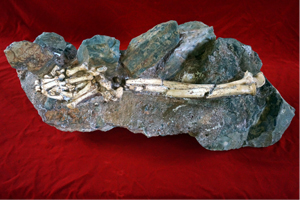
After 13 years of excavation of the nearly complete skeleton of the Australopithecus fossil named Little Foot, researchers conclude that it is probably around 3 million years old, refute previous dating claims that suggested it is younger. 

The Sterkfontein caves of Gauteng, South Africa have been world famous since 1936 for producing large numbers of fossils of the ape-man Australopithecus. However, for sixty years, these fossils consisted only of partial skulls and jaws, isolated teeth and fragments of limb bones. These were obtained by blasting or drilling and breaking of the calcified ancient cave infill or by pick and shovel excavation of the softer decalcified infills.

When President Bush signed an executive order becoming the first to fund human embryonic stem cell research, he had made a compromise that navigated Federal law - his predecessor President Clinton's Dickey-Wicker Amendment - the ethical concerns about a technology that had just come into existence, and the needs of science. American Presidents compromised once upon a time.

NEW ORLEANS – More than 7 million Americans are living with an artificial (prosthetic) knee (4.7 million) or hip (2.5 million), which may have significant future implications in terms of the need for ongoing patient care, according to new research presented at the 2014 Annual Meeting of the American Academy of Orthopaedic Surgeons (AAOS). Two related studies also found a growing incidence of adults younger than age 65 undergoing total knee replacement (TKR) and total hip replacement (THR) surgeries, and a potential underutilization of these procedures in some segments of the population.

In a new study published today in Annals of Surgical Oncology, clinicians worked with mathematicians to review data from 1973 to 2013 to conclude there was a time-dependent link between being diagnosed with diabetes and pancreatic cancer.

A review of 88 international studies to date, is the largest analysis on the topic published.

Dr Mehrdad Nikfarjam, liver, pancreas and biliary specialist from the Department of Surgery at the University of Melbourne said pancreatic cancer was often diagnosed when at an advanced, incurable stage.

"This is an important paper that highlights for doctors and in patients with newly diagnosed diabetes without an obvious cause, a diagnosis of underlying pancreatic cancer should be considered," he said.