Banner
Pilot Study: Fibromyalgia Fatigue Improved By TENS Therapy

Fibromyalgia is the term for a poorly-understood condition where people experience pain and fatigue...

High Meat Consumption Linked To Lower Dementia Risk

Older people who eat large amounts of meat have a lower risk of dementia and cognitive decline...

Long Before The Inca Colonized Peru, Natives Had A Thriving Trade Network

A new DNA analysis reveals that long before the Incan Empire took over Peru, animals were...

Mesolithic People Had Meals With More Tradition Than You Thought

The common imagery of prehistoric people is either rooting through dirt for grubs and picking berries...

User picture.
News StaffRSS Feed of this column.

News Releases From All Over The World, Right To You... Read More »

Blogroll

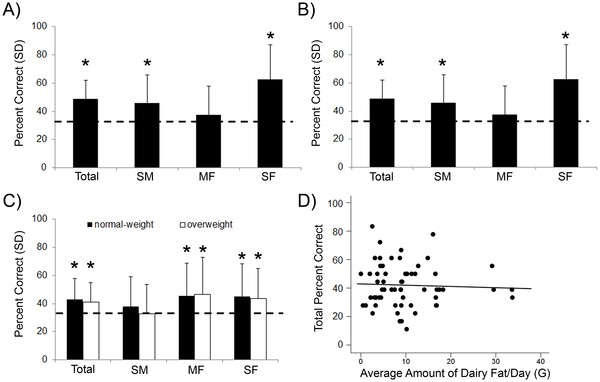
A new paper says the the human sense of smell can detect dietary fat in food.

As the most calorically dense nutrient, fat has been a desired energy source across much of human evolution - but those people who claim they want to eat like their ancient ancestors are doing themselves a huge disservice eating that way now. A diet high in fat today is a health problem but in the past it would have been advantageous to be able to detect sources of fat in food, just as sweet taste is thought to signal a source of carbohydrate energy, says Johan Lundström, PhD, a cognitive scientist at Monell Chemical Senses Center and senior author of a new paper on the topic.

Though media stories about obesity are still prevalent, what gets left out is that American obesity rates have stabilized.

It's unclear why. Some papers claim it was due to the lingering stagnant economy. People go out to eat less, they shop smarter. But a new paper claims it is health food advocacy that has done its job and the leveling off (and, in some demographics, decline) started during the better economy of the Bush years, when  more information and efforts were aimed at producing healthier food choices and eating habits.

So far, the Affordable Care Act and its mandate for insurance coverage has been a disaster. It isn't just that the website doesn't work, it's that the bulk of the people signing up for the program have simply switched from other insurance plans they already had, in order to get a subsidy. Relative to the population, very few people that wanted insurance were uninsured and so only about 11 percent of enrollments were actual uninsured people. It hasn't helped most uninsured people and without massive participation to offset higher costs, the insurance companies won't stay in: Aetna has left numerous state exchanges and says it may have to leave Obamacare entirely next year.

The climate is a sensitive balancing act. There are a lot of knobs turning, making the future difficult to model.

But trees have done a surprisingly good job adapting quickly to keep atmospheric carbon dioxide in a 'sweet' spot for plant life.

As most people know, the cycles of the past have shown that about 90,000 of every 100,000 years have been ice ages. And it's been 12,000 years since the last one. But a biological mechanism could explain how the Earth's atmospheric carbon dioxide and climate were stabilized over the past 24 million years, so things never got too drastic.

Diversity police regulate success by making overachievers victims of their own success. They spread quickly, preventing too much dominance by undercutting whatever gets ahead and enforcing lots of mediocre equivalence. They're pests.

The pests we're talking about are, of course, fungi in rainforests. They play a crucial role in biodiversity by spreading quickly between closely-packed plants of the same species - the success of these fungal diversity police makes sure nothing can be superior, and more species flourish.

Marijuana is enjoying a golden age of cultural advocacy, to such an extent that its medical benefits are exaggerated while the obvious impact on health is trivialized.