Banner
Pilot Study: Fibromyalgia Fatigue Improved By TENS Therapy

Fibromyalgia is the term for a poorly-understood condition where people experience pain and fatigue...

High Meat Consumption Linked To Lower Dementia Risk

Older people who eat large amounts of meat have a lower risk of dementia and cognitive decline...

Long Before The Inca Colonized Peru, Natives Had A Thriving Trade Network

A new DNA analysis reveals that long before the Incan Empire took over Peru, animals were...

Mesolithic People Had Meals With More Tradition Than You Thought

The common imagery of prehistoric people is either rooting through dirt for grubs and picking berries...

User picture.
News StaffRSS Feed of this column.

News Releases From All Over The World, Right To You... Read More »

Blogroll

Researchers from the University of Southern Denmark have discovered that the skin is capable of communicating with the liver. The discovery has surprised the scientists, and they say that it may help our understanding of how skin diseases can affect the rest of the body.

Professor Susanne Mandrup and her research group in collaboration with Nils Færgeman's research group at the Department of Biochemistry and Molecular Biology at the University of Southern Denmark was actually studying something completely different when they made the groundbreaking discovery: That the skin, which is the body's largest organ, can "talk" to the liver.

A human ancestor
dated to 1.34 million years old and belonging to Paranthropus boisei at the Olduvai Gorge World Heritage fossil site in Tanzania
is characterized by a "robust" jaw and skull bones and was a muscular creature with a gorilla-like upper body and more adaptive to its environment than previously thought, scientists have discovered.

The partial skeleton -- including arm, hand, leg and foot fragments -- represents one of the most recent occurrences of P. boisei before its extinction in East Africa.

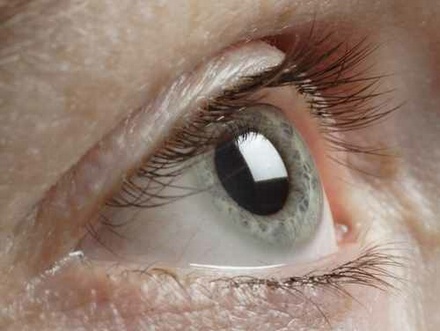
A breakthrough in understanding how cataracts form could be used to help prevent the world's leading cause of blindness, which currently affects nearly 20 million people worldwide. 

It has long been known that human eyes have a powerful ability to focus because of three kinds of crystallin proteins in their lenses, maintaining transparency via a delicate balance of both repelling and attracting light.

Two types of crystallin are structural, but the third – dubbed a "chaperone" – keeps the others from clumping into cataracts if they're modified by genetic mutation, ultraviolet light or chemical damage.

The image of robotics in popular culture is classic science fiction; cogwheels, pistons and levers with perhaps a layer of rubberized skin: miniaturized robots of the future will be "soft". 

"If I think of the robots of tomorrow, what comes to mind are the tentacles of an octopus or the trunk of an elephant rather than the mechanical arm of a crane or the inner workings of a watch. And if I think of micro-robots then I think of unicellular organisms moving in water. The robots of the future will be increasingly like biological organisms," explains Antonio De Simone of 
International School of Advanced Studies (SISSA)

Life grew as a result of natural processes that used Earth's raw materials.

Models of life's origins almost always look to minerals for such essential tasks as the synthesis of life's molecular building blocks or the supply of metabolic energy, but this assumes that the mineral species found on Earth today are much the same as they were during Earth's first 550 million years — the Hadean Eon — when life emerged.

A new analysis of Hadean mineralogy
published in American Journal of Science

Over a year after being launched, NASA's Van Allen Probes mission continues to unravel the mysteries of Earth's high-energy radiation belts that encircle our planet and pose hazards to orbiting satellites and astronauts - termed the Van Allen Radiation Belts.