Banner
Pilot Study: Fibromyalgia Fatigue Improved By TENS Therapy

Fibromyalgia is the term for a poorly-understood condition where people experience pain and fatigue...

High Meat Consumption Linked To Lower Dementia Risk

Older people who eat large amounts of meat have a lower risk of dementia and cognitive decline...

Long Before The Inca Colonized Peru, Natives Had A Thriving Trade Network

A new DNA analysis reveals that long before the Incan Empire took over Peru, animals were...

Mesolithic People Had Meals With More Tradition Than You Thought

The common imagery of prehistoric people is either rooting through dirt for grubs and picking berries...

User picture.
News StaffRSS Feed of this column.

News Releases From All Over The World, Right To You... Read More »

Blogroll

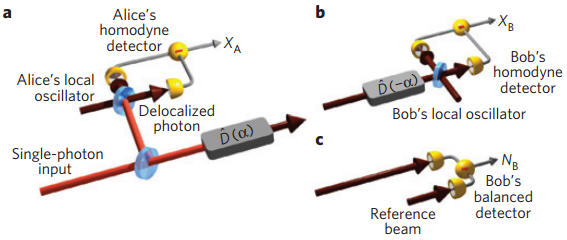
Since 1935, when Austrian physicist Erwin Schrödinger created his famous thought experiment about a cat that was both alive and dead, physicists have tried to create large scale systems to test how the rules of quantum mechanics apply to everyday objects.

Researchers say they have made a significant step forward in this direction by creating a large system that is in two substantially different states at the same time

Understanding Schrödinger's cat

A new paper in Biology Letters raises more questions about the benefits of vitamins as a health supplement.

High doses of dietary antioxidants such as vitamins are claimed to slow the process of cellular aging by lessening the damage to proteins, lipids and DNA caused by free radicals. Some research has found that the longevity of mice could be extended by administering particular vitamin supplements, despite the supplements' limited effectiveness in reducing free radical damage. However, the opposite was found to be true in voles in a new study.

The genetic sequence of the X chromosome, the female counterpart to the male-associated Y chromosome, reveals that large portions of the X have evolved to play a specialized role in sperm production.

Insect limbs can move without muscles – and a new study helps to explain how insects control their movements using a close interplay of neuronal control and 'clever biomechanical tricks', which may provide engineers with new ways to improve the control of robotic and prosthetic limbs.

Their work helps to explain how insects control their movements using a close interplay of neuronal control and 'clever biomechanical tricks,' says lead researcher Dr Tom Matheson, a Reader in Neurobiology at the University of Leicester.
The ancient Romans were the first to officially discovered that rotating crops improves plant nutrition and inhibits the spread of disease.

While it's common wisdom today, science is often about confirming why nature works the way it does. A new paper details profound effect crop rotation has on enriching soil with bacteria, fungi and protozoa. 

Soil was collected from a field near Norwich and planted with wheat, oats and peas. After growing wheat, it remained largely unchanged and the microbes in it were mostly bacteria. However, growing oat and pea in the same sample caused a huge shift towards protozoa and nematode worms. Soil grown with peas was highly enriched for fungi.
Researchers using  ‘metagenomics’,  the open-ended sequencing of DNA from samples without the need for culture or target-specific amplification or enrichment, have recovered tuberculosis (TB) genomes from the lung tissue of a 215-year old mummy using a technique known as metagenomics.