

Banner
Synchrotron Could Shed Light On Exotic Dark Photons

There are many hypothetical particles proposed to explain dark matter and one idea to explore how...

The Pain Scale Is Broken But This May Fix It

Chronic pain is reported by over 20 percent of the global population but there is no scientific...
Study Links Antidepressants, Beta-blockers and Statins To Increased Autism Risk

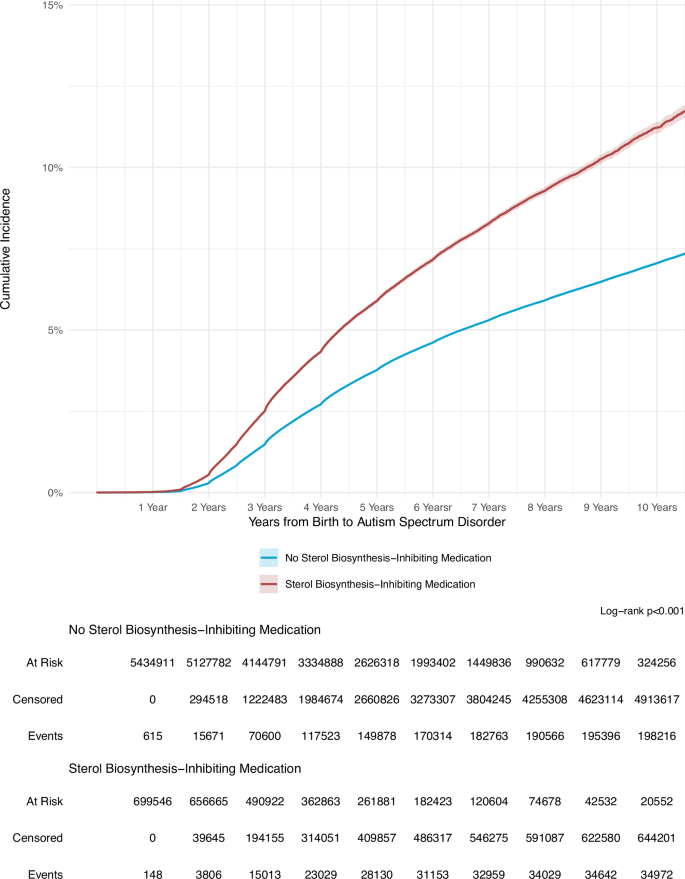
An analysis of 6.14 million maternal-child health records  has linked prescription medications...

Pilot Study: Fibromyalgia Fatigue Improved By TENS Therapy

Fibromyalgia is the term for a poorly-understood condition where people experience pain and fatigue...

User picture.
News StaffRSS Feed of this column.

News Releases From All Over The World, Right To You... Read More »

Blogroll

Millions of years ago, tiny animal thieves going by the alias protozoa held algae captive and then exploited and stole their genes for energy production, thereby evolving into a new and more powerful species.

But the little protozoan outlaws couldn't completely hide all evidence of the captive algae and have been effectively frozen in time - and then caught in the act by genetic sequencing. 

The protozoa captured genes for photosynthesis, the process of harnessing light to produce energy which is used by all plants and algae on earth. Scientists assume that quantum leaps of evolution occurred by one organism cannibalizing another, but hard evidence is rare.

When it comes to the number of pieces of information the mind can cope with before confusion sets in, the "magic" number is seven, psychologists have long said.  But did phone companies pick that because of the claim or did folk wisdom say it must be seven because that is what phone companies used?

In 1956, American psychologist George Miller published a paper, "The Magical Number Seven, Plus or Minus Two. Some Limits on Our Capacity for Processing Information", in Psychological Review, arguing the mind could cope with seven chunks of information.

Temperature rises are consistent with projections made in the IPCC's fourth assessment report (AR4) but satellite measurements show that sea levels are rising at a rate of 3.2 mm a year compared to the best estimate of 2 mm a year in the report, about 60 percent faster, says a new report. 

They used an analysis of global temperatures and sea-level data over the past two decades, comparing them both to projections made in the IPCC's third and fourth assessment reports. Results were obtained by taking averages from the five available global land and ocean temperature series.

Quasars are the luminous centers of distant galaxies powered by huge black holes.  Although black holes are noted for pulling material in, most quasars also accelerate some of the material around them and eject it at high speed.

Many theoretical simulations suggest that the impact of these outflows on the galaxies around them may resolve several enigmas in modern cosmology, including how the mass of a galaxy is linked to its central black hole mass, and why there are so few large galaxies in the Universe. However, whether or not quasars were capable of producing outflows powerful enough to produce these phenomena has remained unclear until now.

The newest Access to Medicine Index, which ranks pharmaceutical companies on their efforts to improve access to medicine in developing countries, shows that the industry, led by
GlaxoSmithKline, is doing more than critics claim.

The Access to Medicine Index is an independent initiative that provides insight into what the world's leading pharmaceutical companies are doing for the millions of people in developing countries who do not have reliable access to safe, effective and affordable medicines, vaccines and other health-related technologies. It is published every two years.

The Galapagos giant tortoise, the largest living species of tortoise (and in the top 10 reptiles), likes to move around. 

We know this because scientists with the Max Planck Institute for Ornithology and the Charles Darwin Foundation have used GPS technology and 3-D acceleration measurements to find out that the dominant male tortoise will wander up to 10 kilometers into the highlands of the island - but only the fully grown animals migrate, the young tortoises stay in the lowlands.

Why?  And why don't they rest during the dry season?  It's a Chelonoidis nigra mystery of science.



