Banner
Synchrotron Could Shed Light On Exotic Dark Photons

There are many hypothetical particles proposed to explain dark matter and one idea to explore how...

The Pain Scale Is Broken But This May Fix It

Chronic pain is reported by over 20 percent of the global population but there is no scientific...
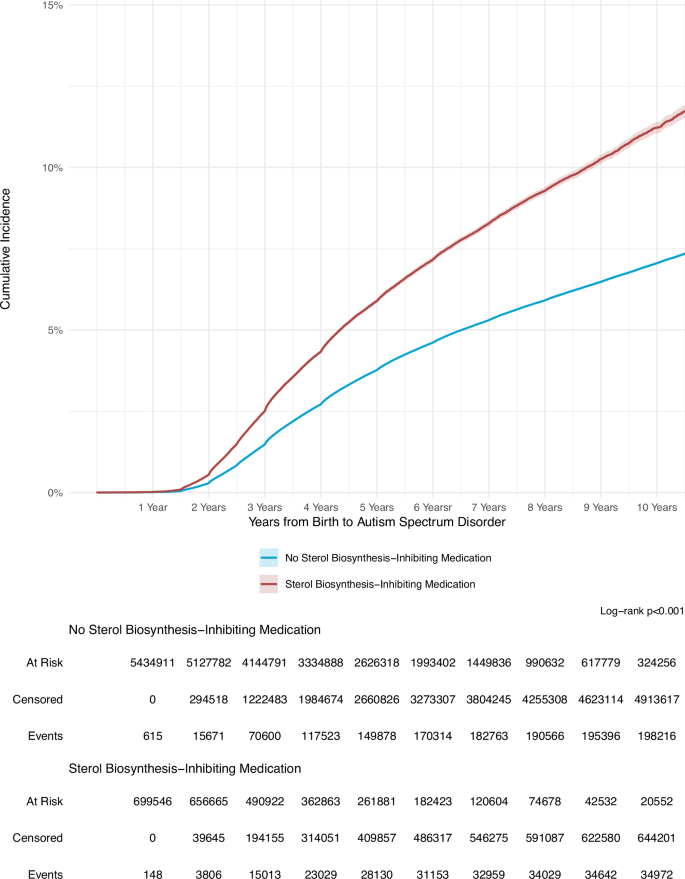
Study Links Antidepressants, Beta-blockers and Statins To Increased Autism Risk

An analysis of 6.14 million maternal-child health records  has linked prescription medications...

Pilot Study: Fibromyalgia Fatigue Improved By TENS Therapy

Fibromyalgia is the term for a poorly-understood condition where people experience pain and fatigue...

User picture.
News StaffRSS Feed of this column.

News Releases From All Over The World, Right To You... Read More »

Blogroll

An international team of researchers has resolved the evolutionary relationships of Necrolestes patagonensis, the so-called “grave robber” because of its burrowing and underground lifestyle. This much-debated fossil mammal from South America has been a paleontological riddle for 121 years but a recent fossil discovery and comparative anatomical analysis helped researchers to correctly place the strange 16-million-year-old Necrolestes, with its upturned snout and large limbs for digging, in the mammal evolutionary tree.

A new annual analysis has again attempted to determine whether society can achieve something similar to the a Rousseaunian social contract. In order to do this, the economists carried out an experiment that reproduced in a laboratory setting some of the important characteristics of the welfare state. 
We know brain activity changes many times over the course of a day. When listening, this oscillation synchronizes to the sounds we are hearing. Not only that, say researchers from the Max Planck Institute for Human Cognitive and Brain Sciences, this oscillation influences the way we listen.

Hearing abilities also oscillate and depend on the exact timing of one’s brain rhythms. This discovery that sound, brain, and behavior are so intimately coupled will help us to learn more about listening abilities in hearing loss and perhaps people who stutter.
Though breast cancer death rates have been in decline for 20 years, black women had higher death rates than other demographics in the newest Centers for Disease Control report covering 2005-2009. Breast cancer remains the most common cancer and is the second leading cause of cancer death among U.S. women, about 40,000 deaths annually.  
Human ancestors were making stone-tipped weapons 500,000 years ago at Kathu Pan 1, an archaeological site in South Africa.  The revelation pushes back the date for manufactured weapons another 200,000 years

Attaching stone points to spears - hafting - was an important advance in hunting for our early ancestors. Though hafted tools require a great deal of effort to manufacture, a sharp stone point on the end of a spear can increase its killing power and that shows strategic foresight.
The planetary nebula Abell 30 is located 5,500 light-years from Earth and it has given astronomers a lookl at a dying Sun-like star that came briefly back to life after giving up the stellar ghost, mimicking the possible fate our own Solar System faces in a few billion years.. 

 ‘Planetary nebula’ is the name given to the often-concentric shells of stellar material cast into space by dying stars. To astronomers of the 18th century, these objects looked like the colorful ‘blob’ of a planet through their telescopes, and the name stuck. Astronomers now know that as a star with less than eight times the mass of the Sun swells into a red giant towards the end of its life, its outer layers are expelled via pulsations and winds.