Palaeontologists have found that not all Easter eggs come from the same “parent” species - some could be from dinosaurs, including a new species from the Pyrenees. An international group of researchers has helped to determine that dinosaurs have shaped the Easter eggs we buy.
Scientists were investigating whether 70 million-year-old fossil eggs found in the Pyrenees were laid by birds, or their dinosaur ancestors - researchers from the University of Leicester extended the study further by comparing Easter egg shapes to those of birds’ and dino eggs.
Researchers have gotten some clues to primitive consciousness - thanks to anesthesia.
People are often groggy when waking from anesthesia, and sometimes struggle. A group of scientists believe they now know why this may occur: primitive consciousness emerges first.
Using brain imaging techniques in healthy volunteers, a team of scientists have now imaged the process of returning consciousness after general anesthesia. The emergence of consciousness was found to be associated with activations of deep, primitive brain structures rather than the evolutionary younger neocortex. They hope these results may represent an important step forward in the scientific explanation of human consciousness.
A previously unknown species of giant, feathered tyrannosaur has been discovered in China, making it the largest-known feathered animal, living or extinct.
Tyrannosaurus rex and its cousins lived until around 65 million years ago and earlier relatives are thought to have been much smaller than the T-Rex we have come to know, but this notion has been challenged by the discovery of three specimens of a new species of tyrannosauroid from the Lower Cretaceous, 125 million years ago. The dinosaur, Yutyrannus huali, whose name translates from Latin and Mandarin as ‘beautiful feathered tyrant’, shares some features with derived tyrannosaurs, but has three-fingered forelimbs and a typical theropod foot, like other early tyrannosaur relatives.
Most people don't know this, but there is a secret war going on in the animal kingdom; since before recorded history began, squirrels and rattlesnakes have been going at it. Over time, some squirrels have
even developed the ability to use rattlesnake scent as a means of concealing their own odor.
The "plumbing systems" that lie under volcanoes, the location and behavior of magma chambers on the Earth's mid-ocean ridge system, a vast chain of volcanoes along which the Earth forms new crust, could bring scientists closer to predicting large eruptions.
Researchers worked in Afar (Ethiopia) and Iceland, the only places where mid-ocean ridges appear above sea level. Volcanic ridges (or "spreading centers") occur when tectonic plates rift or pull apart. Magma injects itself into weaknesses in the brittle upper crust, erupting as lava and forming new crust upon cooling.
Magma chambers work like plumbing systems, channeling pressurized magma through networks of underground "pipes".
Robots don't understand subtlety - what is effortless to a human, like pouring juice into a cup, is a challenge for a machine. While one hand holds the glass bottle firmly, the other one must gently grasp the cup.
Researchers at Saarland University together with associates in Bologna and Naples have developed a robotic hand that can accomplish both tasks and the actuator is barely larger than a human arm. They use a novel string actuator, making use of small electric motors to twist strings, making the new robotic hand suitable as a helper around the house or in catastrophic scenarios.
The robotic hand was recently presented during a meeting at the Forschungszentrum Informatik in Karlsruhe.


 Synchrotron Could Shed Light On Exotic Dark Photons
 The Pain Scale Is Broken But This May Fix It
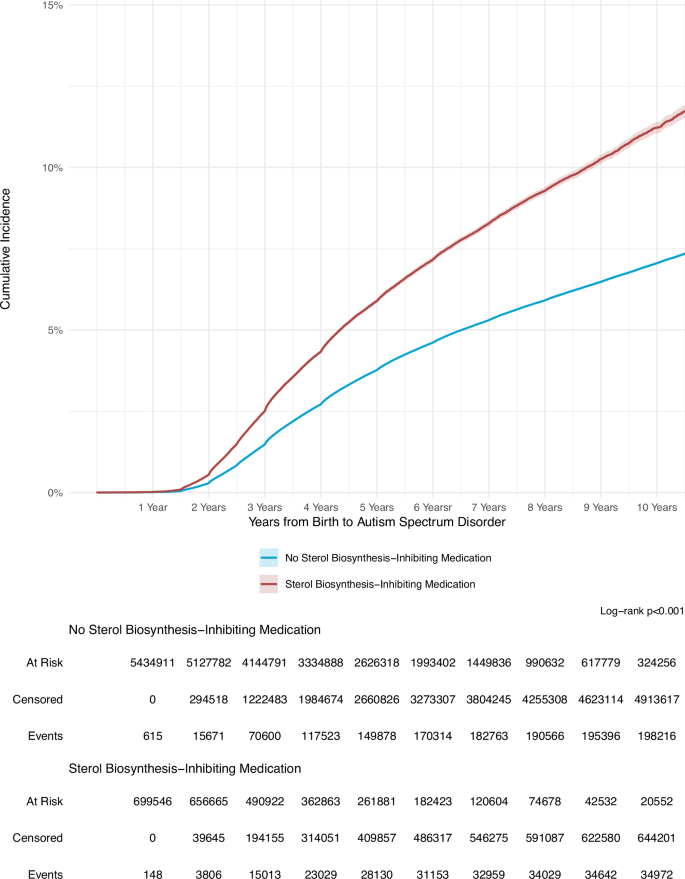 Study Links Antidepressants, Beta-blockers and Statins To Increased Autism Risk
 Pilot Study: Fibromyalgia Fatigue Improved By TENS Therapy