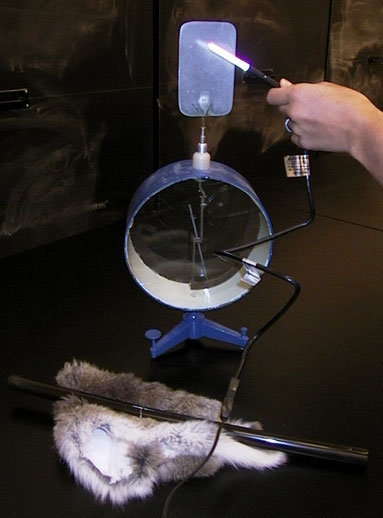
By way of the classical photoeffect, Einstein proved in 1905 that light also has particle character. However, with extremely high light intensities, remarkable things happen in the process, say scientists of the Physikalisch-Technische Bundesanstalt (PTB) and colleagues at FLASH in Hamburg, the first free-electron laser (FEL) for soft X-rays worldwide.
Every brain has a soundtrack. Its tempo and tone will vary, depending on mood, frame of mind, and other features of the brain itself. When that soundtrack is recorded and played back -- to an emergency responder, or a firefighter -- it may sharpen their reflexes during a crisis, and calm their nerves afterward.
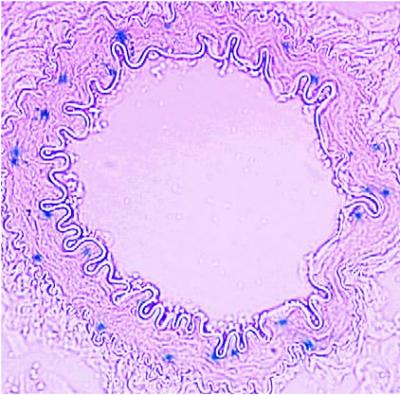
In trying to understand the role of prostaglandins – a family of fatty compounds key to the cardiovascular system – in blood pressure maintenance, researchers at the University of Pennsylvania School of Medicine and colleagues discovered that mice that lack the receptor for one type of prostaglandin have lower blood pressure and less atherosclerosis than their non-mutant brethren.
The results indicate that the normal role for the type of prostaglandin studied, PG F2-alphais to increase blood pressure and accelerate atherosclerosis, at least in rodents, and suggest that targeting this pathway could represent a novel therapeutic approach to cardiovascular disease.
A preliminary study on the use of stem cells obtained from a patient's own adipose tissue in the treatment of multiple sclerosis (MS) has shown promising results. The three case studies, described in BioMed Central's open access Journal of Translational Medicine support further clinical evaluation of stromal vascular fraction (SVF) cells in MS and other autoimmune conditions.
The calming neurological effects of nicotine have been demonstrated in a group of non-smokers during anger provocation. Researchers writing in Behavioral and Brain Functions suggest that nicotine may alter the activity of brain areas that are involved in the inhibition of negative emotions such as anger.
In the 19th century, the Rosetta Stone allowed scholars to translate symbols left by an ancient civilization and decipher the meaning of Egyptian hieroglyphics.
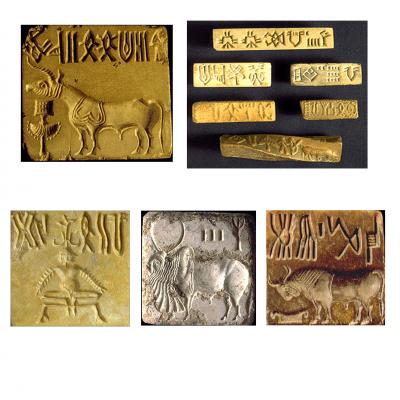
But many mysteries remain about the symbols found on other ancient artifact, including those of a people that inhabited the Indus valley on the present-day border between Pakistan and India. Some experts question whether the symbols represent a language at all, or are merely pictograms that bear no relation to the language spoken by their creators.


 Here's Where Your Backyard Was 300 Million Years Ago
 Convergent Evolution Cheat Sheet Now 120 Million Years Old
 Synchrotron Could Shed Light On Exotic Dark Photons
 The Pain Scale Is Broken But This May Fix It