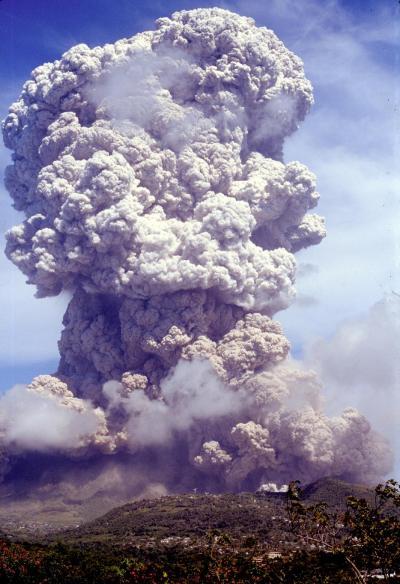
It sounds like a B movie starring Adrienne Barbeau (oops, that's "Amazon Women In The Avacado Jungle Of Death") but this international team of researchers have instead been collecting imaging data on the Soufriere Hills Volcano in Montserrat to understand the internal structure of the volcano and how and when it erupts.
"Using land-based measurement, we can see that over the time periods when the magma is erupting, the ground surface deflates into a bowl of subsidence and when the magma is sealed underground, the ground surface inflates like a balloon," says Barry Voight, professor emeritus of geosciences, Penn State. "The interesting thing is that much more magma is erupting than appears represented by the subsiding bowl."
A research team led by Professor Michael Chazan, director of the University of Toronto's Archaeology Centre, has discovered the earliest evidence of our cave-dwelling human ancestors at the Wonderwerk Cave in South Africa.
Stone tools found at the bottom level of the cave — believed to be 2 million years old — show that human ancestors were in the cave earlier than ever thought before. Geological evidence indicates that these tools were left in the cave and not washed into the site from the outside world.
Archaeological investigations of the Wonderwerk cave — a South African National Heritage site due to its role in discovering the human and environmental history of the area — began in the 1940s and research continues to this day.
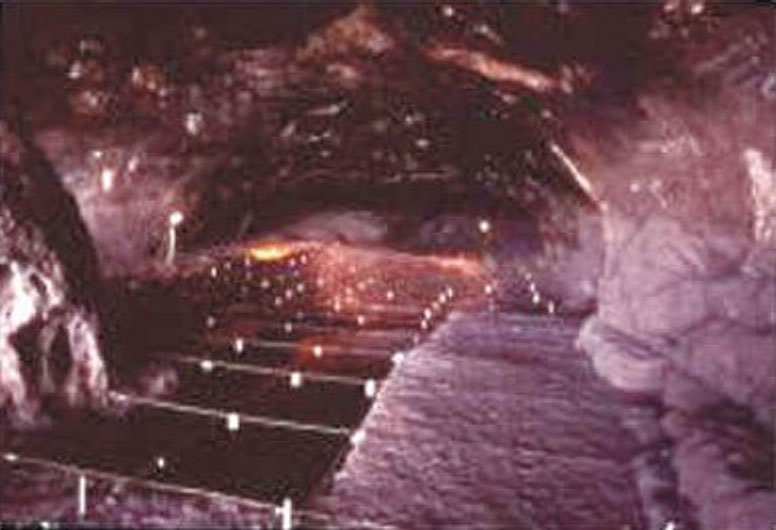
Deep inside the Frasassi cave system in Italy and more than 1,600 feet below the Earth's surface, divers found filamentous ropes of microbes growing in the cold water, according to a team of Penn State researchers.
The Frasassi cave system is located north of Rome and south of Venice in the Marche region. These limestone caves are like New Mexico's Carlsbad Caverns and Lechuguilla Cave, but in those caves, sulfur entered the caves from oil and gas reserves, while in Italy, the sulfur source is a thick gypsum layer below. Having sulfur in the environment allows sulfur-using organisms to grow.
In small towns in the Midwestern United States, people who eat out often at buffets and cafeterias and who perceive their community to be unpleasant for physical activity are more likely to be obese, says a studt in Preventive Medicine.
Thirty percent of U.S. adults are obese, which increases their risk for health conditions such as hypertension, type 2 diabetes, heart disease and stroke. Rural adults have higher levels of obesity and are less active in their leisure time than urban and suburban U.S. adults, says Ross Brownson, Ph.D., senior author of the study and a professor at the George Warren Brown School of Social Work at Washington University in St. Louis..
When most people think of climate change, they think of it as another term for global warming. But climate change replaced global warming as a term because the warming has never been global and it wasn't just warming that impacted human civilization - it was cooling too.
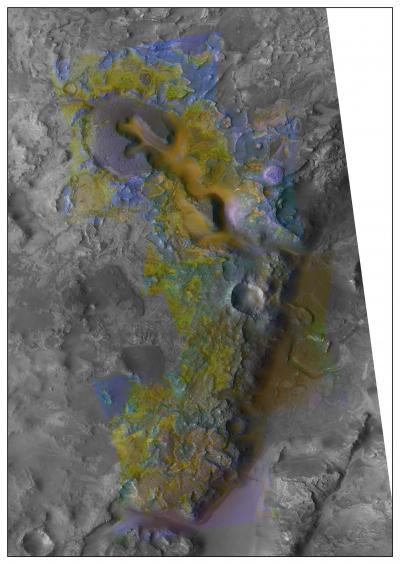
Over the last several years, scientists have built a very convincing case that Mars hosted water, at least early in its history. Recent observations from the Mars Phoenix lander and other spacecraft show that the planet still holds vast deposits of water as ice at its poles and in soil-covered glaciers in the mid-latitudes.
What is less known is how much water occupied the red planet and what happened to it during its geological march to the present. Mostly, evidence has pointed to a period when clay-rich minerals were formed by water, followed by a drier time, when salt-rich, acidic water affected much of the planet. Assuming that happened, the thinking goes, it would have been difficult for life, if it did exist, to have survived and for scientists to find traces of it.


 Synchrotron Could Shed Light On Exotic Dark Photons
 The Pain Scale Is Broken But This May Fix It
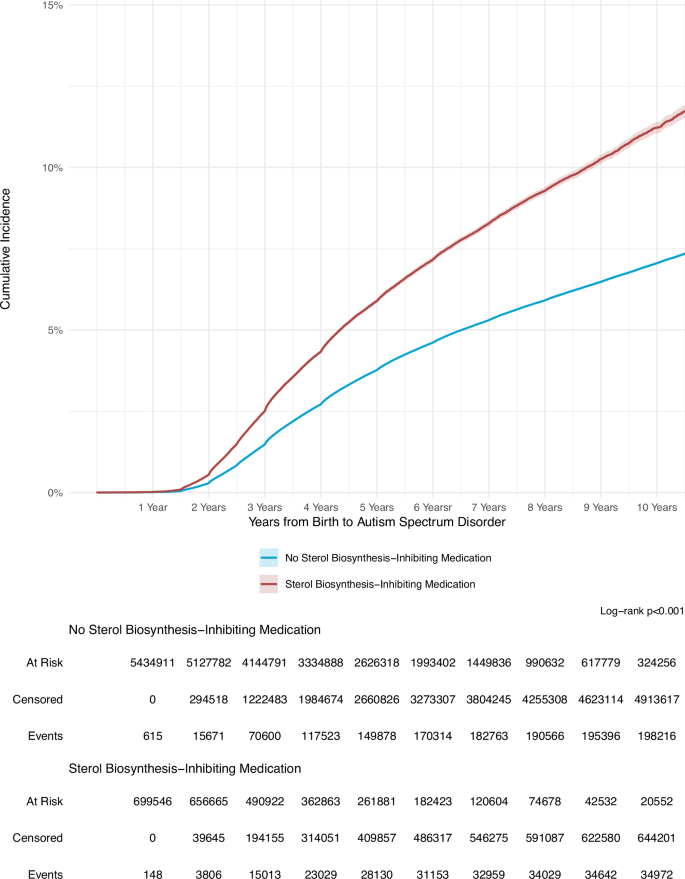 Study Links Antidepressants, Beta-blockers and Statins To Increased Autism Risk
 Pilot Study: Fibromyalgia Fatigue Improved By TENS Therapy