Banner
Synchrotron Could Shed Light On Exotic Dark Photons

There are many hypothetical particles proposed to explain dark matter and one idea to explore how...

The Pain Scale Is Broken But This May Fix It

Chronic pain is reported by over 20 percent of the global population but there is no scientific...
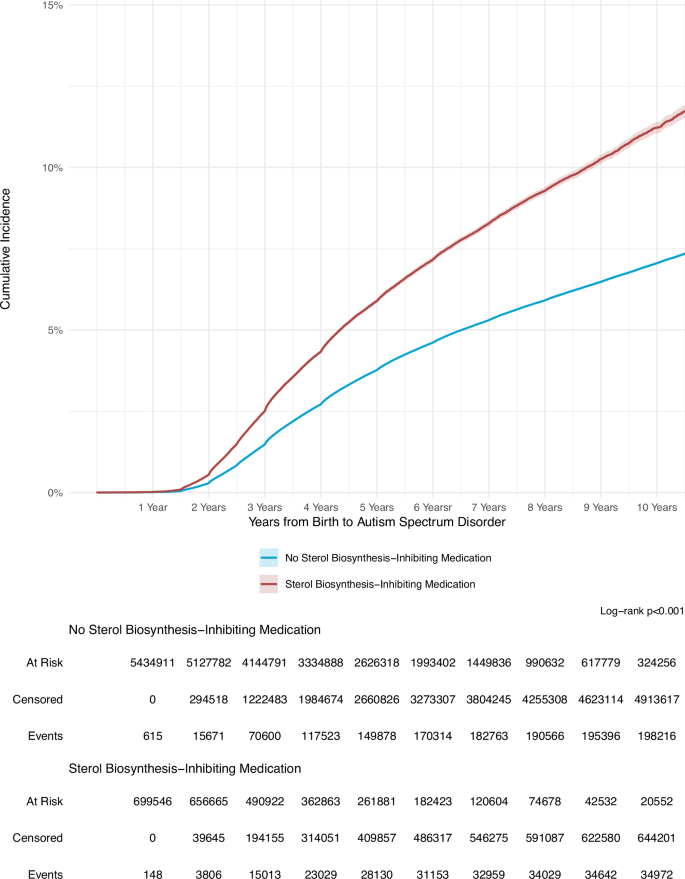
Study Links Antidepressants, Beta-blockers and Statins To Increased Autism Risk

An analysis of 6.14 million maternal-child health records  has linked prescription medications...

Pilot Study: Fibromyalgia Fatigue Improved By TENS Therapy

Fibromyalgia is the term for a poorly-understood condition where people experience pain and fatigue...

User picture.
News StaffRSS Feed of this column.

News Releases From All Over The World, Right To You... Read More »

Blogroll
If you're a Spider-Man reader, you are certainly aware of “noblesse oblige” - the idea that with great power comes great responsibilities.   And you may believe that if you had great power you would use it compassionately - but it's unlikely you think anyone else wielding great power will act in a compassionate way.

The term was created because it is often perceived that increased power makes people - that is, other, less noble people - less likely to use compassion.   Psychologist Gerben A. van Kleef (University of Amsterdam) and his colleagues from University of California, Berkeley, examined how power influences emotional reactions to the suffering of others.
All spiritual experiences are based in the brain. That statement is truer than ever before, according to a University of Missouri neuropsychologist. An MU study has data to support a neuropsychological model that proposes spiritual experiences associated with selflessness are related to decreased activity in the right parietal lobe of the brain. The study is one of the first to use individuals with traumatic brain injury to determine this connection. Researchers say the implication of this connection means people in many disciplines, including peace studies, health care or religion can learn different ways to attain selflessness, to experience transcendence, and to help themselves and others.
Scientists from Imperial College London and the University of Edinburgh say they have shown that tiny crystals found inside bacteria provide a magnetic compass to help them navigate through sediment to find the best food and it provides fresh clues to explain biomagnetism – a phenomenon in which some birds, insects and marine life navigate using the magnetic field that encompasses the Earth.

Researchers say their study, published in the Journal of the Royal Society Interface, focuses on magnetotactic bacteria, which contain chains of magnetic crystals, called magnetosomes. They exist all over the globe, living in lake and pond sediments and in ocean coastal regions. 
Found in the nearby Large Magellanic Cloud, 30 Doradus is one of the largest massive star forming regions close to the Milky Way. Enormous stars in 30 Doradus, also known as the Tarantula Nebula, are producing intense radiation and searing winds of multimillion-degree gas that carve out gigantic bubbles in the surrounding cooler gas and dust. 

Other massive stars have raced through their evolution and exploded catastrophically as supernovae, expanding these bubbles into X-ray- brightened superbubbles. They leave behind pulsars as beacons of their former lives and expanding supernova remnants that trigger the collapse of giant clouds of dust and gas to form new generations of stars. 
On its opening day, the London Millennium Bridge experienced unexpected swaying due to the large number of people crossing it. A new study finally explains the Millennium Bridge 'wobble' by concluding that humans did not walk the way engineers would have preferred.

It has generally been thought the Millennium Bridge 'wobble' was due to pedestrians synchronizing their footsteps with the bridge motion. However, this is not supported by measurements of the phenomenon on other bridges.
"This article says most people die in bed.  I figure if I stay out of bed, I'm safe." - Get Shorty

A map of natural hazard mortality in the United States has been produced and is featured in the  International Journal of Health Geographics.  It gives a county-level representation of the likelihood of dying as the result of natural events such as floods, earthquakes or extreme weather.