Banner
Synchrotron Could Shed Light On Exotic Dark Photons

There are many hypothetical particles proposed to explain dark matter and one idea to explore how...

The Pain Scale Is Broken But This May Fix It

Chronic pain is reported by over 20 percent of the global population but there is no scientific...
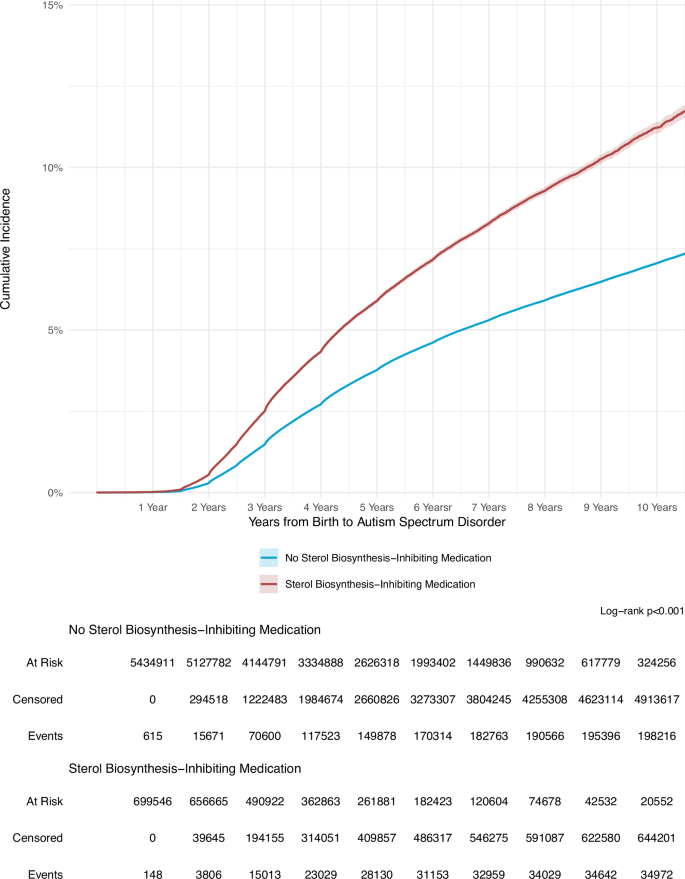
Study Links Antidepressants, Beta-blockers and Statins To Increased Autism Risk

An analysis of 6.14 million maternal-child health records  has linked prescription medications...

Pilot Study: Fibromyalgia Fatigue Improved By TENS Therapy

Fibromyalgia is the term for a poorly-understood condition where people experience pain and fatigue...

User picture.
News StaffRSS Feed of this column.

News Releases From All Over The World, Right To You... Read More »

Blogroll

You're in the store and you have a choice between buying Gears Of War 2, with its innovative third-person tactical action gameplay and jaw-dropping graphics with effects like ambient occlusion, dynamic shadows and advanced destructible environments, or, oh yeah, some jewelry thing your wife mumbled something about wanting for Christmas.

What goes through your mind as you consider these tough choices?  And, of more importance to retailers, how can they manipulate this process for their benefit?  

A possible new therapeutic target for pancreatic cancer, the most lethal form of human cancer, has been identified in the proteins whose DNA recipe comes from the gene named "Seven-In-Absentia," according to researchers at the American Society for Cell Biology (ASCB) 48th Annual Meeting, Dec. 13-17, 2008 in San Francisco. In their studies with Drosophila melanogaster at the Mayo Clinic College of Medicine in Minnesota, scientists found a link between the "Seven-In-Absentia" or SINA gene and the aggressive cellular transformation, oncogenesis and metastasis that characterize pancreatic cancer. Scientists already knew that a mutation in the K-RAS gene underlies the abnormal, excessive cell growth of pancreatic cancer.
NASA's Hubble Space Telescope has discovered carbon dioxide in the atmosphere of a planet orbiting another star.    The Jupiter-sized planet, called HD 189733b, is too hot for life, but the Hubble observations are a proof-of-concept demonstration that the basic chemistry for life can be measured on planets orbiting other stars. Organic compounds also can be a by-product of life processes and their detection on an Earthlike planet someday may provide the first evidence of life beyond our planet. 

Previous observations of HD 189733b by Hubble and the Spitzer Space Telescope found water vapor. Earlier this year, Hubble found methane in the planet's atmosphere. 
Stepping onto a scale after a calorie-filled holiday season isn't an activity many 21st-century Americans relish.

But in the late 19th century, scales were all the rage at festive gatherings — the 1800s' answer to Guitar Hero.

"A family would think it fun to weigh themselves before and after a big holiday dinner to see how much they had gained," said Deborah I. Levine, Ph.D., an Andrew W. Mellon Postdoctoral Fellow in the Modeling Interdisciplinary Inquiry Fellowship Program in the Humanities and Social Sciences in Arts&Sciences at Washington University in St. Louis.

"Knowing your weight was a novelty, a kind of parlor trick, before scales became widely available through mass production," said Levine.
When faced with a difficult decision, we try to come up with the best choice by carefully considering all of the options, maybe even resorting to lists and lots of sleepless nights. So it may be surprising that recent studies have suggested that the best way to deal with complex decisions is to not think about them at all—that unconscious thought will help us make the best choices. Although this may seem like an appealing strategy, new research in Psychological Science cautions that there are limitations in the efficacy of unconscious thought making the best decisions.
Researchers at New York University's Center for Neural Science and the Baylor College of Medicine have identified a protein that when removed from mice results in behaviors that are akin to those with autism and obsessive-compulsive disorders. Their findings, which appear in the latest issue of the journal Neuron, may enhance our understanding of these and other neurological disorders.