A detailed analysis of the measurements of five different satellites has revealed the existence of the warm plasma cloak, a new region of the magnetosphere, which is the invisible shield of magnetic fields and electrically charged particles that surround and protect Earth from the onslaught of the solar wind.
The study was conducted by a team of scientists headed by Charles "Rick" Chappell, research professor of physics and director of the Dyer Observatory at Vanderbilt University and published this fall in the space physics section of the Journal of Geophysical Research. The northern and southern polar lights – aurora borealis and aurora australis – are the only parts of the magnetosphere that are visible, but it is a critical part of Earth's space environment.
It's the age-old conundrum for potential Prius owners - emit CO2 and cause global warming using combustion engines or pollute the ground and water with acid rain due to batteries. Climate scientists at Cardiff have found a way to stop having the environmental money maker for the 2000s fighting against the environmental moneymaker of the 1980s - climate change is hampering acid rain recovery, they say.
Yes, wet weather in Wales is keeping rivers from getting better.
The research by Professor Steve Ormerod and Dr Isabelle Durance of the School of Biosciences is based on observations over a 25 year period around Llyn Brianne in mid-Wales. Their findings are published online today in the British Ecological Society's Journal of Applied Ecology.
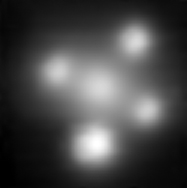
A team of astronomers from Europe and the US studied the "Einstein Cross", a famous cosmic mirage. This cross-shaped configuration consists of four images of a single very distant source. The multiple images are a result of gravitational lensing by a foreground galaxy, an effect that was predicted by Albert Einstein as a consequence of his theory of general relativity. The light source in the Einstein Cross is a quasar approximately ten billion light-years away, whereas the foreground lensing galaxy is ten times closer. The light from the quasar is bent in its path and magnified by the gravitational field of the lensing galaxy.
The best flame retardant for your Christmas tree is still plain old water.
Worse, researchers have determined that some flame retardants not only don't work on cut Christmas trees, they actually sped up the drying process and made trees more flammable.
Drs. Gary Chastagner, professor of plant pathology at Washington State University's Puyallup Research Center, and Eric Hinesley, professor of horticulture at North Carolina State University, tested two flame retardants on Douglas-fir and Fraser fir, two of the favorite Christmas tree species in the United States.
There are hurdles to clear before malaria elimination can be achieved. A supplement published in Malaria Journal features a series of articles reviewing the many aspects of the research agenda for global malaria elimination.
Astronomy&Astrophysics is publishing spectroscopic observations with NASA's space-based Far-Ultraviolet Spectroscopic Explorer (FUSE) of the white dwarf KPD 0005+5106. The team of German and American astronomers who present these observations show that this white dwarf is among the hottest stars known so far, with a temperature of 200,000 K at its surface. It is so hot that its photosphere exhibits emission lines in the ultraviolet spectrum, a phenomenon that has never been seen before. These emission features stem from extremely ionized calcium (nine-fold ionized, i.e., CaX), which is the highest ionization stage of a chemical element ever discovered in a photospheric stellar spectrum.


 Synchrotron Could Shed Light On Exotic Dark Photons
 The Pain Scale Is Broken But This May Fix It
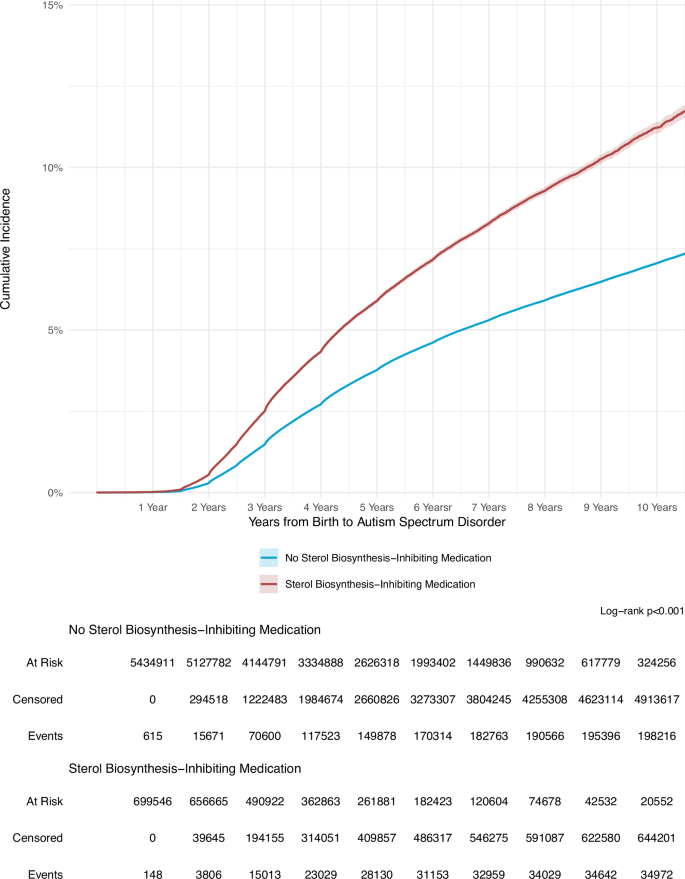 Study Links Antidepressants, Beta-blockers and Statins To Increased Autism Risk
 Pilot Study: Fibromyalgia Fatigue Improved By TENS Therapy