Banner
Synchrotron Could Shed Light On Exotic Dark Photons

There are many hypothetical particles proposed to explain dark matter and one idea to explore how...

The Pain Scale Is Broken But This May Fix It

Chronic pain is reported by over 20 percent of the global population but there is no scientific...

Study Links Antidepressants, Beta-blockers and Statins To Increased Autism Risk

An analysis of 6.14 million maternal-child health records  has linked prescription medications...

Pilot Study: Fibromyalgia Fatigue Improved By TENS Therapy

Fibromyalgia is the term for a poorly-understood condition where people experience pain and fatigue...

User picture.
News StaffRSS Feed of this column.

News Releases From All Over The World, Right To You... Read More »

Blogroll
Media coverage of clinical trials does not contain the elements readers require to make informed decisions. A comparison of the coverage received by pharmaceutical and herbal remedy trials, reported in BMC Medicine, has revealed that it is rarely possible for the lay public to assess the credibility of the described research.
Bone growth is controlled in the gut through serotonin, the same naturally present chemical used by the brain to influence mood, appetite and sleep, according to a new discovery from researchers at Columbia University Medical Center. Until now, the skeleton was thought to control bone growth, and serotonin was primarily known as a neurotransmitter acting in the brain. This new insight could transform how osteoporosis is treated in the future by giving doctors a way to increase bone mass, not just slow its loss. Findings are reported in the Nov. 26, 2008 issue of Cell.
Enormous cave bears, Ursus spelaeus, that once inhabited a large swathe of Europe, from Spain to the Urals, died out 27,800 years ago, around 13 millennia earlier than was previously believed, scientists have reported.  

Despite over 200 years of scientific study – beginning in 1794 when a young anatomist, J. Rosenmüller, first described bones from the Zoolithenhöhle in Bavaria as belonging to a new extinct species, which he called cave bear – the timing and cause of its extinction remain controversial.
Scientists have detected an organic sugar molecule that is directly linked to the origin of life, in a region of our galaxy where habitable planets could exist.  The international team of researchers, including a researcher at University College London (UCL), used the IRAM radio telescope in France to detect the molecule in a massive star forming region of space, some 26000 light years from Earth.
 
The Secretariat of the Joint United Nations Programme on HIV/AIDS (UNAIDS) has lost valuable ground by ignoring for years the contribution of long-term concurrent relationships to Africa's AIDS epidemic, claims says Helen Epstein, an independent consultant on public health in developing countries, ahead of World AIDS Day on British Medical Journal (www.bmj.com) today.
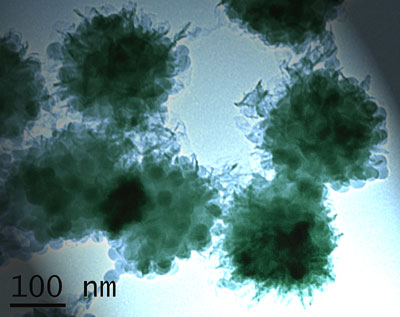
Research chemists at the University of Warwick have devised a process which covers small particles of polymer with a layer of silica-based nanoparticles and provides a versatile material that can be used to create a range of high performance materials - like self healing paints or even packaging that can be tailored to let precise levels of water, air or both pass in a particular direction.