Banner
Pilot Study: Fibromyalgia Fatigue Improved By TENS Therapy

Fibromyalgia is the term for a poorly-understood condition where people experience pain and fatigue...

High Meat Consumption Linked To Lower Dementia Risk

Older people who eat large amounts of meat have a lower risk of dementia and cognitive decline...

Long Before The Inca Colonized Peru, Natives Had A Thriving Trade Network

A new DNA analysis reveals that long before the Incan Empire took over Peru, animals were...

Mesolithic People Had Meals With More Tradition Than You Thought

The common imagery of prehistoric people is either rooting through dirt for grubs and picking berries...

User picture.
News StaffRSS Feed of this column.

News Releases From All Over The World, Right To You... Read More »

Blogroll

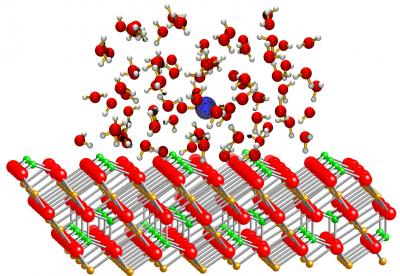
Researchers at Pacific Northwest National Laboratory are uniting theory, computation and experiment to discover exactly how heavy elements, such as uranium and technetium, interact in their environment.

As part of that effort, scientists have combined sensitive experimental measurements with fi rst principle electronic structure calculations to measure, and to really understand, the structural and bonding parameters of uranyl, the most common oxidation state of uranium in systems containing water.

The insights were achieved by PNNL scientist Bert de Jong and associates Gary Groenewold of Idaho National Laboratory and Michael Van Stipdonk of Wichita State University, employing the supercomputing resources of the William R.

Errors in the genetic code can give rise to cancer and a host of other diseases, but finding these errors can be more difficult than looking for the proverbial needle in the haystack. Now, scientists at Johns Hopkins have uncovered how the tiny protein-machines in cells tasked to search for such potentially life-threatening genetic damage actually recognize DNA errors.

Appearing online next week in Nature, the Hopkins team describes how the UDG enzyme (for uracil DNA glycosylase) scrutinizes the shape of DNA building blocks by holding onto them and testing their fit into a specially sized pocket. The UDG pocket holds onto mistakes only — the enzyme loses its grip on the right building blocks, which fall back in line with the rest of the DNA.

Do bats use their ultrasonic echolocation calls to recognize their own species?

A new study in the Journal of Biogeography by Danilo Russo and colleagues suggests that this is certainly the case for Rhinolophidae - horseshoe bats. These bats find their way in the dark and detect insect prey by emitting long ultrasound calls mainly made of a constant frequency. Different rhinolophid species show different frequency values. It has been proposed that such differences are large enough to allow recognition of conspecifics.

The study proved that in Sardinia, Mediterranean (Rhinolophus euryale) and lesser (R.. hipposideros) horseshoe bats show divergence in call frequency, spacing them out more than their conspecifics living in peninsular Italy (i.e. on the mainland).

Scientists at Pacific Northwest National Laboratory have discovered a way to increase the sensitivity of test strips that will enable creation of a portable biosensor that can address a major concern associated with incidents involving chemical or nerve agents - the need to quickly distinguish between individuals who have been exposed and the "worried well."

The sensor components resemble a pregnancy test strip and a small glucose testing meter. Its development will be discussed by principal investigator Yuehe Lin at the national meeting of the American Chemical Society.

Every disease has biomarkers, a change in the proteins that announces something is wrong.

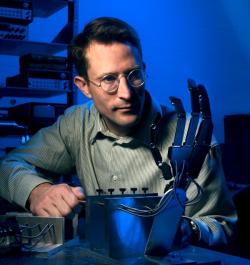
Combine a mechanical arm with a miniature rocket motor: The result is a prosthetic device that is the closest thing yet to a bionic arm.

A prototype of this radical design has been successfully developed and tested by a team of mechanical engineers at Vanderbilt University as part of a $30 million federal program to develop advanced prosthetic devices.

“Our design does not have superhuman strength or capability, but it is closer in terms of function and power to a human arm than any previous prosthetic device that is self-powered and weighs about the same as a natural arm,” says Michael Goldfarb, the professor of mechanical engineering who is leading the effort.


Michael Goldfarb, professor of mechanical engineeri

Without the heartbreak of ended relationships, half of popular music would cease to exist. Everyone has had one but it turns out it probably wasn't so bad - especially if you thought it would be horrible.

A new Northwestern University study shows that lovers, even those madly in love, do much better following a breakup than they imagined they would.

In other words, participants who forecast how badly they would feel over a breakup with a partner actually felt much less distress than they had predicted in the days prior to the relationship’s demise.