Banner
Pilot Study: Fibromyalgia Fatigue Improved By TENS Therapy

Fibromyalgia is the term for a poorly-understood condition where people experience pain and fatigue...

High Meat Consumption Linked To Lower Dementia Risk

Older people who eat large amounts of meat have a lower risk of dementia and cognitive decline...

Long Before The Inca Colonized Peru, Natives Had A Thriving Trade Network

A new DNA analysis reveals that long before the Incan Empire took over Peru, animals were...

Mesolithic People Had Meals With More Tradition Than You Thought

The common imagery of prehistoric people is either rooting through dirt for grubs and picking berries...

User picture.
News StaffRSS Feed of this column.

News Releases From All Over The World, Right To You... Read More »

Blogroll

Researchers have found native gold, silver and platinum salts in the dust of decayed stumps. A ton of their ashes contains 3 kilograms of silver, nearly 200 milligrams of gold and 5 grams of platinum.

These biogeochemical anomalies in complex ore deposit regions were formed by microbes and trees, which act as "gold-diggers" and draw soluble salts out of the soil and then die off, leaving behind the concentrate with “enormous” precious metals content.

The oxidation zone of some ore bodies is very close to the ground surface, within reach of tree roots. That is why, the researchers believe, the soil contains almost as much noble elements as the ore does. For centuries, trees and microorganisms gradually sucked them out of the depth and laid in the soil.

Researchers have determined that 97.9 percent of all white rice is derived from a mutation (a deletion of DNA) in a single gene originating in the Japonica subspecies of rice.

Their report, published in the journal PloS Genetics, suggests that early farmers favored, bred and spread white rice around the world.

The researchers report that this predominant mutation is also found in the Indica subspecies of white rice. They have found a second independent mutation (a single DNA substitution) in the same gene in several Aus varieties of rice in Bangladesh, accounting for the remaining 2.1 percent of white rice varieties. Neither of these two mutations is found in any wild red rice species.

Exploring life in the North Atlantic Ocean at various depths of 800 to 3,500 metres, a team of 31 scientists are returning from a five-week scientific expedition which has surfaced a wealth of new information and insights, stunning images and marine life specimens, with one species thought to be new to science.

Professor Monty Priede, Director of the University’s highly-acclaimed Oceanlab, along with colleague Dr Nicola King, and students Jessica Craig, Claudia Alt and James Hawkins, are part of the science team on board the ship.

Professor Priede said: “It is like surveying a new continent half way between America and Europe. We can recognise the creatures, but familiar ones are absent and unusual ones are common.

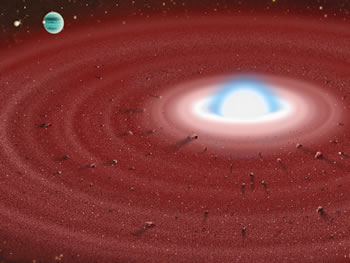
The chemical fingerprint of a burned-out star indicates that Earth-like planets may not be rare in the universe and could give clues to what our solar system will look like when our sun dies and becomes a white dwarf star some five billion years from now.

Astronomers from UCLA report that a white dwarf star known as GD 362, which is surrounded by dusty rings similar to those of Saturn, has been contaminated by a large asteroid that left more than a dozen observable chemical elements in the white dwarf's atmosphere. Such an observation is unprecedented in astronomy.

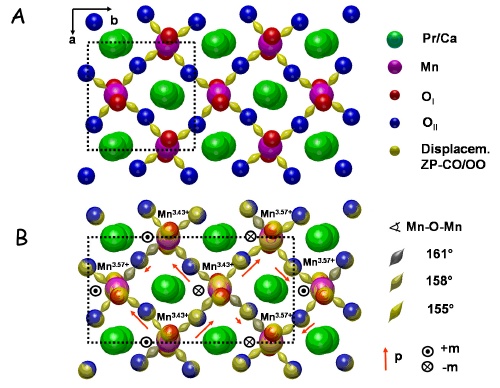
Some materials change their electrical resistance in the presence of an external electromagnetic field. This concept is fundamental to data storage. Understanding large resistance changes, known as colossal magnetoresistance, could lead to new devices with increased data density and reduced power requirements.

"This is an extremely important piece of work with broad potential application in developing the next generation of electronic and data-storage devices," said Brookhaven physicist Yimei Zhu.

The Brookhaven scientists were studying crystalline perovskite manganites that had been doped with extra charge carriers - electrons or "holes" (the absence of electrons) - using various state-of-the-art electron microscopy techniques.

Six American high-school students took the top honors in the 2007 International Linguistics Olympiad in St. Petersburg, Russia earlier this month. This year was the first time a delegation represented the United States at the annual competition. Their victory brings a new focus on computational linguistics.

This year's International Olympiad featured 15 teams representing 9 different countries, including the Netherlands, Russia and Spain. Competitors were given problem sets consisting of sentences in languages most people are not familiar with, including: Tatar; Georgian; a language spoken by indigenous people in Bolivia called Movima; the Papua New Guinean language Ndom; Hawaiian; Turkish; and their English translations.