Banner
How To Overcome Leadership Battles

In times of social rancor and strife, most will fight each other, but societies are saved by those...
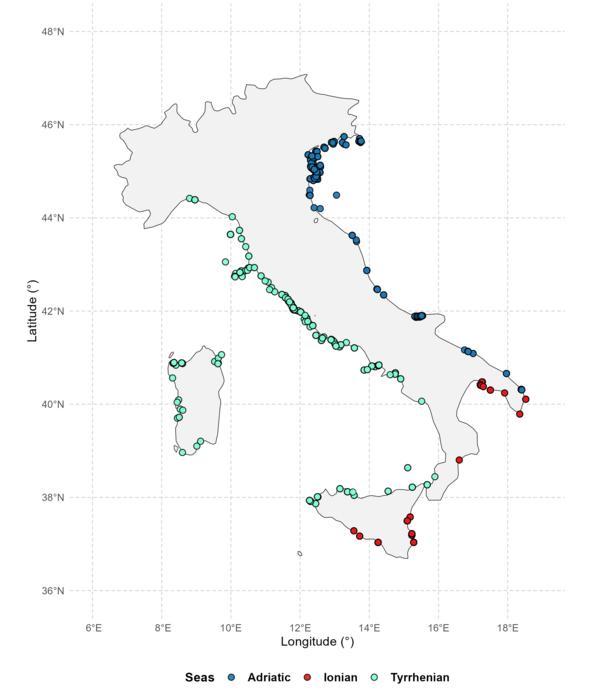
Thousands Of Unpublished Studies Show Why Conservation Efforts Miss The Mark

Europe alone has so much unpublished, un-catalogued biological data that it is challenging to take...

Why Antarctic Sea Ice Stopped Growing In 2015

Though numerical models and popular films like An Inconvenient Truth projected Arctic ice...
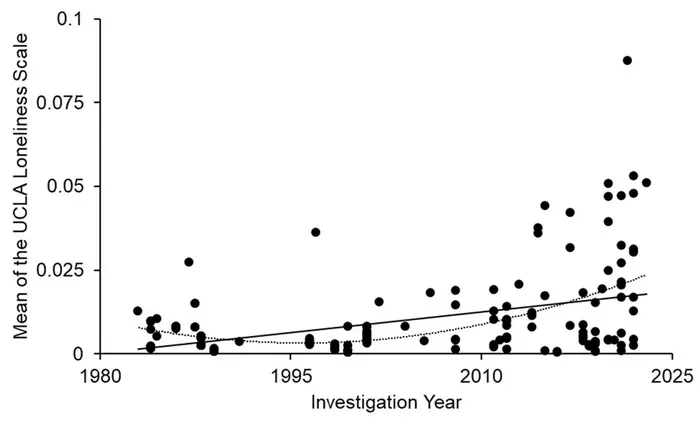
Wealth Correlated To Loneliness

You may have read that Asian cultures respect the elderly more than Europe but Asian senior citizens...

User picture.
News StaffRSS Feed of this column.

News Releases From All Over The World, Right To You... Read More »

Blogroll

The significance of pleiotrophin (PTN) expression in breast cancer has not been clearly established but researchers at Scripps sau they have done it in a new study.

A sheet of molten rock roughly 10 miles thick spreads underneath much of the American Southwest, some 250 miles below Tucson, Ariz. From the surface, you can't see it, smell it or feel it.

But Arizona geophysicists Daniel Toffelmier and James Tyburczy detected the molten layer with a comparatively new and overlooked technique for exploring the deep Earth that uses magnetic eruptions on the sun.

Toffelmier, a hydrogeologist with Hargis + Associates, Inc., in Mesa, Ariz., graduated from ASU’s School of Earth and Space Exploration in 2006 with a master’s degree in geological sciences. Tyburczy, a professor of geoscience in the school, was Toffelmier's thesis advisor.

Researchers have discovered a sophisticated neural computer, buried deep in the cerebellum, that performs inertial navigation calculations to figure out a person’s movement through space.

These calculations are no mean feat, emphasized the researchers. The vestibular system in the inner ear provides the primary source of input to the brain about the body’s movement and orientation in space. However, the vestibular sensors in the inner ear yield information about head position only.

A particular resonance pattern in the brain’s auditory processing region appears to be key to its ability to discriminate speech, researchers have found. They found that the inherent rhythm of neural activity called “theta band” specifically reacts to spoken sentences by changing its phase.

The researchers also noted that the natural oscillation of this frequency provides further evidence that the brain samples speech segments about the length of a syllable.

The findings represent the first time that such a broad neural response has been identified as central to perceiving the highly complex dynamics of human speech, said the researchers.

The team of Denis Réale, Professor in the Department of Biological Sciences at Université du Québec à Montréal, recently published some remarkable research findings. Reconstructing the genetic history of a population of mouflons descended from a single pair, the researchers demonstrated that the animals’ genetic diversity increased over time, contrary to what the usual models predict.

These results contradict the belief that a population descended from a small number of individuals will exhibit numerous deficiencies and reduced genetic diversity.

The mouflon population of the Kerguelen archipelago

The Kerguelen Islands in the Indian Ocean are one of four districts in the French Austral and Antarctic Territories.

In a survey of more than one thousand infertility patients with frozen embryos, 60 percent of patients report that they are likely to donate their embryos to stem cell research, a level of donation that could result in roughly 2000 to 3000 new embryonic stem cell lines.

In August of 2001, less than two dozen embryonic stem cell lines were made eligible for federal research funding. Most scientists now agree that the eligible lines have proven inadequate in number and unsafe for transnational research.

Until recently, the best estimate of human embryos currently in storage that might be available for additional stem cell research was three percent. The 2003 study showed that donations would yield, at best, less than 300 new lines.