Banner
How To Overcome Leadership Battles

In times of social rancor and strife, most will fight each other, but societies are saved by those...

Thousands Of Unpublished Studies Show Why Conservation Efforts Miss The Mark

Europe alone has so much unpublished, un-catalogued biological data that it is challenging to take...

Why Antarctic Sea Ice Stopped Growing In 2015

Though numerical models and popular films like An Inconvenient Truth projected Arctic ice...
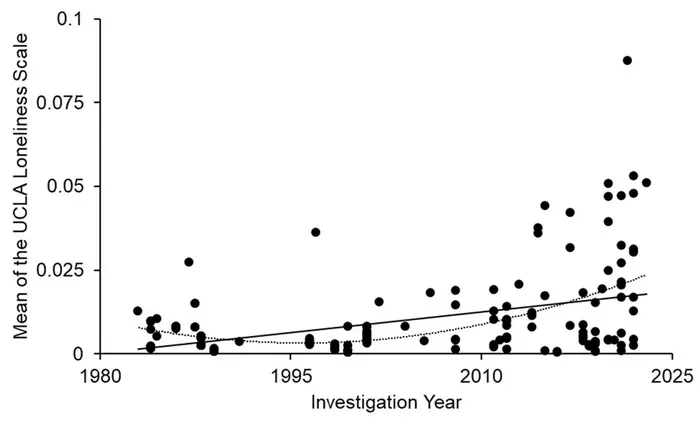
Wealth Correlated To Loneliness

You may have read that Asian cultures respect the elderly more than Europe but Asian senior citizens...

User picture.
News StaffRSS Feed of this column.

News Releases From All Over The World, Right To You... Read More »

Blogroll

Could the food we eat be contributing to the continuing rise of antibiotic-resistant infections? Harmless and even beneficial bacteria that exist in our food supply may also be carrying genes that code for antibiotic resistance. Once in our bodies, could they transmit the resistance genes to disease-causing bacteria?

"The data indicate that food could be an important avenue for antibiotic-resistant bacterial evolution and dissemination. The role of commensals, especially food-borne microbes, in transmitting resistance genes are becoming a concern to the scientific community," says Hua Wang of Ohio State University.

Call it the cellular equivalent of big glasses, a funny nose and a fake mustache.

Bone marrow stem cells attracted to the site of a cancerous growth frequently take on the outward appearance of the malignant cells around them, University of Florida researchers report in a paper to be published in the August issue of Stem Cells.

A colon cancer researcher at the Ireland Cancer Center of University Hospitals Case Medical Center (UHCMC) has laid out the roadmap for how medical science should employ aspirin and new aspirin-like drugs for use in preventing colon cancer in certain high-risk individuals.

Botox is not just for keeping aging actresses looking eerily young any more. Injecting botulinum toxin A, or Botox, into the prostate gland of men with enlarged prostates eased symptoms and improved quality of life for up to a year after the procedure.

The study was based on 37 men with benign prostatic hyperplasia (BPH).

UCLA and Dartmouth scientists have identified a crucial enzyme in plant vitamin C synthesis, which could lead to enhanced crops. The discovery now makes clear the entire 10-step process by which plants convert glucose into vitamin C, an important antioxidant in nature.

"If we can find ways to enhance the activity of this enzyme, it may be possible to engineer plants to make more vitamin C and produce better crops," said Steven Clarke, UCLA professor of chemistry and biochemistry, director of UCLA's Molecular Biology Institute and co-author of the research study, to be published as a 'Paper of the Week' in the Journal of Biological Chemistry and currently available online.

Professionally speaking, things in David Damanik's world don't line up – and he can prove it.

In new research, Damanik and colleague Serguei Tcheremchantsev offer a key proof in the study of quasicrystals, crystal-like materials whose atoms don't line up in neat, unbroken rows like the atoms found in crystals.