Banner
How To Overcome Leadership Battles

In times of social rancor and strife, most will fight each other, but societies are saved by those...
Thousands Of Unpublished Studies Show Why Conservation Efforts Miss The Mark

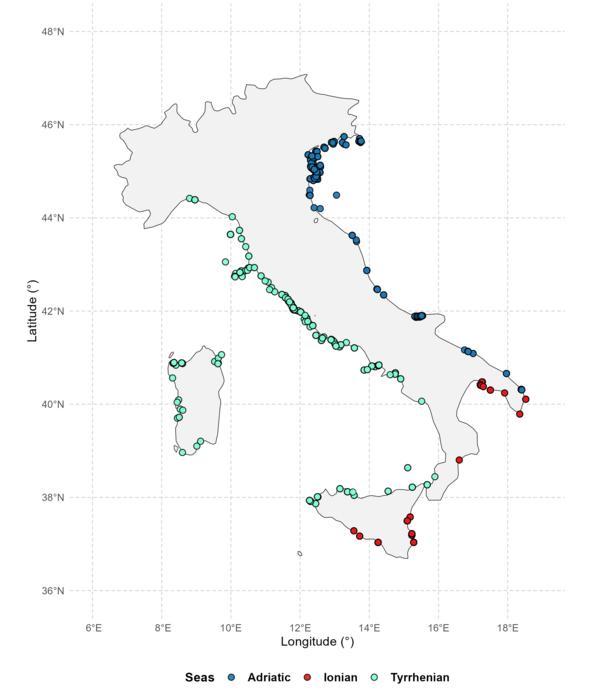
Europe alone has so much unpublished, un-catalogued biological data that it is challenging to take...

Why Antarctic Sea Ice Stopped Growing In 2015

Though numerical models and popular films like An Inconvenient Truth projected Arctic ice...

Wealth Correlated To Loneliness

You may have read that Asian cultures respect the elderly more than Europe but Asian senior citizens...

User picture.
News StaffRSS Feed of this column.

News Releases From All Over The World, Right To You... Read More »

Blogroll

Scientists at the U.S. Department of Energy's Brookhaven National Laboratory and collaborators at Stony Brook University have received U.S. Patent Number 7,179,448 for developing chimeric, or "combination," proteins that may advance the development of vaccines and diagnostic tests for Lyme disease.

Does orange juice taste sweeter if it's a brighter orange? A new study in the March issue of the Journal of Consumer Research finds that the color of a drink can influence how we think it tastes. In fact, the researchers found that color was more of an influence on how taste was perceived than quality or price information.

"Perceptual discrimination is fundamental to rational choice in many product categories yet rarely examined in consumer research," write JoAndrea Hoegg (University of British Columbia) and Joseph W. Alba (University of Florida). "The present research investigates discrimination as it pertains to consumers' ability to identify difference—or the lack thereof—among gustatory stimuli."

The nonnative invasive grass Microstegium vimineum may hinder the regeneration of woody species in southern forests. Chris and Sonja Oswalt (Forest Service Southern Research Station) and Wayne Clatterbuck (University of Tennessee) set up experiments on a mixed-hardwood forest in southwest Tennessee to study the growth of the invasive grass under different levels of forest disturbance. Study results were published online in the journal Forest Ecology and Management on March 27, 2007.

A Florida State University anthropologist has new evidence that ancient farmers in Mexico were cultivating an early form of maize, the forerunner of modern corn, about 7,300 years ago - 1,200 years earlier than scholars previously thought.

Professor Mary Pohl conducted an analysis of sediments in the Gulf Coast of Tabasco, Mexico, and concluded that people were planting crops in the "New World" of the Americas around 5,300 B.C. The analysis extends Pohl's previous work in this area and validates principles of microfossil data collection.

For the first time, scientists from the University of Washington School of Medicine, Indiana University Bloomington and the University of Cambridge have determined how a plant hormone -- auxin -- interacts with its hormone receptor, called TIR1. Their report, on the cover of this week's issue of Nature, also may have important implications for the treatment of human disease, because TIR1 is similar to human enzymes that are known to be involved in cancer.

Flavonoids. You’ve heard of them -- the good-for-your-health compounds found in plants that we enjoy in red wine, dark chocolate, green tea and citrus fruits. Mother Nature is an ace at making them, producing different ones by the thousands, but no chemist has figured out a good way to synthesize a special class of these chemicals in the laboratory. Until now.

Karl Scheidt, assistant professor of chemistry in the Weinberg College of Arts and Sciences at Northwestern University, and his research team have synthesized 10 different flavanones, a type of flavonoid, using a new general method they developed that takes advantage of one simple catalyst.