
Banner
How To Overcome Leadership Battles

In times of social rancor and strife, most will fight each other, but societies are saved by those...
Thousands Of Unpublished Studies Show Why Conservation Efforts Miss The Mark

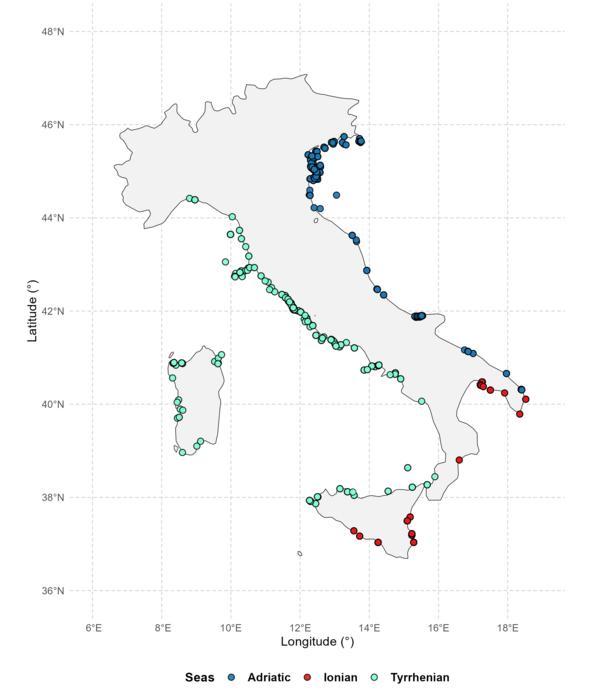
Europe alone has so much unpublished, un-catalogued biological data that it is challenging to take...

Why Antarctic Sea Ice Stopped Growing In 2015

Though numerical models and popular films like An Inconvenient Truth projected Arctic ice...

Wealth Correlated To Loneliness

You may have read that Asian cultures respect the elderly more than Europe but Asian senior citizens...

User picture.
News StaffRSS Feed of this column.

News Releases From All Over The World, Right To You... Read More »

Blogroll

How does life survive in the black depths of the ocean? At the surface, sunlight allows green plants to "fix" carbon from the air to build their bodies. Around hydrothermal vents deep in the ocean live communities of giant clams with no gut and no functional digestive system, depending on symbiotic bacteria to use energy locked up in hydrogen sulfide to replace sunlight.

The life cycles of many viruses include a self-assembly stage in which a powerful molecular motor must pack the DNA genome into the virus's preformed shell (the capsid). How it manages this intricate feat has been subject to debate, but we know that the DNA passes into the capsid shell through a channel formed by a structure called the connector.

How does the heart attain its characteristic shape? Shape may be sculpted by cell movement, cell division, or changes in cell size and shape, all of which can be influenced by the local environment. The heart appears as a simple tube early in development; later, the tube walls bulge outward to form the cardiac chambers.

In a new study published online in the open access journal PLoS Biology, Heidi Auman, Deborah Yelon, and colleagues found, by using transgenic zebrafish in which they can watch individual cardiac cells, that cells change size and shape, enlarging and elongating to form the bulges in the heart tube and eventually the chambers.

North American marine turtles are at risk if global warming occurs at predicted levels, according to scientists from the University of Exeter. An increase in temperatures of just one degree Celsius could completely eliminate the birth of male turtles from some beaches. A rise of three degrees Celsius would lead to extreme levels of infant mortality and declines in nesting beaches across the USA.


Marine turtle. Credit: Copyright Lucy Hawkes, MTRG

On Feb. 19 at the annual meeting of the American Association for the Advancement of Science in San Francisco, movie lovers get a behind-the-scenes glimpse at the physics-based simulations that breathe life into fantasy.

"It is an exhaustive task to prescribe the motion of every degree of freedom in a piece of clothing or a crashing wave," says Ron Fedkiw, an assistant professor of computer science at Stanford who will speak about computations used to make solids and fluids more realistic in feature films. "Since these motions are governed by physical processes, it can be difficult to make these phenomena appear natural. Thus, physically based simulation has become quite popular in the special effects industry.

In case you have been hiding under a rock, there was the scientific equivalent of an earth-shattering thunderclap that emanated from the American Association for the Advancement of Science (AAAS) meetins held February 15th-19th in San Francisco - to be honest, they pretend everything they say is big news, you can see 20 articles from it just on this site - but I mean this was legitimately big news.

Was it that they had to take an internal vote to decide if there is global warming? No, they've been run exclusively by Democrats for decades and after "An Inconvenient Truth" they needed to help garner support for an Academy Award.




