Banner
How To Overcome Leadership Battles

In times of social rancor and strife, most will fight each other, but societies are saved by those...

Thousands Of Unpublished Studies Show Why Conservation Efforts Miss The Mark

Europe alone has so much unpublished, un-catalogued biological data that it is challenging to take...

Why Antarctic Sea Ice Stopped Growing In 2015

Though numerical models and popular films like An Inconvenient Truth projected Arctic ice...

Wealth Correlated To Loneliness

You may have read that Asian cultures respect the elderly more than Europe but Asian senior citizens...

User picture.
News StaffRSS Feed of this column.

News Releases From All Over The World, Right To You... Read More »

Blogroll

With an aging population susceptible to stroke, Parkinson’s disease and other neurological conditions, and military personnel returning from Iraq and Afghanistan with serious limb injuries, the need for strategies that treat complex neurological impairments has never been greater.

One tack being pursued by neuroscientists and engineers is the development of “smart” neural prostheses. These devices are intended to restore function, through electrical stimulation, to damaged motor neural circuits – the long, slender fibers that conduct neurochemical messages between nerve cells in the brain and spinal cord.

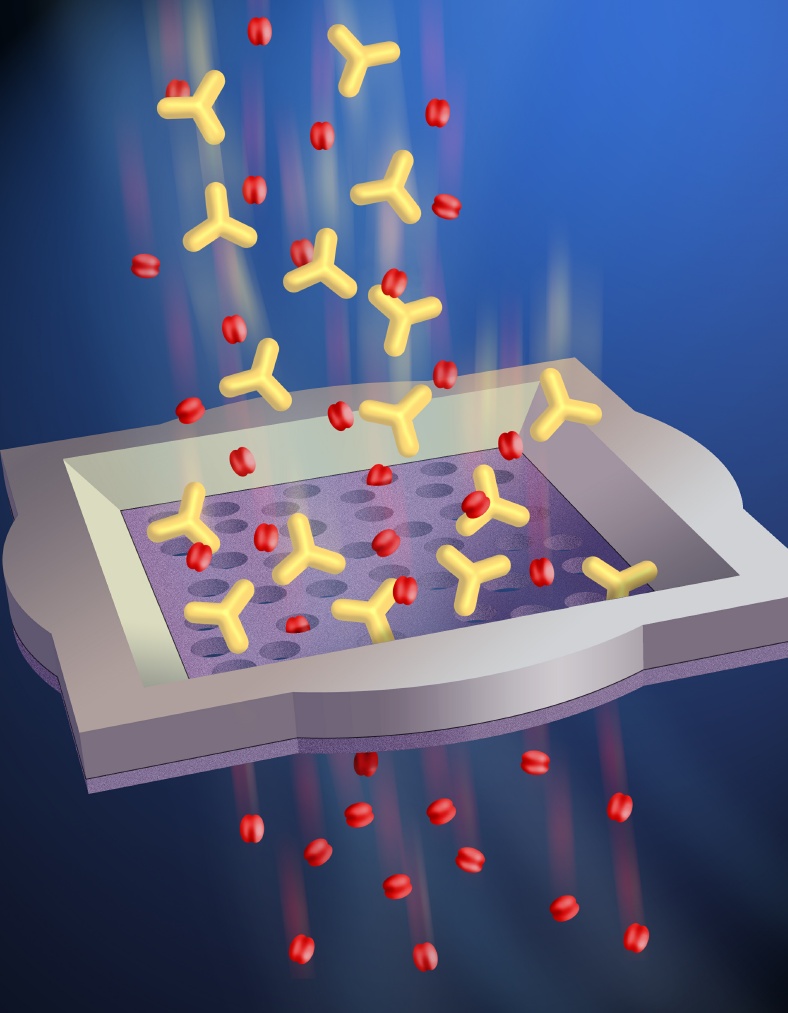
A newly designed porous membrane, so thin it's invisible edge-on, may revolutionize the way doctors and scientists manipulate objects as small as a molecule.

The 50-atom thick filter can withstand surprisingly high pressures and may be a key to better separation of blood proteins for dialysis patients, speeding ion exchange in fuel cells, creating a new environment for growing neurological stem cells, and purifying air and water in hospitals and clean-rooms at the nanoscopic level.


Membrane sorts molecules by size. Credit: University of Rochester.

Plants have an immune system that resists infection, yet 10% of the world's agricultural production is lost annually to diseases caused by bacteria, fungi, and viruses. Understanding how disease resistance works may help combat this scourge.

In a new study published online this week in the open-access journal PLoS Biology, Tessa Burch-Smith, Savithramma Dinesh-Kumar, and colleagues show how one aspect of the plant immune system is defined by the gene-for-gene hypothesis: a plant Resistance (R) gene encodes a protein that specifically recognizes and protects against one pathogen or strain of a pathogen carrying a corresponding Avirulence (Avr) gene.

In tobacco and its relatives, the N resistance protein confers resistance to infection by the Tobacco mosaic virus (TMV).

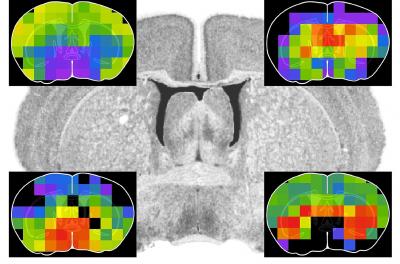
The Allen Brain Atlas, a genome-wide map of the mouse brain on the Internet, has been hailed as “Google of the brain.” The atlas now has a companion or the brain’s working molecules, a sort of pop-up book of the proteins, or proteome map, that those genes express.

The protein map is “the first to apply quantitative proteomics to imaging,” said Richard D. Smith, Battelle Fellow at the Department of Energy’s Pacific Northwest National Laboratory, who led the mapping effort with Desmond Smith of UCLA’s David Geffen School of Medicine.


Caption: Abundance profiles of four different proteins compiled from 1 millimeter cubes (voxels) in a mouse brain.

Stem cell technique helps women grow their own implants

Daily Mail - Women have grown their own breast implants through pioneering stem cell treatment, it emerged yesterday. Scientists harvested the stem cells from the women's own fat and encouraged them to form breast tissue...

Global-warming skeptics cite being 'treated like a pariah'

There's science in love, you know, and that means there's science in Valentine's Day. Science on Valentine's Day is like cold fusion instead of ethanol. Completely wonderful. And we have it all right here.

Not sure who to date? Garth Sundem answers it in The Valentine's Day Man-O-Meter. Be sure to take it as gospel because he never just makes stuff up.
There's science in love, you know, and that means there's science in Valentine's Day. Science on Valentine's Day is like cold fusion instead of ethanol. Completely wonderful. And we have it all right here.