

Banner
How To Overcome Leadership Battles

In times of social rancor and strife, most will fight each other, but societies are saved by those...
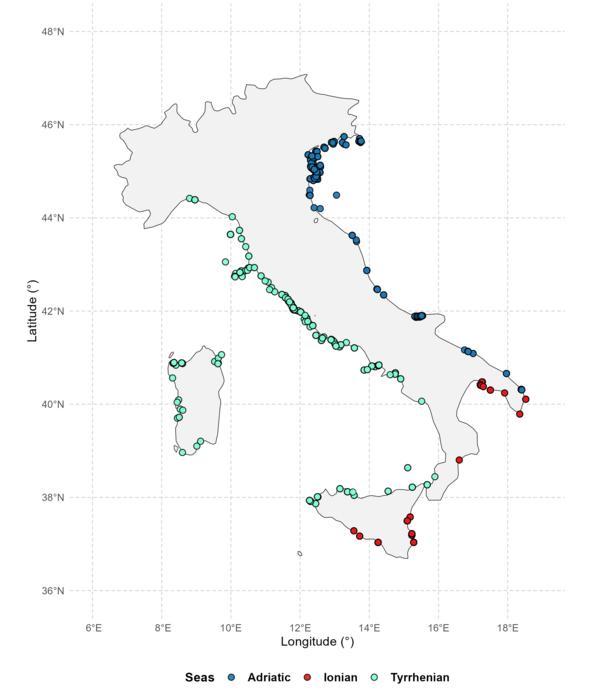
Thousands Of Unpublished Studies Show Why Conservation Efforts Miss The Mark

Europe alone has so much unpublished, un-catalogued biological data that it is challenging to take...

Why Antarctic Sea Ice Stopped Growing In 2015

Though numerical models and popular films like An Inconvenient Truth projected Arctic ice...
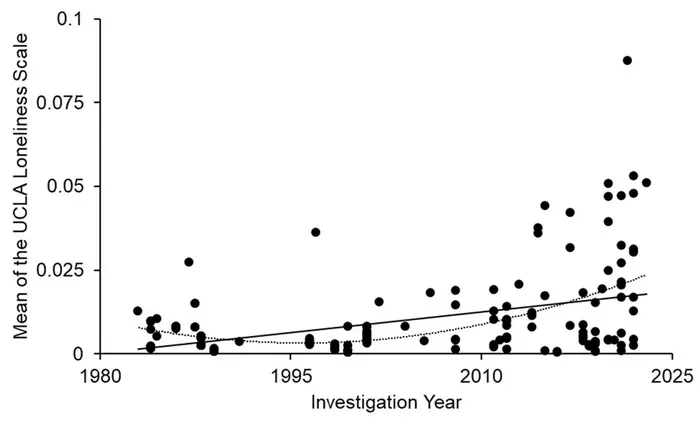
Wealth Correlated To Loneliness

You may have read that Asian cultures respect the elderly more than Europe but Asian senior citizens...

User picture.
News StaffRSS Feed of this column.

News Releases From All Over The World, Right To You... Read More »

Blogroll

Both in materials science and in biomedical research it is important to be able to view minute nanostructures, for example in carbon-fiber materials and bones. A team from the Technical University of Munich (TUM), the University of Lund, Charite hospital in Berlin and the Paul Scherrer Institute (PSI) have now developed a new computed tomography method based on the scattering, rather than on the absorption, of X-rays. The technique makes it possible for the first time to visualize nanostructures in objects measuring just a few millimeters, allowing the researchers to view the precise three-dimensional structure of collagen fibers in a piece of human tooth.

Astronomers using the Atacama Large Millimeter/submillimeter Array (ALMA) have discovered that a dim, cool dwarf star is generating a surprisingly powerful magnetic field, one that rivals the most intense magnetic regions of our own Sun.

The star's extraordinary magnetic field is potentially associated with a constant flurry of solar-flare-like eruptions. As with our Sun, these flares would trace tightly wound magnetic field lines that act like cosmic particle accelerators: warping the path of electrons and causing them to emit telltale radio signals that can be detected with ALMA.

Such intense flare activity, the astronomers note, would barrage nearby planets with charged particles.

  • Fastest pigeons tend to become flock leaders

  • Leaders learn navigation skills more effectively than followers

    Many birds travel in flocks, sometimes migrating over thousands of miles. But how do the birds decide who will lead the way? Researchers at Oxford University, reporting in the journal Current Biology, can offer new insight based on studies in homing pigeons. For pigeons, it seems, leadership is largely a question of speed.

    'This changes our understanding of how the flocks are structured and why flocks of this species have consistent leadership hierarchies,' says co-author Dr Dora Biro of the Department of Zoology at Oxford.

  • As you're driving to work along a busy road, your eyes on the traffic lights ahead, hoping they won't turn to red, you pass signs warning of roadworks, ads on bus shelters... Suddenly a dog runs out in front of you. What are your chances of seeing it before it's too late?

    Even with 20/20 vision in broad daylight on a clear day, our peripheral vision can be surprisingly poor, particularly when the scene in front of us is cluttered. Now, scientists at the University of Cambridge, UK, Northeastern University, Boston, USA, and Queensland Brain Institute, Brisbane, Australia, believe they are a step closer to understanding why this is.

    Health services in many countries increasingly rely on prescribed 'psychosocial interventions': treatments that use counselling techniques to tackle mental health issues, behavioural problems such as substance abuse, and assist parents with new or troubled children.

    These highly-regarded therapeutic and educational programmes, devised by senior academics and practitioners, are sold commercially to public health services across the world on the basis that they are effective interventions for people in need of support - with the evidence to back them up.

    As doctors in England prepare for strike action next month, researchers at Harvard Medical School and Brigham and Women's Hospital (Boston, USA) show that, in high-income countries, "patients do not come to serious harm during industrial action provided that provisions are made for emergency care."

    In The BMJ today, David Metcalfe and colleagues report that death rates remained the same, or decreased, during all previous doctor strikes that have been studied in developed countries. They say that strikes can therefore be organised in such a way that patient safety is not compromised.

    The right to strike is recognised as a fundamental human right by the United Nations, the Council of Europe, and the European Union, they explain.


