Banner
Ousiometrics Analysis Says All Human Language Is Biased

A new tool drawing on billions of uses of more than 20,000 words and diverse real-world texts claims...

Wavelengths Of Light Are Why CO2 Cools The Upper Atmosphere But Warms Earth

There are concerns about projected warming on the Earth’s surface and in the lower atmosphere...

Here's Where Your Backyard Was 300 Million Years Ago

We may use terms like "grounded" and terra firma to mean stability and consistency but geology...

Convergent Evolution Cheat Sheet Now 120 Million Years Old

One tenet of natural selection is a random walk of genes but nature may be more predictable than...

User picture.
News StaffRSS Feed of this column.

News Releases From All Over The World, Right To You... Read More »

Blogroll

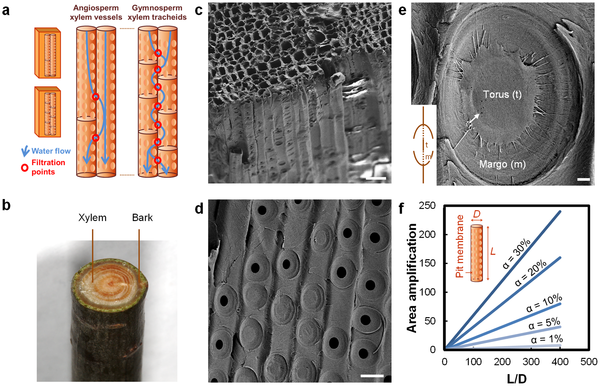
Boy scouts know this, and now we'll let you in on a secret too: if you've run out of drinking water during a lakeside camping trip, there's a simple solution. Break off a branch from the nearest pine tree, peel away the bark, and slowly pour lake water through the stick. This improvised filter will trap any bacteria, producing fresh, uncontaminated water. 

An MIT team has discovered that this low-tech filtration system can produce up to four liters of drinking water a day — enough to quench the thirst of a typical person. 

Passive smoking is linked to a significantly increased risk of miscarriage, stillbirth and ectopic pregnancy, finds a large observational study, published online in Tobacco Control.

The risk appears to be cumulative, with risk heightened in parallel with the length of time exposed to second hand smoke, the findings indicate.

It is well known that smoking during pregnancy significantly increases the risks of miscarriage and birth complications. What is less clear is whether passive smoking exerts similar effects, and if there are particularly critical periods of exposure to second hand smoke.

Two spotted seals orphaned as pups in the Arctic are now thriving at UC Santa Cruz's Long Marine Laboratory, giving scientists a rare opportunity to learn about how these seals perceive their environment. In a comprehensive study of the hearing abilities of spotted seals, UCSC researchers found that the seals have remarkably sensitive hearing in both air and water.

Picture a single cloud large enough to span the solar system from the sun to beyond Pluto's orbit. Now imagine many such clouds orbiting in a vast ring at the heart of a distant galaxy, occasionally dimming the X-ray light produced by the galaxy's monster black hole.

Using data from NASA's Rossi X-ray Timing Explorer (RXTE) satellite, an international team has uncovered a dozen instances where X-ray signals from active galaxies dimmed as a result of a cloud of gas moving across our line of sight. The new study triples the number of cloud events previously identified in the 16-year archive.

For the first time, an international team of astrophysicists, including Lawrence Livermore National Laboratory scientists, have unraveled how stars blow up in supernova explosions.

Using NASA's Nuclear Spectroscopic Telescope Array (NuSTAR) – a high-energy X-ray observatory - the international collaboration created the first-ever map of radioactive material in a supernova remnant, named Cassiopeia A, or Cas A for short. The findings reveal how shock waves likely rip apart massive dying stars, and ultimately end their lives.

A reduced risk of cervical lesions among Danish girls and women at the population level is associated with use of a quadrivalent HPV vaccine after only six years, according to a new study published February 19 in the Journal of the National Cancer Institute.