Banner
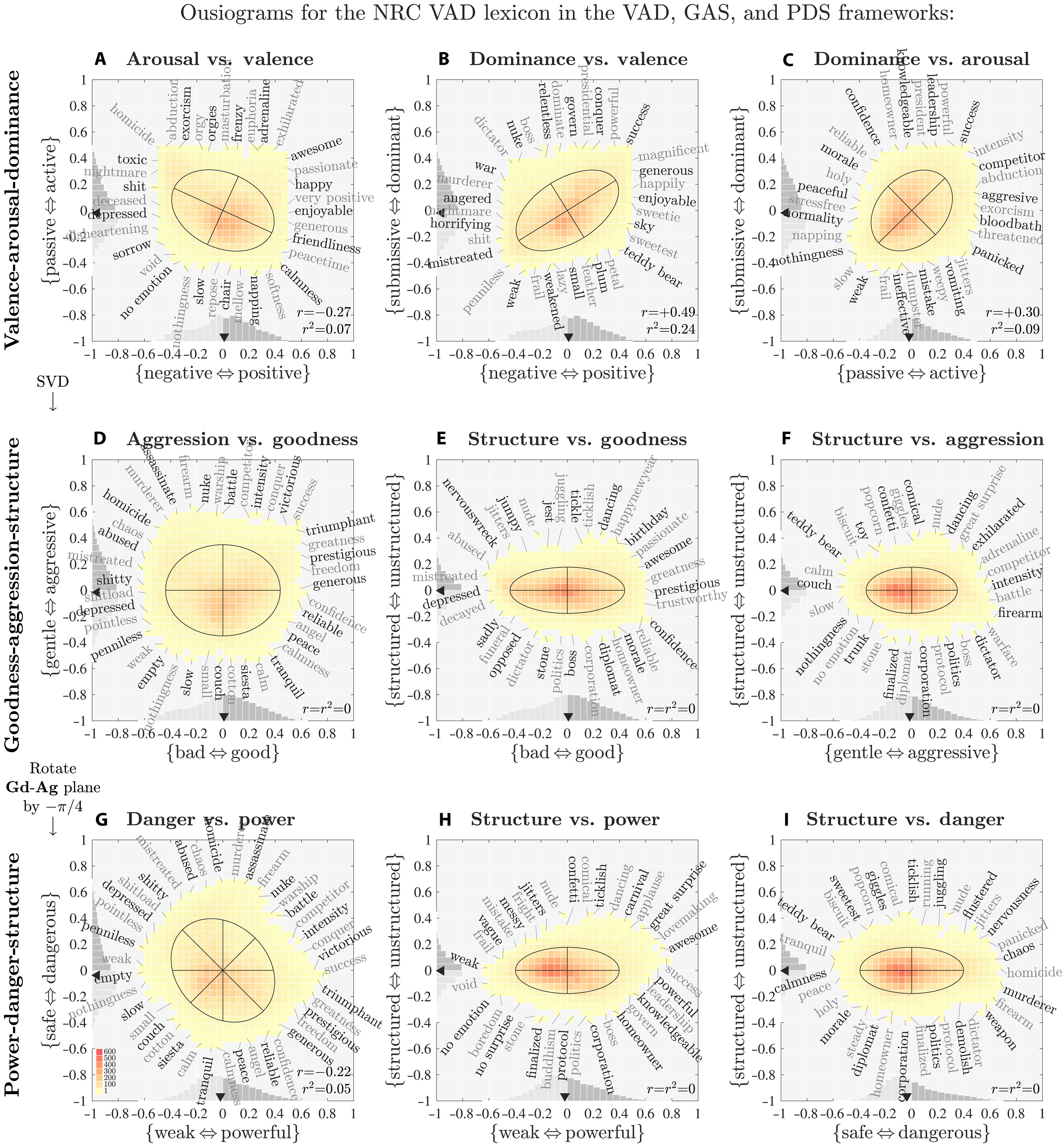
Ousiometrics Analysis Says All Human Language Is Biased

A new tool drawing on billions of uses of more than 20,000 words and diverse real-world texts claims...

Wavelengths Of Light Are Why CO2 Cools The Upper Atmosphere But Warms Earth

There are concerns about projected warming on the Earth’s surface and in the lower atmosphere...

Here's Where Your Backyard Was 300 Million Years Ago

We may use terms like "grounded" and terra firma to mean stability and consistency but geology...

Convergent Evolution Cheat Sheet Now 120 Million Years Old

One tenet of natural selection is a random walk of genes but nature may be more predictable than...

User picture.
News StaffRSS Feed of this column.

News Releases From All Over The World, Right To You... Read More »

Blogroll

After nearly 25 years of searching, three scientists have finally found Waldo. No, not the lovable bespectacled character in children's picture books, but rather an unusual clam they have named Waldo arthuri and which was discovered off the coast of California and British Columbia.

Paul Valentich-Scott from the Santa Barbara Museum of Natural History, and Diarmaid Ó Foighil from the University of Michigan, Museum of Zoology first began discussing this unusual clam back in 1989. Valentich-Scott discovered his strange specimens off the coast of Santa Barbara and Morro Bay, California, while Ó Foighil uncovered his while trawling for invertebrates off Vancouver Island, British Columbia.

Testing a new therapeutic intervention such as a drug or surgical procedure on human subjects is not an option so the vast majority are first tested on animals and only when they have been established in those trials can human trials be considered.

But in recent years cultural campaigns against animal testing have increased, making researchers increasingly leery of them. That means size constraints and limited statistical power, and as a result the scientific literature contains many studies that are either uncertain in their outcomes or even contradictory.


If the Sun's outer atmosphere - corona - is so hot, why does it always look so cool?

The Sun's visible surface is 'only' 10,000 degrees Fahrenheit, but as you move outward the temperature shoots up to millions of degrees. It's like a campfire that feels hotter the farther away you stand. That defies common sense, but so do dogs named Checkers and Esther Williams swimming pools so let's talk about coronal loops.

By the time Sandy hit New Jersey and New York, it had been reduced to a tropical storm but its rare angle of approach still meant a lot of devastation.

Environmentalists in New York are resistant to creating barriers against future storms, like subway doors that can prevent flooding, and seawalls, but the stories of two residential beach communities on the New Jersey shore provide compelling evidence.

While America has dramatically dematerialized its environmental footprint in recent decades, producing far more food on far less land than 30 years ago, that's not true for the rest of the world. 

Heavy financial incentives in places like Europe - which accounts for 85% of the agricultural subsidies for the entire world - mean there is no reason to embrace modern science and technology. But a new paper notes that allowing land use to be determined purely by those agricultural constituencies results in considerable financial and environmental costs to the public. 

Scientists have revealed the genetic secrets of how a small bird, Parus humilis
 (ground tit) can survive in one of the most hostile environments on earth - the Tibetan plateau, the largest high-altitude land mass in the world.

The study found molecular signatures in the ground tit genome which reveal how it copes with the extreme living conditions of this habitat, said co-authors Professor David Lambert and Dr. Sankar Subramanian from Griffith University.