Banner
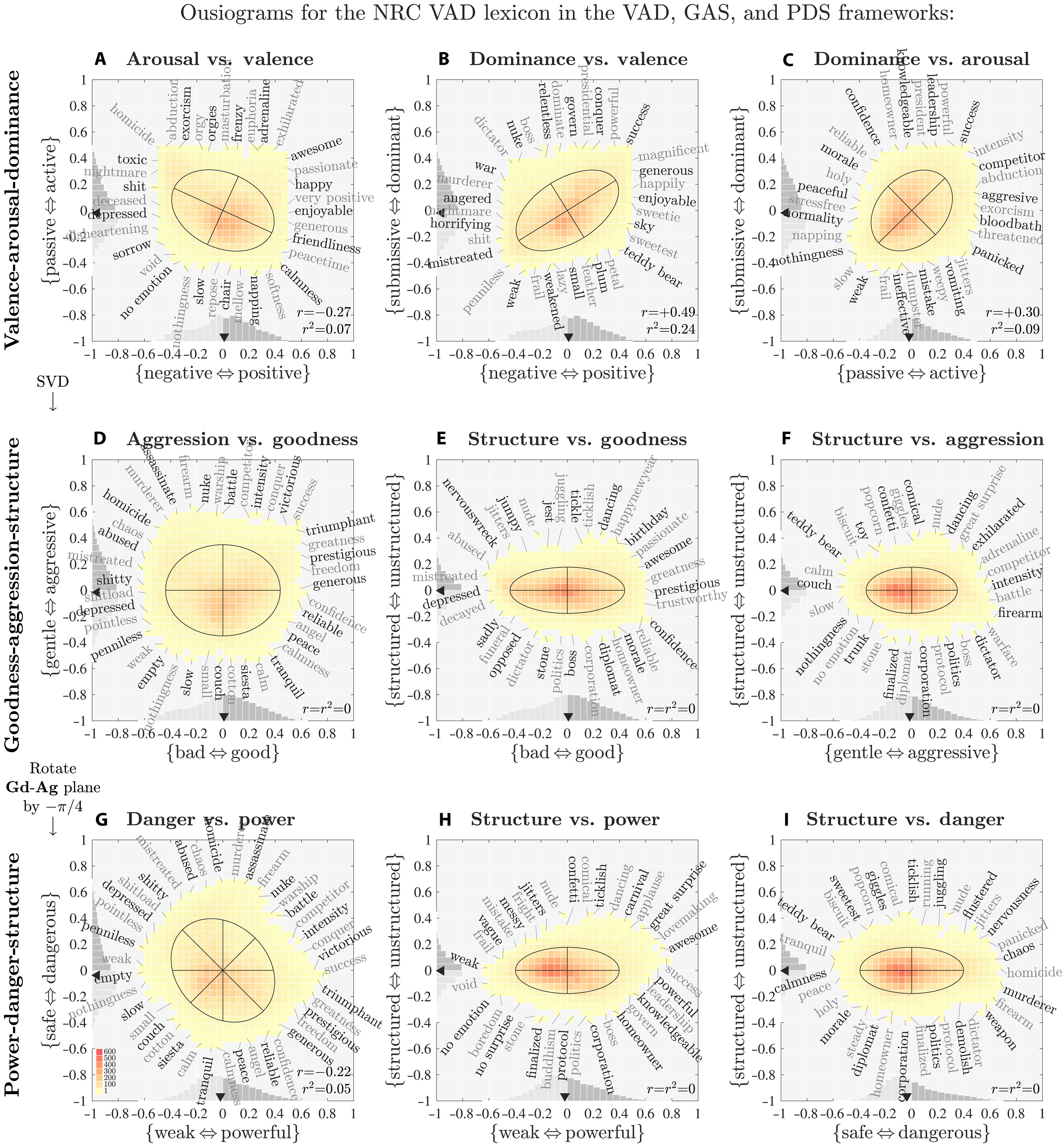
Ousiometrics Analysis Says All Human Language Is Biased

A new tool drawing on billions of uses of more than 20,000 words and diverse real-world texts claims...

Wavelengths Of Light Are Why CO2 Cools The Upper Atmosphere But Warms Earth

There are concerns about projected warming on the Earth’s surface and in the lower atmosphere...

Here's Where Your Backyard Was 300 Million Years Ago

We may use terms like "grounded" and terra firma to mean stability and consistency but geology...

Convergent Evolution Cheat Sheet Now 120 Million Years Old

One tenet of natural selection is a random walk of genes but nature may be more predictable than...

User picture.
News StaffRSS Feed of this column.

News Releases From All Over The World, Right To You... Read More »

Blogroll
Shy? You may be less happy. Surveys say so.

In its happy journey into becoming anthropology, epidemiology is increasingly tackling social issues like they are diseases and using surveys as verification. They have time now, since that whole malaria problem has been solved.  Dr. Catharine Gale, Reader in Epidemiology at the University of Southampton, and colleagues from the University of Edinburgh and University College London looked at survey results and concluded that young adults who are more outgoing or more emotionally stable are happier in later life than their more introverted or less emotionally stable peers.

Do looks matter in the work place? There are a lot more unattractive people running departments and entire companies than there are pretty ones - but a new paper by academics says just the opposite. Pretty people have an easier time on the job.

The paper by Timothy Judge, professor of management at the University of Notre Dame, and Brent Scott from Michigan State University, is the first to link attractiveness to cruelty in the workplace. 

Despite the horrors of the Maoist regime, the Communist Party dictatorship in the People's Republic of China continues to exist and retain control, even though tens of millions of people suffered from persecution or were executed for political reasons while he lived. 

Even less likely, the perpetrators and victims have managed to continue living together long after the death of Mao Zedong and the beginning of the reform era in 1978.

Why do we value gold? It's not strong, it's not pretty, it's rare but in the 21st century, given enough energy we can turn lead into gold, the way alchemists once only dreamed about.

It's not just rare on Earth, it's rare in the universe, even though the universe has a fantastic amount of energy, it is a perpetual Philosopher's Stone. Yet even in the infinite universe creating gold is not trivial. Unlike elements such as carbon or iron, gold cannot be created within a star. Instead, it must be born in a more cataclysmic event, like one that was witnessed last month: a short gamma-ray burst.

Neutrinos are the second most abundant particles in the Universe, after photons, but when it comes to being elusive they can compete with anything. That's due to their having extremely weak interactions with all other particles, which leads to them being called  'ghost particles’.

Neutrinos are invisible but could carry as much mass as all other known forms of matter, traveling almost at the speed of light over fantastic distances. Their tiny masses have  important consequences for the structures in the Universe and they are the driving element in the explosion of Supernovae.
A group at the Bristol Robotics Laboratory have developed a novel way of charging mobile phones - using urine as the power source to generate electricity.

Lead author Dr. Ioannis Ieropoulos from the University of the West of England is an expert at harnessing power from unusual sources using microbial fuel cells and says, “We are very excited as this is a world first, no-one has harnessed power from urine to do this so it's an exciting discovery. Using the ultimate waste product as a source of power to produce electricity is about as eco as it gets.”

Basically, the microbial fuel cells contain bacteria that produce electricity from pee. Bet you never thought of that, Muad'Dib.