Banner
You Didn't Feel Continental Mantle Earthquakes, But They Happened. A Lot

A 1979 seismic event was a different kind of earthquake, and it is has intrigued scientists ever...

How To Overcome Leadership Battles

In times of social rancor and strife, most will fight each other, but societies are saved by those...

Thousands Of Unpublished Studies Show Why Conservation Efforts Miss The Mark

Europe alone has so much unpublished, un-catalogued biological data that it is challenging to take...

Why Antarctic Sea Ice Stopped Growing In 2015

Though numerical models and popular films like An Inconvenient Truth projected Arctic ice...

User picture.
News StaffRSS Feed of this column.

News Releases From All Over The World, Right To You... Read More »

Blogroll
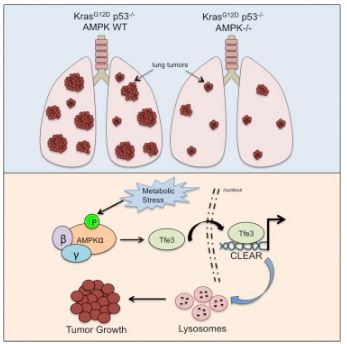
The protein complex AMPK is thought to suppress cancer, by slowing cellular metabolism, but it can also help some tumors grow.

But why? A new study says it has solved the mystery.

AMPK acts as a fuel gauge for the cell, overseeing energy input and output to keep the cell running smoothly. Similar to a car sensor flashing a low-gas signal or turning off a vehicle’s AC to save energy, AMPK slows down cell growth and changes the cell’s metabolism if the cell’s fuel (nutrients) is low.
The Great Pyramids have long been held up as the pinnacle of ancient engineering. Over 100 structures, some as high as were constructed of huge alabaster blocks, many quarried from Hatnub - the site of an new interesting discovery.

Given the challenges in building such huge structures, it is no surprised the Great Pyramid of Khufu is one of the Seven Wonders of the Ancient World. It and others were built thanks to quarries connected to the Nile by Bronze Age roads. The blocks were transported by sleds. But what about construction? Huge ramps? Were they poured? Some even speculated about aliens.
New molecules similar to carbohydrates have showed the capacity to inhibit the activity of a specific type of glycoside enzymes - and that means inhibiting infectious diseases.

Glycosides are essential enzymes to digest carbohydrates but they are also key players in infections caused by pathogens, in anti-bacterial defense and many other vital cellular processes. Because these small molecules that are able to bond with and inhibit the activity of enzymes in infectious diseases, it opens up the basis for new medicines. 
In his just published final book, "Brief Answers to the Big Questions," physicist Satephen Hawking wrote, "There is no God. No one directs the universe" but in a universe where only 6% of what must exist is even matter that can be detected, the science community is unwilling to be as definitive as he was.

It may be that God is in the gaps, and different people have different definitions for what that is. Yet it may be perpetuating the false narrative that religion is on one pole and science is on another.
Lyme disease is the most prevalent tick-borne disease and is caused by the bacterial spirochete Borrelia. Using the Centers for Disease Control and Prevention (CDC) recommended two-tier method, Garg et al., claim that 72 percent of individuals they examined classified "negative" by the CDC two-tier lyme disease test showed positive for the Borellia biomarker, and other microbes such as Babesia, Bartonella, and Ehrlichia.

That means some lyme disease patients do not follow the "one microbe, one disease" Germ Theory, according to an analysis of patients at different disease stages which found they respond to various microbes 65 percent of the time. And that ticks carry more than just lyme disease.
Anti-gun proponents like to produce headlines showing a young child accidentally shot another family member with a pistol, but that kind of cultural framing may be doing more harm than good, because a new study reaffirms what most gun owners knew: Gun harm is not caused by lazy or irresponsible gun owners letting their kids get them by mistake, it is from assaults by men. And teenagers at greatest risk for committing acts of violence are at greatest risk of receiving it, not pre-schoolers.

Of the over 75,000 youths who visited emergency rooms for gun-related injuries from 2006 to 2014, 86.2 percent were males and overwhelmingly in large cities.