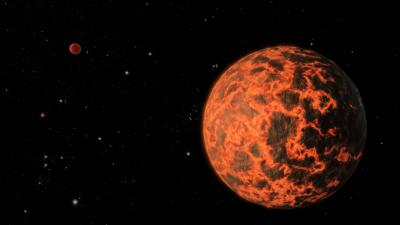
A newly discovered exoplanet is two-thirds the size of Earth and a relatively close 33 light years away.
But is it really a planet? UCF 1.01 is being called an exoplanet candidate. The reason is because a measured mass is needed to verify that it is a planet, but even the most sensitive instruments currently available are unable to measure exoplanet masses this small.
UCF 1.01 is so close to its star it orbits in 1.4 days. The planet's surface likely reaches temperatures of more than 1,000 degrees Fahrenheit and it probably has no atmosphere. Its surface may be volcanic or molten.
Methane, a potent greenhouse gas, has been underrated in the quest to discuss carbon dioxide, but it shouldn't be - it has about 23 times the warming effect of CO2. And methane levels are at least one-and-a-half times higher in California than previously estimated, says a new study.
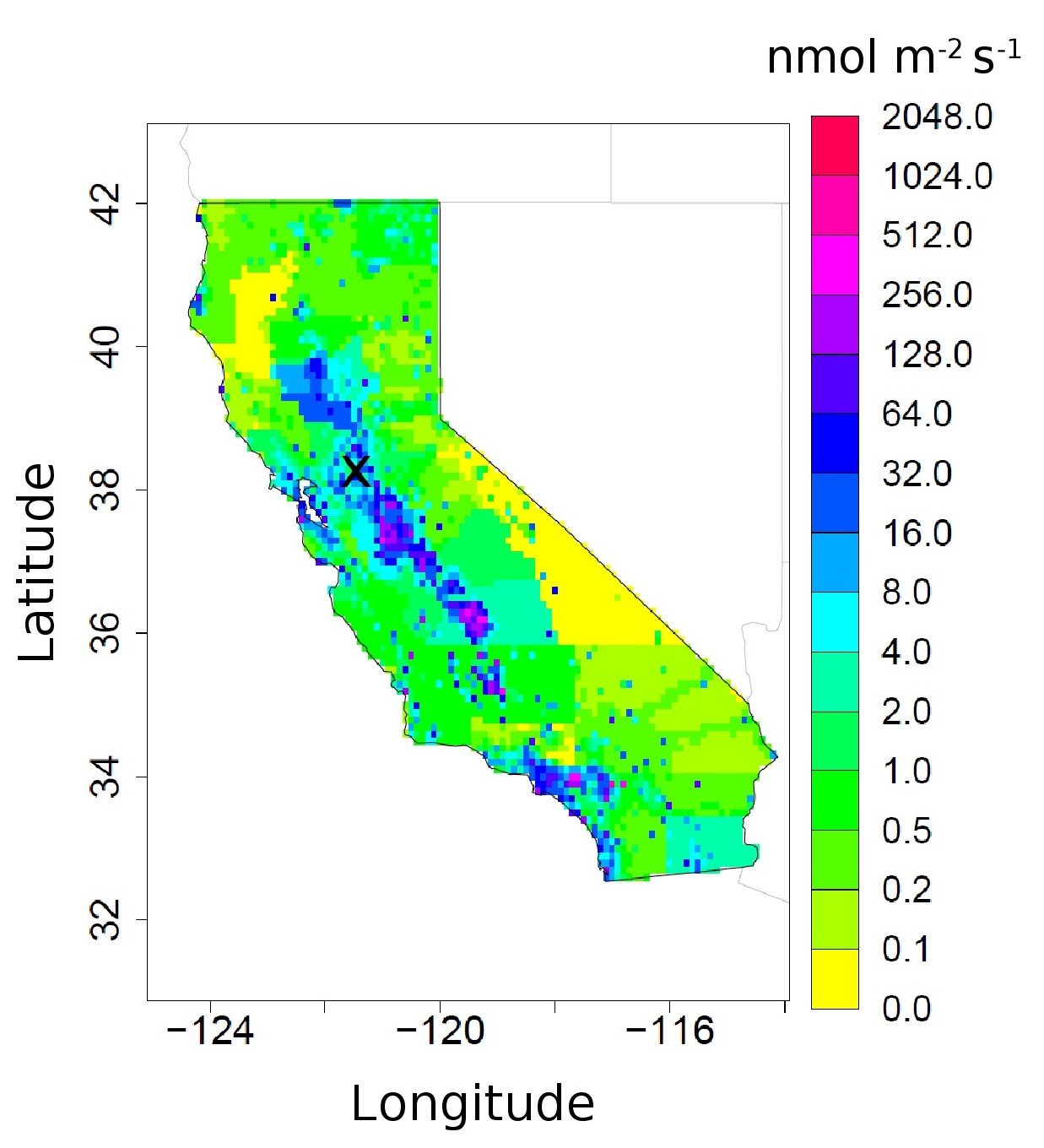
Researchers recently combined highly accurate methane measurements from a tower with model predictions of expected methane signals to revise estimated methane emissions from central California. They found that annually averaged methane emissions in California were 1.5 to 1.8 times greater than previous estimates, depending on the spatial distribution of the methane emissions.
Are psychopaths made in a certain way and unable to change?
Perhaps, says Aina Gullhaugen, a psychologist at the Norwegian University of Science and Technology, but there is a discrepancy between the formal characteristics of psychopathy and what she has experienced in meeting psychopaths - which is kind of like saying Stalin was not a psychopath if she had met him and he seemed different than what the DSM describes.
If the millions of people suffering who have Multiple Sclerosis or muscular dystrophy could have one wish, it probably wouldn't be that they could use play video games - but until cures can be found, using a computer might make it a little better. costs less than £40.
No matter how much spin you hear and read from highly-paid lobbyists and clueless advocates, green energy is not viable. It will be, though science would get there faster if the Department of Energy would stop throwing money at solar panel companies and instead throw it at basic research, like battery technology.
After cost and efficiency, storage is the biggest obstacle preventing widespread use of renewable energy sources like wind and solar power. The ability to store energy when it is produced is an essential waypoint on the road to turning alternative energy into regular energy. The current U.S. energy grid system is used predominantly for distributing energy and allows little flexibility for storage of excess or a rapid dispersal on short notice.
Researchers have resurrected a 500-million-year-old gene from bacteria and inserted it into modern-day Escherichia coli(E. coli) - the bacterium has now been growing for more than 1,000 generations, which has given the scientists a front row seat to observe descent with modification in action.
It's paleo-experimental evolution.


 Here's Where Your Backyard Was 300 Million Years Ago
 Convergent Evolution Cheat Sheet Now 120 Million Years Old
 Synchrotron Could Shed Light On Exotic Dark Photons
 The Pain Scale Is Broken But This May Fix It