Banner
Here's Where Your Backyard Was 300 Million Years Ago

We may use terms like "grounded" and terra firma to mean stability and consistency but geology...

Convergent Evolution Cheat Sheet Now 120 Million Years Old

One tenet of natural selection is a random walk of genes but nature may be more predictable than...

Synchrotron Could Shed Light On Exotic Dark Photons

There are many hypothetical particles proposed to explain dark matter and one idea to explore how...

The Pain Scale Is Broken But This May Fix It

Chronic pain is reported by over 20 percent of the global population but there is no scientific...

User picture.
News StaffRSS Feed of this column.

News Releases From All Over The World, Right To You... Read More »

Blogroll

While America debates moving to a health care system more like the UK, the majority of Brits want to try an American approach. According to Simplyhealth's latest survey, 59% of people would consider paying to be seen privately due to concerns about access to diagnosis and treatment. 

 Simplyhealth's report 'Are we an instant health generation?' carried out by YouGov suggests that concerns about cost, waiting times and access to healthcare are driving people to seek private alternatives to the NHS. Just over half believe that they will need to wait longer for treatment than ever before and 45% agree that government changes may mean that they are denied treatment altogether by the NHS. 

Xiao-Gang Wen, a condensed matter theoretical physicist, has joined the Perimeter Institute for Theoretical Physics as the new BMO Financial Group Isaac Newton Chair.   Yes, their Isaac Newton Chair has a corporate sponsor.

 Xiao-Gang Wen is moving from MIT to Perimeter Institute as the inaugural holder of the BMO Financial Group Isaac Newton Chair in Theoretical Physics. At MIT, he held the Cecil and Ida Green Professorship in Physics.  The position was funded by a CDN$4 million gift from the BMO Financial Group, matched by another CDN$4 million from Perimeter's existing endowment. 

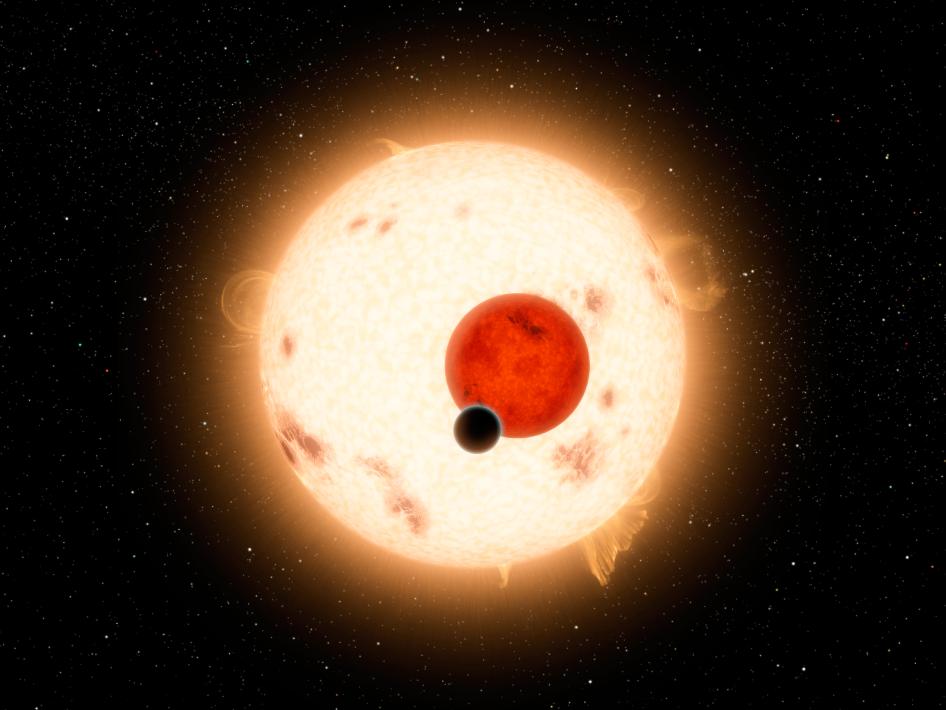
A terrific scene in "Star Wars" - when "Star Wars" universe was still good(1) - was the double sunset on Tatooine.  It wasn't the first time it was done but the graphics in "Star Wars" were light years ahead of its competition.  Well, parsecs ahead of their time, if you understand physics the way George Lucas did (2).

We may now get to think about what it's like for real, though no one lives on the newly discovered cold and gaseous planet, Kepler-16b in the Kepler-16 system,  which orbits two stars.
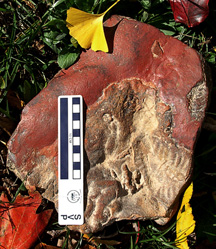
In 1997, Ray Stanford, a citizen scientist dinosaur tracker who often spent time looking for fossils close to his Maryland home, was searching a creek bed after an extensive flood and discovered a fossil which he identified as a nodosaur. 

Nodosaurs have been found in diverse locations worldwide, but they've rarely been found in the United States.  The area had originally been a flood plain, where the dinosaur originally drowned and it was tiny -  only 13 cm long, just shorter than the length of a dollar bill. Adult nodosaurs are estimated to have been 20 to 30 feet long.
A 3-D inkjet printer can generate 3-dimensional solids from a wide variety of materials very quickly by applying the material in layers of defined shape and then bonding these layers are with UV radiation.  It can create microstructures but 3-D printing technology is still too imprecise for the fine structures of capillary vessels.

Perhaps not for long.

Researchers at Fraunhofer are applying new techniques and materials to come up with artificial blood vessels in their BioRap project. In the future that may mean artificial tissue and maybe even complex organs in future. 
Does playing music lead to less age-related hearing problems or do people without hearing problems continue to play music?

Hearing studies have shown that trained musicians have highly developed auditory abilities compared to non-musicians but a new study concludes hearing abilities in musicians and non-musicians differs, across the age spectrum from 18 to 91 years of age, and that musicians retain a keener ability to  detect and discriminate acoustic information from the environment.