Banner
Synchrotron Could Shed Light On Exotic Dark Photons

There are many hypothetical particles proposed to explain dark matter and one idea to explore how...

The Pain Scale Is Broken But This May Fix It

Chronic pain is reported by over 20 percent of the global population but there is no scientific...
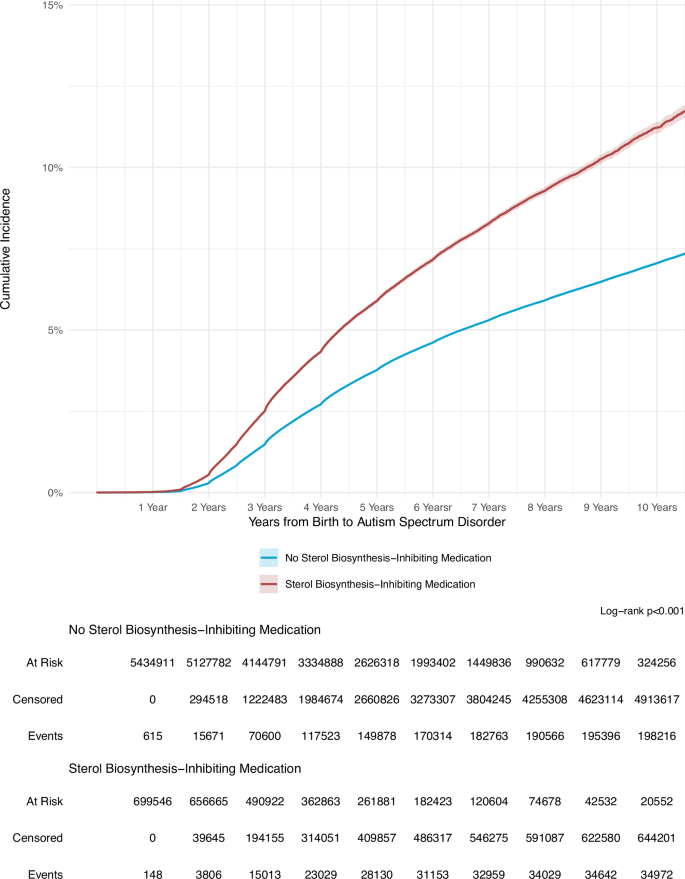
Study Links Antidepressants, Beta-blockers and Statins To Increased Autism Risk

An analysis of 6.14 million maternal-child health records  has linked prescription medications...

Pilot Study: Fibromyalgia Fatigue Improved By TENS Therapy

Fibromyalgia is the term for a poorly-understood condition where people experience pain and fatigue...

User picture.
News StaffRSS Feed of this column.

News Releases From All Over The World, Right To You... Read More »

Blogroll
A study of patients and members of the public has shown that most lack even basic knowledge of human anatomy. The research, featured in the journal BMC Family Practice, found that people were generally incapable of identifying the location of major organs, even if they were currently receiving relevant treatment.
The search for planets capable of sustainable life (as we know it) is on, but with an infinite number of planets astronomers are focusing their attention on each system's 'habitable zone', where heat radiated from the star is just right to keep a planet's water in liquid form. They have found planets orbiting red dwarf stars because those make up about three-quarters of the stars close to our solar system. Potentially habitable planets must orbit closer to those stars, perhaps one-fiftieth the distance of Earth to the sun, since they are smaller and generate less heat than our sun.
Matthew C. Nisbet, assistant professor in the School of Communication writing in Nature Biotechnology, says there are changes that must be made to ensure quality science communication in the future. Some of his recommendations, based on the results of a science communication workshop in Washington, D.C., are: 1. Scientists should pursue a trust- and dialogue-based relationship with the public. The goal is not to 'sell the public' but to democratize public input about scientific issues so that members of the public can meaningfully participate in science-related decision making, which is not framing, but then ...
A group of researchers say they have clarified the role that retinoic acid plays in limb development. Their study in Current Biology says that retinoic acid controls the development (or budding) of forelimbs, but not hindlimbs, and that retinoic acid is not responsible for patterning (or differentiation of the parts) of limbs. This research corrects longstanding misconceptions about limb development and provides new insights into congenital limb defects.
Paleontologists and some in biology have long believed that modern birds are the direct descendants of ancient, meat-eating dinosaurs.

Researchers at Oregon State University contend they have made a fundamental new discovery about how birds breathe and have a lung capacity that allows for flight – and the finding means it's unlikely that birds descended from any known theropod dinosaurs.

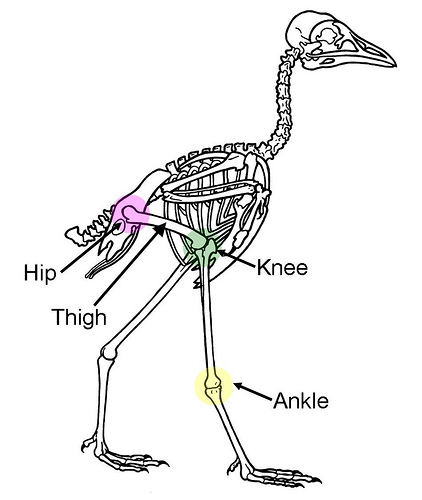
It's been known for decades that the femur, or thigh bone in birds is largely fixed and makes birds into "knee runners," unlike virtually all other land animals, the OSU experts say. What was just discovered, however, is that it's this fixed position of bird bones and musculature that keeps their air-sac lung from collapsing when the bird inhales.
Jellyfish blooms are up almost everywhere and it's going to become a menace.  The reason?   Over-fishing and excess nutrients from fertilizers and sewage, say researchers from The Commonwealth Scientific and Industrial Research Organisation (CSIRO), Australia's national science agency.

"Dense jellyfish aggregations can be a natural feature of healthy ocean ecosystems, but a clear picture is now emerging of more severe and frequent jellyfish outbreaks worldwide," says CSIRO Climate Adaptation Flagship and University of Queensland scientist Dr Anthony Richardson.