Is Internet expression a fundamental right? Certainly a subset of the modern generation has demonstrated an irrational sense of entitlement about free content, to the detriment of media companies that have tried to provide it like the New York Times, but parts of copyrighted material have always been allowed under fair use. What if court interpretation of fair use has changed?
University of Arkansas law professor Ned Snow says current judicial interpretation of fair use, a 150-year-old doctrine that allows people to use copied material in their speech, has become so constricted that it inhibits speech.
Scientists say they have succeeded in treating immune cells in a way that enables them to inhibit unwanted immune reactions such as organ rejection. Their results have now been published in the Journal of Cellular and Molecular Medicine.
The immune system keeps us healthy: day and night it protects us against invading and harmful pathogens. But this fulltime surveillance can also turn into a problem, for example after an organ transplant. The immune system recognizes the new organ as "foreign" and starts fighting it. In the end, the life-saving transplant will be rejected. Until now, only special drugs have managed to keep the immune system silent and thus inhibit organ rejection.
Darwin knew that some mechanism had to govern how our physical features and behavioral traits have evolved over centuries, passing from a parent to their offspring with natural selection favoring those that give the greatest advantage for survival, but he did not have a scientific explanation for this process.
Scientists for decades have believed that differences in the way genes are expressed into functional proteins is what differentiates one species from another and drives evolutionary change but no one has been able to prove it - until now, say researchers at the University of Leeds.
It's two inches long, is shaped like a phallus and is commonly associated with wood. A middle school joke? No, it's a new species of stinkhorn mushroom discovered on the African island of Sao Tome and named after Robert Drewes, Curator of Herpetology at the California Academy of Sciences.
Phallus drewesii belongs to a group of mushrooms known as stinkhorns which give off a foul, rotting meat odor. There are 28 other species of Phallus fungi worldwide, but this particular species is notable for its small size, white net-like stem, and brown spore-covered head. It is also the only Phallus species to curve downward instead of upward.
A team of researchershas discovered a biological marker for neovascular age-related macular degeneration (AMD), the leading cause of blindness in older adults. The marker, a receptor known as CCR3, shows strong potential as a means for both the early detection of the disease and for preventive treatment.
Neovascular (or "wet-type") macular degeneration is caused by choroidal neovascularization (CNV) – the invasive growth of new blood vessels in the thin vascular layer that provides nourishment and oxygen to the eye. Central vision loss occurs when these abnormal blood vessels invade the retina, the light-sensitive tissue that lines the inner surface of the eyeball.
Dr Jennifer Loveland-Curtze and a team of scientists from Pennsylvania State University say that a bacterium trapped more than a mile under under glacial ice in Greenland for over 120,000 years may hold clues as to what life forms might exist on other planets.


 Synchrotron Could Shed Light On Exotic Dark Photons
 The Pain Scale Is Broken But This May Fix It
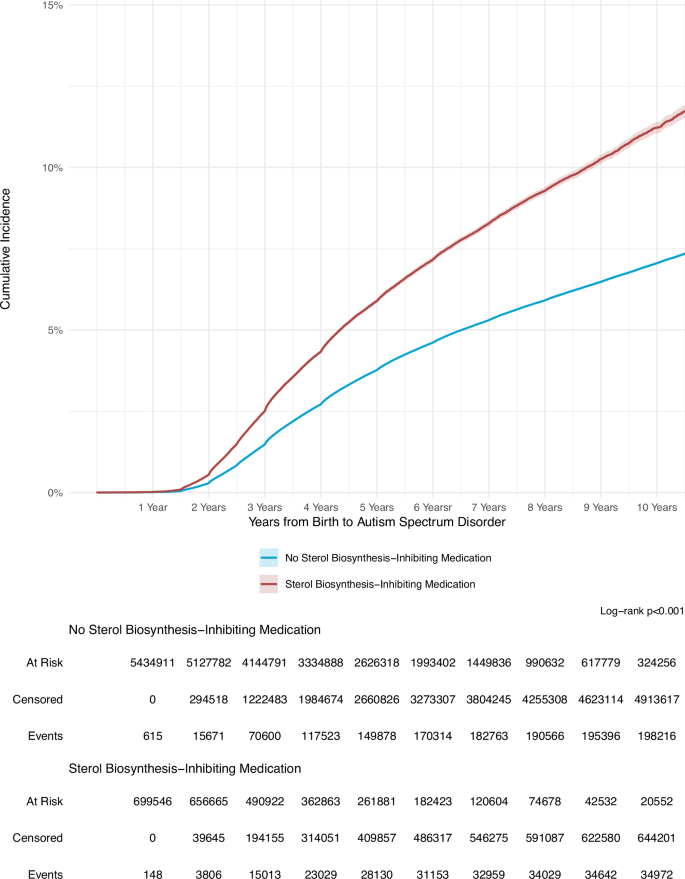 Study Links Antidepressants, Beta-blockers and Statins To Increased Autism Risk
 Pilot Study: Fibromyalgia Fatigue Improved By TENS Therapy