Banner
Pilot Study: Fibromyalgia Fatigue Improved By TENS Therapy

Fibromyalgia is the term for a poorly-understood condition where people experience pain and fatigue...

High Meat Consumption Linked To Lower Dementia Risk

Older people who eat large amounts of meat have a lower risk of dementia and cognitive decline...

Long Before The Inca Colonized Peru, Natives Had A Thriving Trade Network

A new DNA analysis reveals that long before the Incan Empire took over Peru, animals were...

Mesolithic People Had Meals With More Tradition Than You Thought

The common imagery of prehistoric people is either rooting through dirt for grubs and picking berries...

User picture.
News StaffRSS Feed of this column.

News Releases From All Over The World, Right To You... Read More »

Blogroll

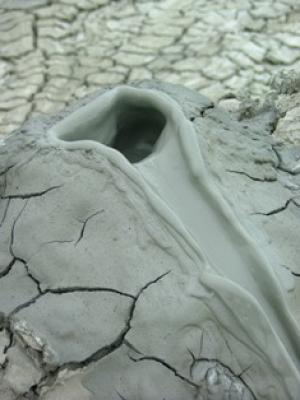
Lusi, the world’s fastest-growing mud volcano, is collapsing and could subside to depths of more than 140 meters with consequences for the surrounding environment, according to new research.

As the second anniversary (May 29) of the eruption on the Indonesian island of Java approaches, scientists have also found that the center of the volcano is collapsing by up to three meters overnight.

Such sudden collapses could be the beginning of a caldera - a large basin-shaped volcanic depression - according to the research team, from Durham University UK, and the Institute of Technology Bandung, in Indonesia.

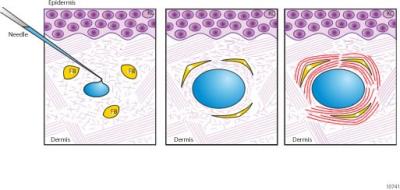
Dozens of studies show collagen repair is possible and demonstrate why three types of available skin treatments, topical retinoic acid, carbon dioxide laser resurfacing and injections of cross-linked hyaluronic acid, are effective.

University of Michigan scientists draw on dozens of studies since the early 1990s to explain why these treatments all improve the skin’s appearance – and its ability to resist bruises and tears – by stimulating new collagen. Collagen is a key supporting substance, plentiful in young skin, that’s produced in the sub-surface layer of skin known as the dermis. The findings show that the breakdown of the dermis’ firm, youthful structure is a very important factor in skin aging – a much more straightforward thing to fix than genetic factors that others theorize may be involved.

“Fibroblasts are not genetically shot,” says John J. Voorhees, M.D., F.R.C.P., chair of the Department of Dermatology at the University of Michigan Medical School and the article’s senior author. Fibroblast cells in the skin are the key producers of collagen.

Researchers at The University of Nottingham have taken some important first steps to creating a synthetic copycat of a living cell.

Dr Cameron Alexander and PhD student George Pasparakis in the have used polymers — long-chain molecules — to construct capsule-like structures that have properties mimicking the surfaces of a real cell.

In work published as a 'VIP paper' in the journal Angewandte Chemie International Edition, they show how in the laboratory they have been able to encourage the capsules to 'talk' to natural bacteria cells and transfer molecular information.

Charlotte Eklund-Jonsson at the Department of Food Science, Chalmers University of Technology, in Sweden says the results of her doctoral dissertation could be a new vegetarian food that boosts the uptake of iron and offers a good set of proteins.

The food, called tempe, is a whole-grain product with high folate content. It is generally accepted in medicine that whole-grains reduce the risk of cardiovascular diseases, and it is also believed that it protects against age-related diabetes and certain forms of cancer.

You went to a wedding yesterday. The service was beautiful, the food and drink flowed and there was dancing all night. But people tell you that you are in hospital, that you have been in hospital for weeks, and that you didn’t go to a wedding yesterday at all.

The experience of false memories like this following neurological damage is known as confabulation. The reasons why patients experience false memories such as these has largely remained a mystery. Now a new study conducted by Dr Martha Turner and colleagues at University College London, published in the May 2008 issue of Cortex offers some clues as to what might be going on.

The authors studied 50 patients who had damage to different parts of the brain, and found that those who confabulated all shared damage to the inferior medial prefrontal cortex, a region in the centre of the front part of the brain just behind the eyes.

The world's first optical pacemaker is described in an article published today in Optics Express. A team of scientists at Osaka University in Japan show that powerful, but very short, laser pulses can help control the beating of heart muscle cells.

"If you put a large amount of laser power through these cells over a very short time period, you get a huge response," says Nicholas Smith, who led the research. The laser pulses cause the release of calcium ions within the cells, Smith explains, and this action forces the cells to contract.

This technique provides a tool for controlling heart muscle cells in the laboratory, a breakthrough that may help scientists better understand the mechanism of heart muscle contraction.