Banner
Pilot Study: Fibromyalgia Fatigue Improved By TENS Therapy

Fibromyalgia is the term for a poorly-understood condition where people experience pain and fatigue...

High Meat Consumption Linked To Lower Dementia Risk

Older people who eat large amounts of meat have a lower risk of dementia and cognitive decline...

Long Before The Inca Colonized Peru, Natives Had A Thriving Trade Network

A new DNA analysis reveals that long before the Incan Empire took over Peru, animals were...

Mesolithic People Had Meals With More Tradition Than You Thought

The common imagery of prehistoric people is either rooting through dirt for grubs and picking berries...

User picture.
News StaffRSS Feed of this column.

News Releases From All Over The World, Right To You... Read More »

Blogroll

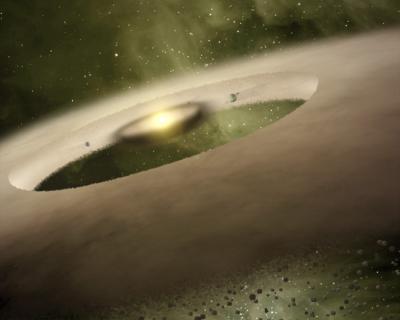
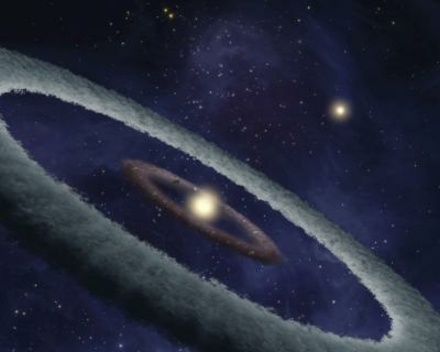
Astronomers at the University of Michigan have found what are believed to be some of the youngest solar systems yet detected.

The systems are around the young stars UX Tau A and LkCa 15, located in the Taurus star formation region just 450 light years away. Using a telescope that measures levels of infrared radiation, the researchers noticed gaps in the protoplanetary disks of gas and dust surrounding these stars. They say those gaps are most likely caused by infant planets sweeping those areas clear of debris.

A paper on the findings by astronomy doctoral student Catherine Espaillat, professor Nuria Calvet, and their colleagues is published in the Dec. 1 issue of Astrophysical Journal Letters.

CHICAGO – Using a novel imaging technique to study autistic children, researchers have found increased gray matter in the brain areas that govern social processing and learning by observation. Results of the study conducted at the Fay J.

CHICAGO – Stereoscopic digital mammography, a new diagnostic technique capable of producing three-dimensional, in-depth views of breast tissue, could significantly reduce the number of women who are recalled for additional tests following routine screening mammography. Results of a clinical trial being conducted at Emory University Breast Clinic in Atlanta were presented today at the annual meeting of the Radiological Society of North America (RSNA).

“Standard mammography is one of the most difficult radiographic exams to interpret,” said David J. Getty, Ph.D., division scientist at BBN Technologies of Cambridge, Mass.

A technique for controlling the magnetic properties of a commonly used blue dye could revolutionise computer processing power, according to research published recently in Advanced Materials.

Scientists have demonstrated that they can control the properties in a dye known as Metal Phthalocyanine, or MPc, with the use of magnetism.

Though this technology is still in its infancy, researchers claim that the ability to control the magnetic properties of MPc could have the potential to dramatically improve information processing in the future.

iPods, CD read/writers, and other electronic devices already use magnetism as a system for signalling to process and store information.

Current technology, however, has limitations.

The N-Myc gene lives a double life, triggering cancer when it works with the growth-promoting protein IL-3 and causing cell suicide in the absence of IL-3

(MEMPHIS, Tenn. – Nov. 26, 2007) A gene called N-Myc leads a double life in certain white blood cells when it is overexpressed, helping to trigger a cancer called acute myeloid leukemia (AML) under some conditions while triggering apoptosis, or cell suicide, under other conditions, according to results of a mouse study done by investigators at St. Jude Children's Research Hospital.

“This discovery gives researchers an important insight into N-Myc’s role in human AML and might contribute to new strategies for treating this leukemia or disrupting this gene’s ability to cause it,” said Gerard Grosveld, Ph.D., chair of the St.

One of the fastest moving stars ever seen has been discovered with NASA's Chandra X-ray Observatory. This cosmic cannonball is challenging theories to explain its blistering speed.

Astronomers used Chandra to observe a neutron star, known as RX J0822-4300, over a period of about five years. During that span, three Chandra observations clearly show the neutron star moving away from the center of the Puppis A supernova remnant. This remnant is the stellar debris field created during the same explosion in which the neutron star was formed about 3700 years ago.

By combining how far it has moved across the sky with its distance from Earth, astronomers determined the neutron star is moving at over 3 million miles per hour.