Banner
Social Media Is A Faster Source For Unemployment Data Than Government

Government unemployment data today are what Nielsen TV ratings were decades ago - a flawed metric...

Gestational Diabetes Up 36% In The Last Decade - But Black Women Are Healthiest

Gestational diabetes, a form of glucose intolerance during pregnancy, occurs primarily in women...

Object-Based Processing: Numbers Confuse How We Perceive Spaces

Researchers recently studied the relationship between numerical information in our vision, and...

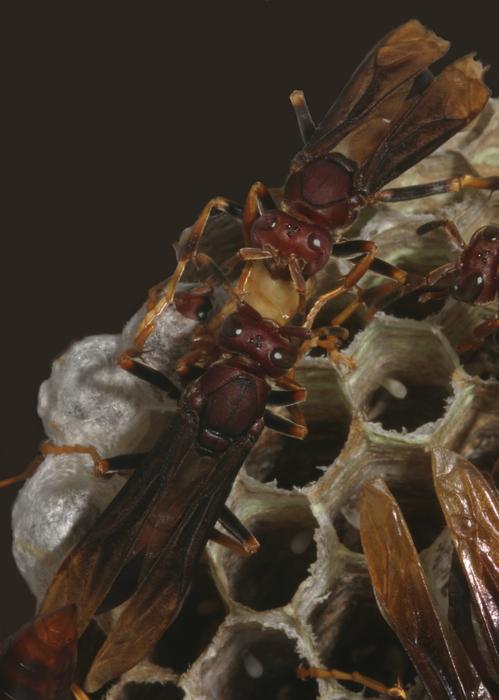
Males Are Genetically Wired To Beg Females For Food

Bees have the reputation of being incredibly organized and spending their days making sure our...

User picture.
News StaffRSS Feed of this column.

News Releases From All Over The World, Right To You... Read More »

Blogroll

In youth with attention deficit hyperactivity disorder (ADHD), the brain matures in a normal pattern but is delayed three years in some regions, on average, compared to youth without the disorder, an imaging study by researchers at the National Institutes of Health’s (NIH) National Institute of Mental Health (NIMH) has revealed.

The delay in ADHD was most prominent in regions at the front of the brain’s outer mantle (cortex), important for the ability to control thinking, attention and planning. Otherwise, both groups showed a similar back-to-front wave of brain maturation with different areas peaking in thickness at different times.

Chimpanzees crave roots and tubers even when food is plentiful above ground, according to a new study that raises questions about the relative importance of meat for brain evolution. The study documents a novel use of tools by chimps to dig for tubers and roots in the savanna woodlands of western Tanzania.

The chimps’ eagerness for buried treats offers new insights in an ongoing debate about the role of meat versus potato-like foods in the diet of our hominid ancestors, said first author Adriana Hernandez-Aguilar, who collected the field data for her doctoral research at the University of Southern California.

The debate centers on the diet followed by early hominids as their brain and body size slowly increased towards a human level.

A diet rich in fish, omega-3 oils, fruits and vegetables may lower your risk of dementia and Alzheimer’s disease, whereas consuming omega-6 rich oils could increase chances of developing memory problems, according to a study published in the November 13, 2007, issue of Neurology®. The study did not find any association between consuming corn oil, peanut oil, lard, meat or wine and lowering risk of dementia.

For the study, researchers examined the diets of 8,085 men and women over the age of 65 who did not have dementia at the beginning of the study. Over four years of follow-up, 183 of the participants developed Alzheimer’s disease and 98 developed another type of dementia.

Scientists at John Carroll University, working in its Lighting Innovations Institute, have developed an affordable accessory that appears to reduce the symptoms of ADHD. Their discovery also has also been shown to improve sleep patterns among people who have difficulty falling asleep.

The John Carroll researchers have created glasses designed to block blue light, therefore altering a person’s circadian rhythm, which leads to improvement in ADHD symptoms and sleep disorders.

The individual puts on the glasses a couple of hours ahead of bedtime, advancing the circadian rhythm. The special glasses block the blue rays that cause a delay in the start of the flow of melatonin, the sleep hormone. Normally, melatonin flow doesn’t begin until after the individual goes into darkness.

One of the foundations of Einstein's Special Relativity is that no particular frame of reference is better than any other - whether you're sitting on the couch or barreling through space on a rocket, physics doesn't change. On the other hand, as many physics undergrads learn, choosing the right reference frame can simplify your homework problems a lot.

Thanks to Einstein, physicists know that the world looks different depending on how fast you're moving.

A new antenna made of plasma (a gas heated to the point that the electrons are ripped free of atoms and molecules) works just like conventional metal antennas, except that it vanishes when you turn it off.

That's important on the battlefield and in other applications where antennas need to be kept out of sight. In addition, unlike metal antennas, the electrical characteristics of a plasma antenna can be rapidly adjusted to counteract signal jamming attempts.

Plasma antennas behave much like solid metal antennas because electrons flow freely in the hot gas, just as they do in metal conductors. But plasmas only exist when the gasses they're made of are very hot.