Banner
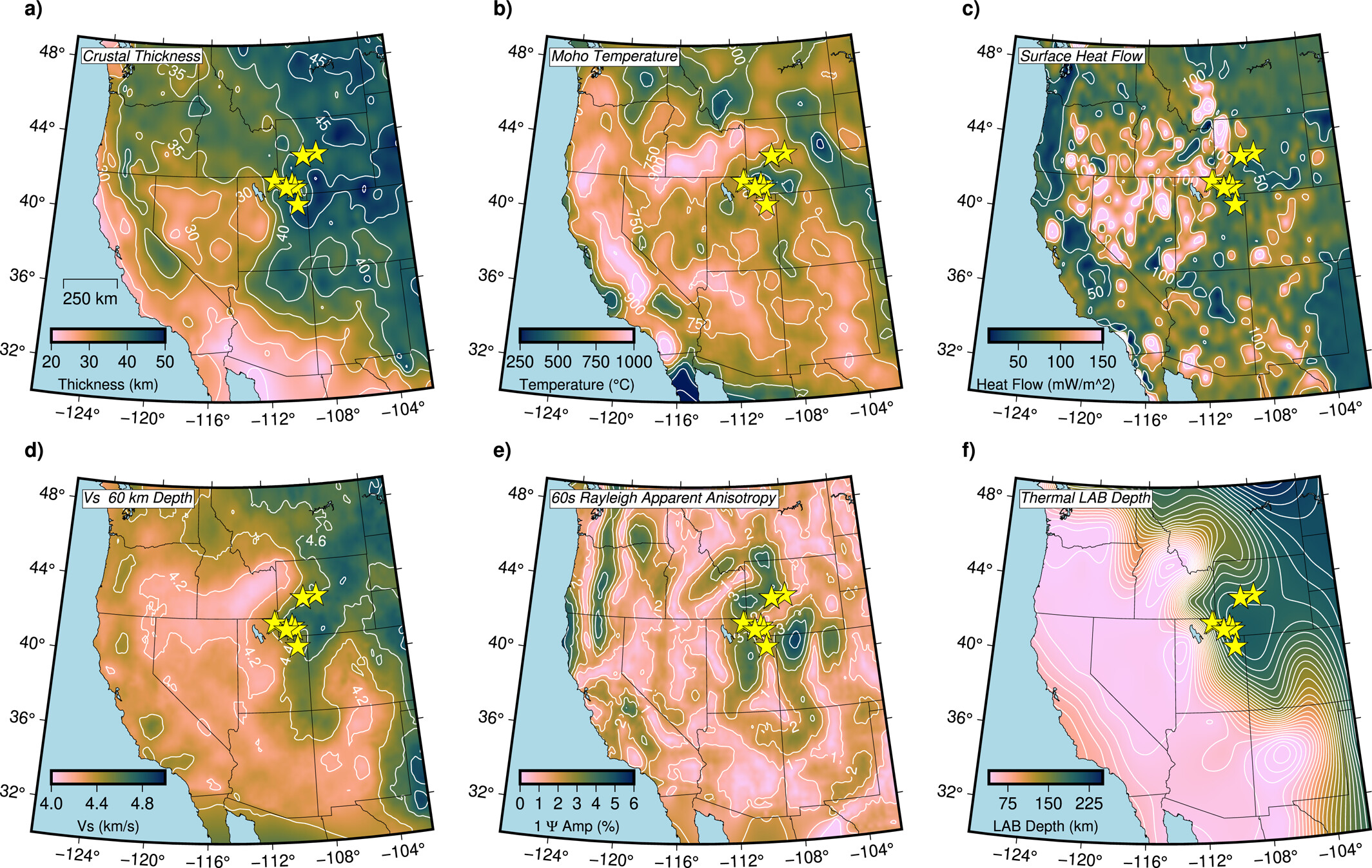
You Didn't Feel Continental Mantle Earthquakes, But They Happened. A Lot

A 1979 seismic event was a different kind of earthquake, and it is has intrigued scientists ever...

How To Overcome Leadership Battles

In times of social rancor and strife, most will fight each other, but societies are saved by those...

Thousands Of Unpublished Studies Show Why Conservation Efforts Miss The Mark

Europe alone has so much unpublished, un-catalogued biological data that it is challenging to take...

Why Antarctic Sea Ice Stopped Growing In 2015

Though numerical models and popular films like An Inconvenient Truth projected Arctic ice...

User picture.
News StaffRSS Feed of this column.

News Releases From All Over The World, Right To You... Read More »

Blogroll

Whereas most birds are sole proprietors of their nests, some tropical species “time share” together – a discovery that helps clear up a 150-year-old evolutionary mystery, says Queen’s University Biology professor Vicki Friesen.

The Queen’s-led international study confirms one of Charles Darwin’s more controversial theories – first put forward in 1859 and since disputed by many experts – that different species can arise, unhindered, in the same place. Others believe that a geographic barrier such as a mountain or a river is required to produce two separate species.

Although focused on how species change over time through natural selection, Darwin’s landmark book, The Origin of Species, also speculates that it is possible for different species to develop in the same place.

The CO2 emissions of 50,000 power plants worldwide, the globe’s most concentrated source of greenhouse gases, have been compiled into a massive new database, called CARMA — Carbon Monitoring for Action.

The on-line database, compiled by the Center for Global Development (CGD), an independent policy and research organization that focuses on how the actions of the rich world shape the lives of poor people in developing countries, lays out exactly where the CO2 emitters are and how much of the greenhouse gas they are casting into the atmosphere.

There is little substantive evidence that binge drinking while pregnant seriously harms the developing fetus, finds a study in the Journal of Epidemiology and Community Health.

Consistently heavy drinking throughout pregnancy has been associated with birth defects and subsequent neurological problems. But it is not known what impact binge drinking, in the absence of regular heavy drinking, might have. And this drinking pattern is becoming increasingly common, particularly among women, say the authors.

Their findings are based on a comprehensive review of published research on binge drinking and women who were either pregnant or trying to conceive.

Agroforestry is the integration of trees and shrubs in agricultural areas, like farmland, to help protect the soil and in some cases to provide additional income.

Reduced soil erosion, biodiversity conservation and carbon sequestration are some of the major effects agroforestry systems have on the environment.

Yet many of the areas crucial to world ecology are in developing countries where it is a difficult sell to discourage maximum utilization of available land for crops.

A new study from the Karolinska Institutet states that consumers of Swedish moist snuff – a smokeless tobacco called 'snus' – run a higher risk of dying from cardiac arrest and stroke. Snus also increases the risk of high blood pressure, a known factor of cardiovascular disease.

The use of snus has increased markedly in Sweden in the past few decades, so much so that it now accounts for half of all tobacco consumption in the country. Over 20 per cent of men between the ages of 18 and 79 are daily users.

On Sept. 21, 2007, the trial sponsors announced that vaccinations in the STEP study of Merck & Co.'s HIV vaccine (V520) were discontinued because the vaccine was not effective (see 'No Efficacy':V520 HIV Vaccine Study), and the available results from the study were presented at last week's meeting of the HIV Vaccine Trials Network (HVTN).

Merck and the HVTN today announced that study volunteers in the STEP study of V520 will be told whether they received vaccine or placebo, and all study volunteers will be encouraged to continue to return to their study sites on a regular basis for ongoing risk reduction counseling and study-related tests.