Banner
Social Media Is A Faster Source For Unemployment Data Than Government

Government unemployment data today are what Nielsen TV ratings were decades ago - a flawed metric...

Gestational Diabetes Up 36% In The Last Decade - But Black Women Are Healthiest

Gestational diabetes, a form of glucose intolerance during pregnancy, occurs primarily in women...

Object-Based Processing: Numbers Confuse How We Perceive Spaces

Researchers recently studied the relationship between numerical information in our vision, and...

Males Are Genetically Wired To Beg Females For Food

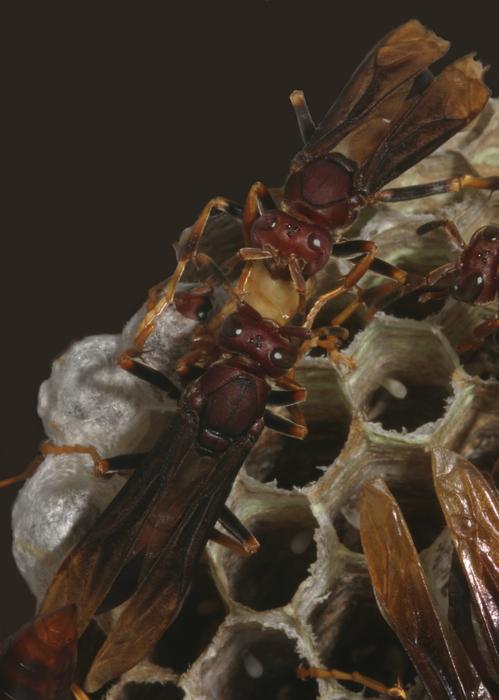
Bees have the reputation of being incredibly organized and spending their days making sure our...

User picture.
News StaffRSS Feed of this column.

News Releases From All Over The World, Right To You... Read More »

Blogroll

International donors, including the United States, spent more than $80 billion in 2004 on overseas medical aid, yet there is no conclusive evidence that this money is making a difference in preventing deaths, including those from AIDS, tuberculosis and malaria, because most people in Africa and Asia are born and die without leaving a trace in any official records.

In the lead paper of The Lancet’s “Who Counts” series, Philip Setel, Ph. D., and colleagues discuss this “scandal of invisibility" and analyze the inadequacy of civil registration systems for counting births, deaths and causes of death.

People who are optimistic are more likely than others to display prudent financial behaviors, according to new research from Duke University’s Fuqua School of Business.

But too much optimism can also be a problem: people who are extremely optimistic tend to have short planning horizons and act in ways that are generally not considered wise.

Manju Puri and David Robinson, professors of finance at Duke, report in the October 2007 issue of the Journal of Financial Economics that the differences between optimists and extreme optimists provide important insights into the interaction between psychology and economic and lifestyle choices.

Bella Abramovna Subbotovskaya is a little-known heroine of 20th century mathematics who died under mysterious circumstances at the age of 44.

She was a mathematician who founded the "Jewish People's University" to help talented young Jews who had been prevented from studying mathematics due to the anti-Semitic policies of the Soviet government.

During the 1970s and 1980s, Jewish students in the Soviet Union were routinely denied admission to advanced study in many institutions of higher education. In mathematics, one of the best places for advanced study in mathematics was---and still is---the department of mathematics and mechanics (called "Mekh-Mat") at Moscow State University.

Although current teacher training programs generally omit the science of how we learn, an overwhelming number of the teachers surveyed by the Teaching and Learning Research Programme (TLRP) and the Economic and Social Research Council (ESRC) felt neuroscience could make an important contribution in key educational areas.

Dr Sue Pickering and Dr Paul Howard-Jones, at Bristol University's Graduate School of Education, asked teachers and other education professionals whether they thought it was important to consider the workings of the brain in educational practice. Around 87 per cent of respondents felt it was.

Cultural mind games or good science? The first openly gay male high school sports coach in the US is now a sociologist in England, where European football rules the sports pages, and has done a study concludng that a lot of former American football players are not necessarily gay, but they have had sex with other men anyway. And they're now cheerleaders.

“The evidence supports my assertion that homophobia is on the rapid decline among male teamsport athletes in North America at all levels of play,” writes Dr. Eric Anderson, of the University of Bath in his study, ‘Being masculine is not about whom you sleep with…Heterosexual athletes contesting masculinity and the one-time rule of homosexuality’. It will be published in the journal Sex Roles in January.

The catch?

When cells become cancerous, the sugars on their surfaces undergo distinct changes that set them apart from healthy cells. For decades, scientists have tried to exploit these differences by training the immune system to attack cancerous cells before they can spread and ravage the body.

Now, researchers at the University of Georgia Cancer Center have synthesized a carbohydrate-based vaccine that – in mice – has successfully triggered a strong immune response to cancer cells.