Banner
Social Media Is A Faster Source For Unemployment Data Than Government

Government unemployment data today are what Nielsen TV ratings were decades ago - a flawed metric...

Gestational Diabetes Up 36% In The Last Decade - But Black Women Are Healthiest

Gestational diabetes, a form of glucose intolerance during pregnancy, occurs primarily in women...

Object-Based Processing: Numbers Confuse How We Perceive Spaces

Researchers recently studied the relationship between numerical information in our vision, and...

Males Are Genetically Wired To Beg Females For Food

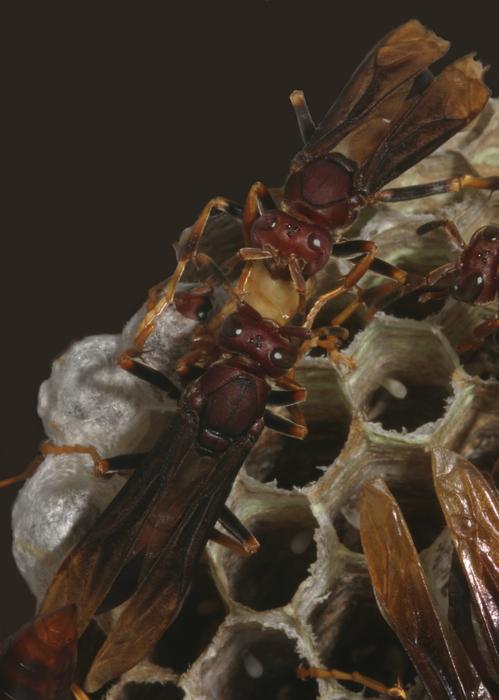
Bees have the reputation of being incredibly organized and spending their days making sure our...

User picture.
News StaffRSS Feed of this column.

News Releases From All Over The World, Right To You... Read More »

Blogroll

It's historically been the case that fossil remains of Neanderthals paint an incomplete picture; they can't tell us about their cognitive skills or really give us details of what they looked like.

But scientists at the Max Planck Institute in Leipzig started looking into the DNA of Neanderthals and they made some astonishing discoveries. They discovered the human variant of the FOXP2 gene in our nearest relatives and an interesting detail: at least one percent of the Neanderthals in Europe may have had red hair.

Only two percent of the world's population have naturally red hair - caused by a mutation in the gene mc1r.

A new study explores the role of natural enemies, such as predators and parasites, for mixed mating, a reproductive strategy in which hermaphroditic plants and animals reproduce through both self- and cross-fertilization. The findings highlight the possible evolutionary consequences of these interactions.

Mating systems are a complex set of traits that reflect interactions among genetics, population structure, demography, and numerous environmental factors that influence mating success. These traits have profound consequences for genetic variation.

The emergence of drug resistant forms of HIV often underlies the failure of current antiretroviral therapies for HIV infection. Specific mutations in the HIV genome confer resistance to individual drugs.

Recombination, a process similar to sexual reproduction in higher organisms, can accelerate the accumulation of resistance mutations by mixing the contents of distinct viral genomes and expedite the failure of therapy. The dynamics of the emergence of recombinant forms of HIV in infected individuals remains poorly understood.

Mankind’s closest living relatives – the world’s apes, monkeys, lemurs and other primates – are under unprecedented threat from destruction of tropical forests, illegal wildlife trade and commercial bushmeat hunting, with 29 percent of all species in danger of going extinct, according to a new report by the Primate Specialist Group of IUCN’s Species Survival Commission (SSC) and the International Primatological Society (IPS), in collaboration with Conservation International (CI).

Titled "Primates in Peril: The World’s 25 Most Endangered Primates—2006–2008", the report compiled by 60 experts from 21 countries warns that failure to respond to the mounting threats now exacerbated by climate change will bring the first primate extinctions in more than a century.

According to a small-scale, in-office, observational study, psychiatrists and parents have significantly different perceptions of the importance of pediatric ADHD and psychiatric comorbidities, particularly regarding the patients’ most concerning behavior.

The study, which utilized accepted sociolinguistic methodologies to evaluate the tone, content and structure of in-office visits, was presented recently at the 20th annual U.S.

Cornell archaeologists are rewriting history with the help of tree rings from 900-year-old trees, wood found on ancient buildings and through analysis of the isotopes (especially radiocarbon dating) and chemistry they can find in that wood.

By collecting thousands of years worth of overlapping tree rings, with each ring representing a tree's annual growth, the researchers have created long-term records in the eastern Mediterranean that allow them to precisely date such seminal milestones in history as when Hammurabi, "the law-giver," reigned, when the massive Santorini volcanic eruption occurred, and the timelines of the Bronze and Iron ages, as well as many more recent events.