Banner
Social Media Is A Faster Source For Unemployment Data Than Government

Government unemployment data today are what Nielsen TV ratings were decades ago - a flawed metric...

Gestational Diabetes Up 36% In The Last Decade - But Black Women Are Healthiest

Gestational diabetes, a form of glucose intolerance during pregnancy, occurs primarily in women...

Object-Based Processing: Numbers Confuse How We Perceive Spaces

Researchers recently studied the relationship between numerical information in our vision, and...

Males Are Genetically Wired To Beg Females For Food

Bees have the reputation of being incredibly organized and spending their days making sure our...

User picture.
News StaffRSS Feed of this column.

News Releases From All Over The World, Right To You... Read More »

Blogroll

An autoimmune inflammatory disease that takes a progressive toll on the heart, kidney and liver as well as the joints, rheumatoid arthritis (RA) is associated with a high risk of early death. This sobering fact is well known. Less is known about whether longevity has improved for RA patients over the past few decades of remarkable improvements in longevity in the general population. Are earlier diagnosis, breakthrough drugs, and more aggressive antirheumatic treatment regimens paying off in terms of survival?

Smoking cigarettes is associated with an increased risk of cancers of the lung, head and neck, esophagus, bladder and many others and also affects response to anti-cancer treatments. But smoking does not result in more advanced stage diagnoses or aggressive breast cancers at the time of diagnosis. That is the result of an analysis of 35 years of data for more than 6,000 patients presented today at the American Society for Therapeutic Radiology and Oncology’s 49th Annual Meeting in Los Angeles.

“We hypothesized that tobacco use could result in more advanced stage or more aggressive breast cancer presentation, but that doesn’t appear to be the case,” said Matthew Abramowitz, M.D.,a resident in the radiation oncology department at Fox Chase Cancer Center.

In political polling, as the same questions are asked of more and more people the uncertainty (expressed as margin of error) declines and the results become a clearer snapshot of public opinion - yet with climate issues additional research does not substantially reduce the uncertainty.

"Uncertainty and sensitivity have to go hand in hand. They're inextricable," said Gerard Roe, a University of Washington associate professor of Earth and space sciences. "We're used to systems in which reducing the uncertainty in the physics means reducing the uncertainty in the response by about the same proportion.

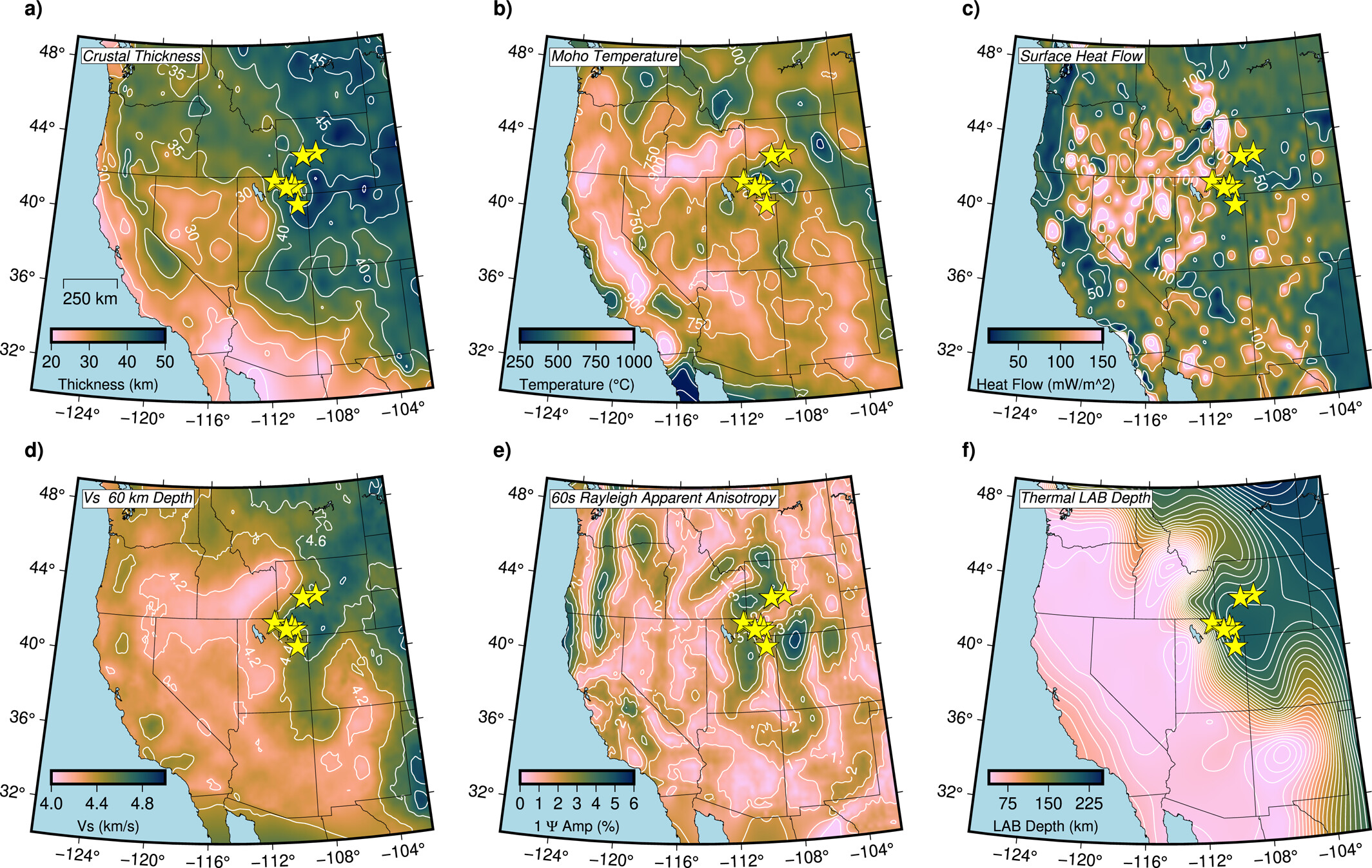
Seismologists in recent years have recast their understanding of the inner workings of Earth from a relatively benign homogeneous environment to one that is highly dynamic and chemically diverse. This new view of Earth’s inner workings depicts the planet as a living organism where events that happen deep inside can affect what happens at its surface, like the rub and slip of tectonic plates and the rumble of the occasional volcano.

New research into these dynamic inner workings are now showing that Earth’s upper mantle (an area that extends down to 660 km) exhibits how far more than just temperature and pressure play a role in the dynamics of the deep interior.

Chilean researchers have identified a region of the brain – the insular cortex – that plays a role in drug craving in amphetamine-addicted rats, according to a report published Science. This finding ultimately may help support the development of new therapies to treat drug addiction as well as certain behavioral side effects of medications.

The insular cortex, also known as the insula, lies deep inside the brain. It is a part of the interoceptive sensory system that monitors the body’s perception of its physiological states and needs. The researchers used rats for these studies and before the findings can be shown to apply in humans, researchers will have to perform similar tests in human subjects.

Soils may dictate the array of fall colors as much as the trees rooted in them, according to a forest survey out of North Carolina.

By taking careful stock and laboratory analyses of the autumn foliage of sweetgum and red maple trees along transects from floodplains to ridge-tops in a nature preserve in Charlotte, N.C., former University of North Carolina at Charlotte graduate student Emily M. Habinck found that in places where the soil was relatively low in nitrogen and other essential elements, trees produced more red pigments known as anthocyanins.

Habinck's discovery supports a 2003 hypothesis put forward to explain why trees bother to make red pigments, by plant physiologist William Hoch of Montana State University, Bozeman.