Banner
Social Media Is A Faster Source For Unemployment Data Than Government

Government unemployment data today are what Nielsen TV ratings were decades ago - a flawed metric...

Gestational Diabetes Up 36% In The Last Decade - But Black Women Are Healthiest

Gestational diabetes, a form of glucose intolerance during pregnancy, occurs primarily in women...

Object-Based Processing: Numbers Confuse How We Perceive Spaces

Researchers recently studied the relationship between numerical information in our vision, and...

Males Are Genetically Wired To Beg Females For Food

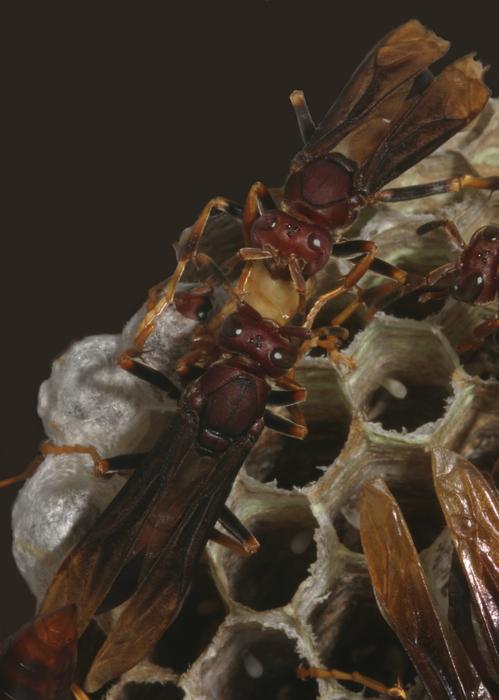
Bees have the reputation of being incredibly organized and spending their days making sure our...

User picture.
News StaffRSS Feed of this column.

News Releases From All Over The World, Right To You... Read More »

Blogroll

In process that is shrouded in mystery, rod-shaped bacteria reproduce by splitting themselves in two. By applying advanced mathematics to laboratory data, a team led by Johns Hopkins researchers has solved a small but important part of this reproductive puzzle.

The findings apply to highly common rod-shaped bacteria such as E. coli, found in the human digestive tract. When these single-celled microbes set out to multiply, a signal from an unknown source causes a little-understood structure called a Z-ring to tighten like a rubber band around each bacterium’s midsection. The Z-ring pinches the rod-like body into two microbial sausages that finally split apart.

Washington state climatologist Philip Mote, one of the lead authors of the recently released Fourth Assessment Report of the Intergovernmental Panel on Climate Change, will deliver a public lecture on global warming at the American Vacuum Society's (AVS) 54th International Symposium & Exhibition in Seattle. The lecture is free and open to the public (see details below).

“Climate change is real and it is a problem,” says Mote, a researcher with the University of Washington Climate Impacts Group.

The best views of the hydrocarbon lakes and seas on Saturn's moon Titan taken by the Cassini spacecraft are being released today.

A new radar image comprised from seven Titan fly-bys over the last year and a half shows a north pole pitted with giant lakes and seas, at least one of them larger than Lake Superior in the USA, the largest freshwater lake on Earth. Approximately 60% of Titan's north polar region, above 60° north, has been mapped by Cassini's radar instrument. About 14% of the mapped region is covered by what scientists interpret as liquid hydrocarbon lakes.

"This is our version of mapping Alaska, the northern parts of Canada, Greenland, Scandinavia and Northern Russia," said Rosaly Lopes, Cassini radar scientist at the Jet Propulsion Laboratory, USA.

Dr. Dan Gewirth, Hauptman-Woodward senior research scientist, has just solved the structure of the first mammalian GRP94 protein implicated in immune diseases such as sepsis, AIDS and certain cancers. His work is being published today in a cover article in a top scientific journal - Molecular Cell.

Gewirth’s study confirms his 2001 hypothesis that this protein – GRP94 – is from the same family as the better known HSP90 proteins. As ligand-regulated chaperones – proteins that help other cellular proteins achieve their active shapes, the HSP90s are key players in cellular regulation and recognition.

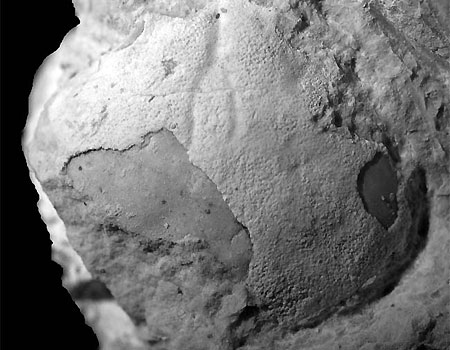
Were Neanderthals direct ancestors of contemporary humans or an evolutionary side branch that eventually died out?

This is one of the enduring questions in human evolution as scientists explore the relationship of fossil groups, such as Neanderthals, with people alive today.

The simultaneous publication of two studies with Neanderthal nuclear DNA sequences [1,2] was a technological breakthrough that held promise for answering a longstanding question in human evolution: Did “archaic” groups of humans, such as Neanderthals, make any substantial contribution to the extant human gene pool? The conclusions of the two studies, however, were puzzling and possibly contradictory.

The cow as killer of the climate: this more recent portrayal of our bovine friends is because their digestion causes them to produce methane almost continuously and pound for pound methane has a much larger impact on global warming than carbon dioxide.

Now a team of German and Czech scientists say these animals also boost the production of methane from soil.

Grass lands that are not used for crops generally act as sinks for greenhouse gases like methane, carbon dioxide and nitrous oxide. However, once these grasslands become pastures for cattle a change occurs. This was especially noticeable in the winter, when cows stayed in a smaller area, reducing the spread of waste and increasing the density of the soil due to the animals' weight.