Banner
Object-Based Processing: Numbers Confuse How We Perceive Spaces

Researchers recently studied the relationship between numerical information in our vision, and...

Males Are Genetically Wired To Beg Females For Food

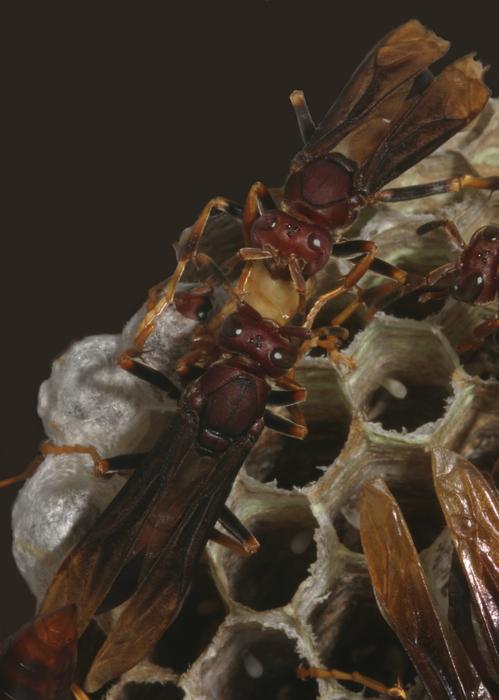
Bees have the reputation of being incredibly organized and spending their days making sure our...

The Scorched Cherry Twig And Other Christmas Miracles Get A Science Look

Bleeding hosts and stigmatizations are the best-known medieval miracles but less known ones, like ...

$0.50 Pantoprazole For Stomach Bleeding In ICU Patients Could Save Families Thousands Of Dollars

The inexpensive medication pantoprazole prevents potentially serious stomach bleeding in critically...

User picture.
News StaffRSS Feed of this column.

News Releases From All Over The World, Right To You... Read More »

Blogroll

EISLINGEN, Germany, October 16 /PRNewswire/ -- The media daily reports on new toxication occurrences in households. Home makers inhaling the toxic odors of standard household cleaners and sanitizers suffer serious health damages over the years. Also the infection rates at hospitals and the food industry are increasing constantly. It has been proved that the resistance of bacteria against standard disinfectant products are raising more and more.

Bio-AntiBact can be applied in areas where chemical material can or should not be used and are non-toxic and non-hazardous to humans, animals and the environment.

New evidence that genetics plays a key role in obesity is published today in the International Journal of Bioinformatics Research and Applications. The findings relate to the genetics of modern Pima Indians who have an unusually high rate of obesity but could be extrapolated to all people. Their obesity is thought to be linked to a thrifty metabolism that allowed them to metabolize food more efficiently in times when little was available but causes problems when food is in abundance.

Mark Rowe, David McClellan, and colleagues at Brigham Young University in Provo, Utah, USA, have studied the effect of evolutionary selection on Pima Indians, a people indigenous to the present-day Sonora desert of Arizona and New Mexico.

More than one-third of patients receiving HIV medication in Africa die or discontinue their treatment within two years, according to a study published in PLoS Medicine.

Boston University researcher Sydney Rosen and colleagues identified and analyzed scientific reports over the past 7 years that gave details on adult patients remaining on antiviral treatment in 13 sub-Saharan African countries.

They found that 77.5% of patients remained on treatment after an average period of 9.9 months. Of the patients no longer on treatment, just under half had died and half had lost contact with the clinics for undetermined reasons.

Frank Furedi is a Professor of Sociology at the University of Kent. During the past decade his research has been oriented towards the way that risk and uncertainty is managed by contemporary culture.

In recent years Professor Furedi has been exploring the way that fear has come to dominate public discussions in Western societies.

A study of 130 middle-aged and older men in the USA found that many of the 40 to 65 year-olds were engaging in high-risk sexual practices.

38 per cent didn’t use condoms during oral sex, with 25 per cent having unprotected vaginal sex and 22 per cent having unsafe anal sex. The research also showed that men who were single and displayed fewer HIV symptoms were least likely to use condoms during sex.

As many as four out of ten HIV positive African-American men could be putting their partners at risk by not using condoms, according to research in the latest UK-based Journal of Advanced Nursing.

A five-minute eye exam might prove to be an inexpensive and effective way to gauge and track the debilitating neurological disease multiple sclerosis, potentially complementing costly magnetic resonance imaging to detect brain shrinkage - a characteristic of the disease’s progression.

A Johns Hopkins-based study of a group of 40 multiple sclerosis (MS) patients used a process called optical coherence tomography (OCT) to scan the layers of nerve fibers of the retina in the back of the eye, which become the optic nerve. The process, which uses a desktop machine similar to a slit-lamp, is simple and painless.