




Like all cancer, that may not be the end of it. Sometimes, the aggressive cancer returns. A recent study sought to find out if high doses of vitamin B3 or niacin could help, by rejuvenating compromised immune cells to kill tumor cells, the way it had with mice. The researchers found that while glioblastoma suppresses the immune system, niacin in mice gave immune cells a boost so they could continue to attack and destroy cancer cells.
Mice are not little people. There would be 10,000 cures for cancer if mouse models were enough. Instead, human treatments must first go through increasingly difficult stages of clinical trials to get approval. This effort has led to a Phase I and II clinical trial to determine dosing and see about efficacy. Dosing matters because high amounts of vitamins like niacin are toxic.
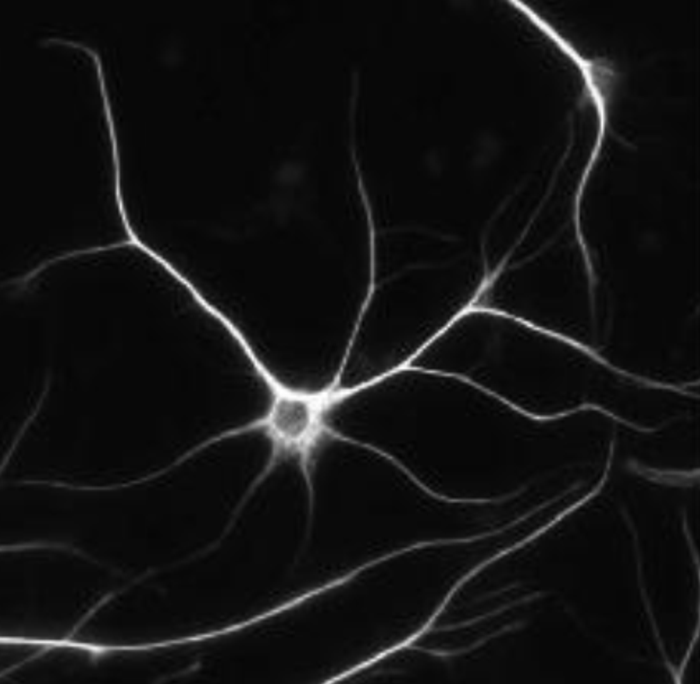
Human astrocyte in a dish. Credit: Ye Zhang and Steven A. Sloan
Early results involving 24-patients showed 82 percent were free of progression of the cancer at six-months; an increase of 28 percent from previous studies. Since they had decided the study would stop if the progression-free survival over six-months did not improve by at least 20 percent compared with older studies, 28 percent was a win.
Next up is the final analysis that will include 48-participants by the end of 2026 or early 2027.
The research is supported by the Canadian Institutes of Health Research and the Alberta Cancer Foundation.
Citation: Roldan Urgoiti, G., de Robles, P., Tsang, R.Y. et al. A phase I-II study of niacin in patients with newly diagnosed glioblastoma: safety and interim phase II analysis. J Neurooncol 176, 101 (2026). https://link.springer.com/article/10.1007/s11060-025-05351-z



Comments