




A new study recruited 130 two-month-old infants who were placed on a beanbag chair wearing sound-canceling headphones, while shown bright, colorful images which kept them engaged for 15-20 minutes. The team used functional MRI (fMRI) to measure changes in brain activity in response to pictures representing 12 common visual categories such as cat, bird, rubber duck, shopping cart and tree.
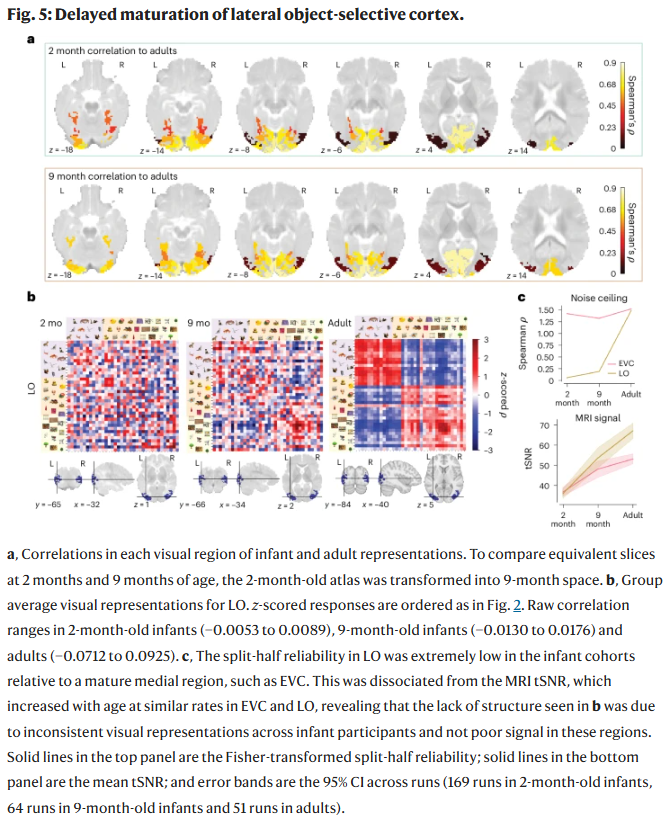
It is fMRI, so don't wonder if it can be a diagnostic tool for neurodevelopmental disorders. Interpretation in fMRI is subjective, and the use of Large Language Models ("AI") to further estimate how the babies’ brains represented different visual categories by comparing activity patterns along the pathways for visual recognition between the models and the brains is a confounder, but it's an interesting idea.
But it affirms that human babies learn much faster than AI tools, using a lot less energy while not driving up the price of computer chips.
Citation: O’Doherty, C., Dineen, Á.T., Truzzi, A. et al. Infants have rich visual categories in ventrotemporal cortex at 2 months of age. Nat Neurosci (2026). https://www.nature.com/articles/s41593-025-02187-8



Comments